
Family cook who uses several pans
You make a large pot of soup and often use other pans at the same time. Look at the zone layout and how power is shared when several zones are on.


Start by checking the base size of your soup pot, the space available for any other pans and the connection in your kitchen. A freestanding single-phase hob may avoid installation work, but the available power is shared between the zones in use. A built-in hob can offer more cooking power across several zones at once, provided the connection and cut-out are suitable. Also check that your pans are induction-compatible and see how easy the hob is to control on low settings.
You make a large pot of soup and often use other pans at the same time. Look at the zone layout and how power is shared when several zones are on.
You want to use induction without necessarily installing a new cooker circuit or cutting a new opening in your worktop. Compare the connection and any limitations of the exact model. The Consumers’ Association notes that single-phase use can limit cooking on several high settings at once.
You want to keep your soup gently simmering after bringing it to the boil, so you’re looking at the controls and how the hob behaves on low settings. The Consumers’ Association includes simmering in its hob tests.
A good fit if: you don’t want to cut an opening and the available connection is suitable for the model you’ve chosen.
The trade-off: The Consumers’ Association reports that a freestanding hob with a lower connection rating may take longer to bring water to the boil than a built-in hob rated at 7000 W or more.
A good fit if: you want to use an existing cut-out and check the connection options for your kitchen.
The trade-off: Inventum lists adjustable power for single- or two-phase use on the IKI7028. Power management on a single-phase connection does not remove the limitation on using several high-power settings at once.
A good fit if: you often use a soup pot alongside other pans, and your kitchen has—or can be fitted with—the required connection and cut-out.
The trade-off: Check the installation requirements and pan shape. A flexible zone may be designed for longer cookware, but that doesn’t automatically make it useful for a round soup pot.
| What to consider | What to look for | Who should pay particular attention? |
|---|---|---|
| Pan space and power | Measure the base of your pan and compare it with the zone layout and how power is shared when several zones are in use. | If I’m making soup and side dishes at the same time, I want to know whether the pans will fit side by side and remain practical to use. Around 36% of consumers with this cooking requirement prioritise pan space and cooking at the same time. |
| Connection | Check the connection rating, plug, circuit and specified connection for the exact model. | If I want to keep using my existing kitchen installation, I want to know in advance what connection work will be needed. Around 29% of consumers with this cooking requirement prioritise the connection. |
| Simmering and controls | Check how the controls work on low settings and look for an independent simmering test of the exact model, if available. | If the soup needs to simmer gently after cooking, I’ll focus on setting and adjusting a low heat. Around 21% of consumers with this cooking requirement prioritise simmering and controls. |
| Installation and extra costs | For a built-in hob, compare its overall dimensions with the required cut-out. Also check whether your pans have a magnetisable base. | If I want to avoid changes to my worktop, connection or pans, I’ll check these requirements in advance. Around 14% of consumers with this cooking requirement prioritise avoiding such changes and costs. |
Milieu Centraal recommends checking that the pan base has a magnetisable steel layer, for example with a magnet. The required cut-out and electrical connection vary by model.
With single-phase use, the available power may be shared between the zones in use. This means several pans may not always be able to cook on high settings at the same time.
Before you buy, check the connection rating, circuit and power management for the exact model.
You may have to wait longer for water to boil; a different connection may require installation work.
The width of the hob doesn’t tell you whether it will fit the cut-out in your worktop.
Compare both the overall dimensions and the specified cut-out for the exact model you want to install.
A cut-out that doesn’t match may mean altering the worktop and carrying out installation work.
A flexible zone is designed for cookware that suits its combined shape, so it won’t necessarily be suitable for a round soup pot.
Measure the base of your pan and compare it with the individual zones and any zones that can be combined.
ACM ConsuWijzer distinguishes between a commercial manufacturer’s warranty and your statutory rights against the retailer.
Check exactly what any extra warranty covers and keep your proof of purchase in case you need to make a claim against the retailer.
The VKI6010ZIL is a freestanding single-phase model. Inventum lists adjustable power for single- or two-phase use on the built-in IKI7028.
According to ETNA, the KIF472MG is a 70 cm built-in hob with a specified cut-out of 560 × 490 mm.
According to AEG, the NIO64B00IB is a 60 cm built-in hob with four zones and a bridge function.
The PVS631HB1E and PVS631HC1E are separate models; Bosch lists the PVS631HC1E on its service page.
This selection includes induction hobs for use with several pans. Check the dimensions, connection and pan space for each model.
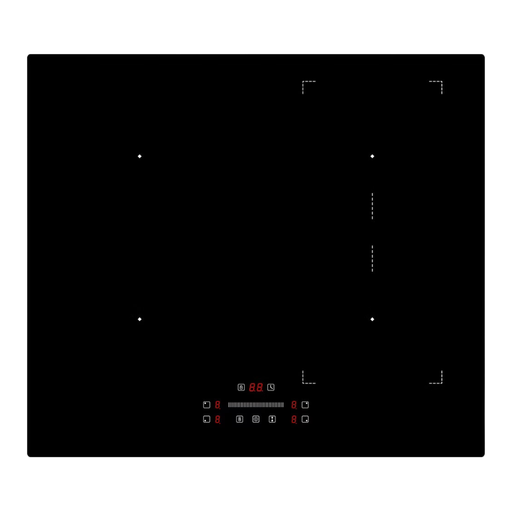 No image available
The product name specifies four cooking zones. Compare the layout with your soup pot and the space available for other pans.
Supplied with a cable but no plug. Check the specified connection and installation requirements.
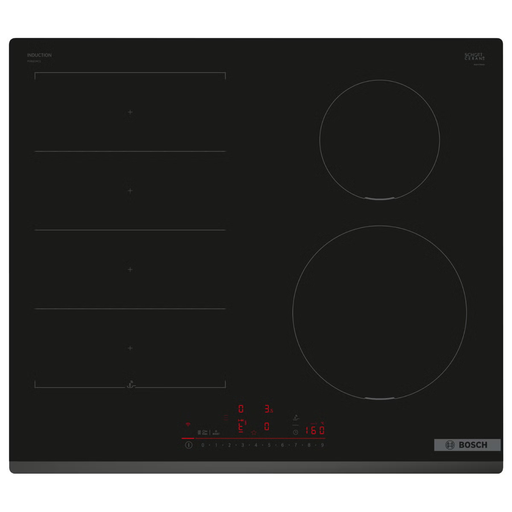 No image available
The product name specifies four cooking zones and a width of 60 cm. Check that the layout suits your pans.
The stated connection rating is 7400 W. Have the connection and installation requirements for your kitchen checked.
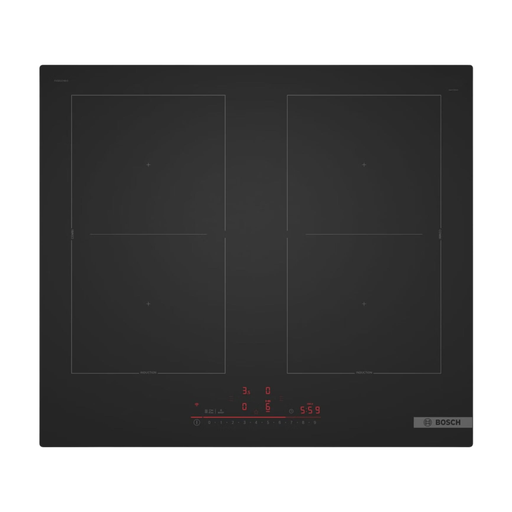 No image available
The product name specifies four zones and a width of 60 cm. Compare the pan layout with the space available on your worktop.
The stated connection rating is 7,4 kW. Check the connection requirements for your kitchen before you buy.
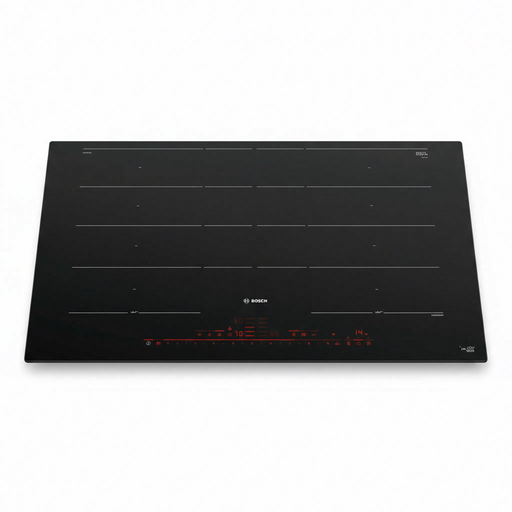 No image available
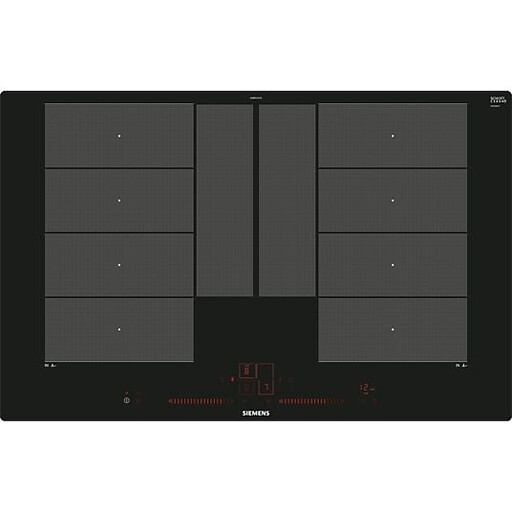
The product name specifies an 80 cm FlexInduction hob. Measure the available space and check the required cut-out.
Compare the zone layout with the shape and base size of your soup pot.
 No image available
The product name specifies four cooking zones. Check that the pan layout leaves room for your soup pot and other pans.
Compare the connection and installation details for this exact model with your kitchen.
Check that the base has a magnetisable steel layer, for example by testing it with a magnet, and that its size suits the cooking zone. According to Milieu Centraal, the base of the pan doesn’t have to be completely flat.
No, it depends on the model. Follow the specified connection instructions and check the available circuit. A more powerful model may need a Perilex connection. The Consumers’ Association explains that lower-powered freestanding hobs can be connected to an earthed socket.
Once the soup has come to the boil, turn the heat down and check how the hob behaves on low settings. ETNA Service explains that some induction hobs regulate power at these settings by briefly switching a zone on and off. Also follow the instructions for your model.
Not necessarily. First, have someone check whether an upgrade is needed for your chosen model and existing connection. The Dutch government says that, since 1 July 2026, priority rules have applied to applications for new or upgraded grid connections.
According to ACM ConsuWijzer, the retailer is responsible if a product doesn’t perform as you could reasonably expect under normal use. In the Netherlands, there is no general fixed two-year period for statutory guarantees; any manufacturer’s warranty is in addition to your legal rights.