
Cooking with a large casserole pan
You want a cooking zone that matches the diameter and shape of the pan’s base. A wide, round pan needs a different setup from an elongated casserole pan.


Start by checking the shape and diameter of your pan’s base. Choose a suitably large round cooking zone or, for elongated cookware, a hob with connectable zones. If you’d like to cook side dishes at the same time, also check the space and power distribution across the zones, the cut-out dimensions and the electrical connection.
You want a cooking zone that matches the diameter and shape of the pan’s base. A wide, round pan needs a different setup from an elongated casserole pan.
You want to know in advance whether your existing electrical connection is suitable for a built-in hob, or whether a single-phase model would be a better fit for your kitchen.
You want to use several pans at once for a neighbourhood meal, so you’re looking at the layout of the zones and how power is distributed.
Choose this option if: you use a wide, round pan and the required cut-out and electrical connection are suitable. AEG lists a round zone of up to 320 mm, as well as a bridge function, for the NIO84U00IB.
Bear in mind: the pan’s base still needs to match the zone. Also check the cut-out dimensions and electrical connection required for the model you choose.
Choose this option if: your pan’s base suits the connected zones and you’d also like to use other pans. Electrolux describes two connectable zones for the EIV73441; ETNA lists connectable zones for the KIF472MG.
Bear in mind: a bridge or flex function doesn’t guarantee that every round pan will fit. ETNA says the KIF472MG can be set up for a 1- or 2-phase connection; check the installation instructions and guidance on using zones at the same time.
Choose this option if: you don’t want a built-in hob and a standard socket is suitable for the model you’ve chosen. Inventum lists four zones and a standard plug for the VKI6010ZIL.
Bear in mind: Inventum says this model distributes power across the zones in use, so consider how you plan to cook your side dishes too.
For a neighbourhood meal with a large pan of fish stew, pan compatibility, the electrical connection and space for other pans all matter. Use the table to compare these key points before you buy.
| What to consider | What to check before buying | Who should pay particular attention? |
|---|---|---|
| Suitable pan heating | Measure the pan’s base and compare its diameter and shape with the zone. Also check that the pan is suitable for induction; Milieu Centraal recommends checking this in advance. | If I’m using a large pan of fish stew, I want its base to match the heated zone. That’s why around 33% of consumers give a suitable pan size and shape top priority. |
| Electrical connection | Compare the connection rating with your existing supply and check the instructions for the exact model. Consumentenbond says that hobs above 3.65 kW need a higher-capacity connection and a 5-pin Perilex socket. | If my existing connection limits my choice, I want to know what’s needed for installation in advance. Around 27% of consumers put the connection and installation first. |
| Cooking stew and side dishes at the same time | Compare the zone layout with the bases of all the pans you want to use at once. Check the manual to see how the model distributes power when several zones are in use. | If I’m cooking side dishes as well as the stew, I want to know whether all the pans will fit on the hob at once. Around 20% of consumers give cooking several dishes simultaneously top priority. |
| Installation and controls | Choose between freestanding and built-in; for a built-in model, measure the cut-out and check the electrical connection. Also consider whether the controls suit the way you want to manage several pans. | If I want to install and use the hob easily in my kitchen, I want to assess that first without losing sight of pan size. Around 20% of consumers prioritise installation and controls. |
A bridge function connects zones, but the shape and position of the heated area still matter when it comes to the pan’s base.
Measure the base and compare it with the zone layout and the pan sizes supported by the exact model. Also check whether the model has a separate large round zone.
A pan that doesn’t match the heated zone well may not be suitable for the dish you have in mind.
According to Inventum, the VKI6010ZIL distributes power across the zones in use.
Think about which pans you want to use at the same time and check the power distribution in the manual for the exact model.
A built-in hob needs to fit the cut-out and work with the existing electrical supply. Consumentenbond points out that any necessary alterations can affect the installation.
Measure the cut-out, check the electrical connection and, if necessary, get an installation quote before you buy.
Changes to the consumer unit, electrical connection or worktop may add to the installation cost. What’s needed will depend on your existing kitchen.
The NIO84U00IB may suit anyone using a wide, round casserole pan who also wants a bridge function. AEG lists a round zone of up to 320 mm for this model.
The EIV73441 is a built-in option with a bridge function for cookware that suits the connected zones.
Inventum offers several options for anyone who wants to cook on a freestanding hob or is looking for a separate built-in hob with a single-phase connection.
The KIF472MG may be worth considering if you’re looking for connectable zones and an adjustable electrical connection.
Bosch describes the PVW81CHB1E as featuring CombiZone for large cookware and DirectSelect controls.
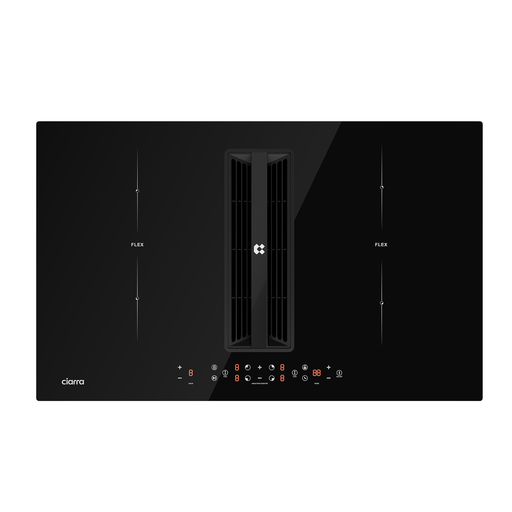
This selection features built-in induction hobs with several cooking zones. For each model, compare the shape of the flexible or extended zone with your pan’s base, and check the cut-out and electrical connection.
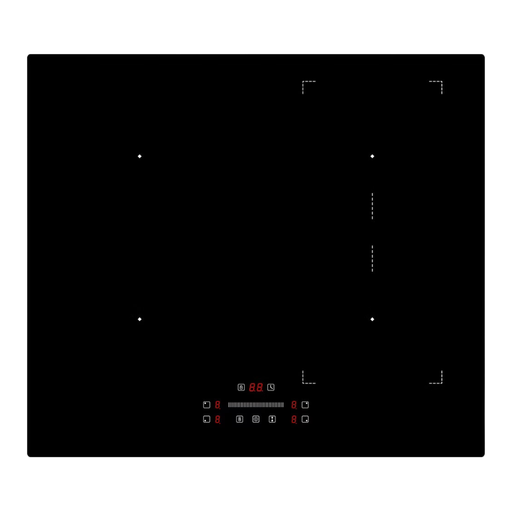 No image available
The bridge function is designed for a large, elongated pan; compare its base with the combined cooking surface.
Four cooking zones, touch controls, PowerBoost and a child lock. Supplied with a cable but no plug.
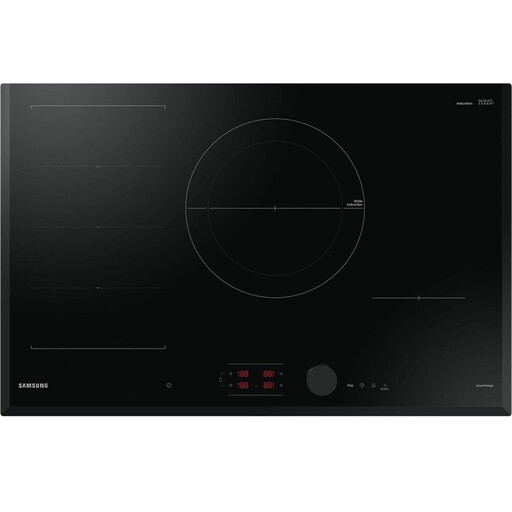 No image available
Flex Zone Plus is described as suitable for extra-wide or long pans; check that your pan’s base suits the zone.
80 cm wide with four cooking zones.
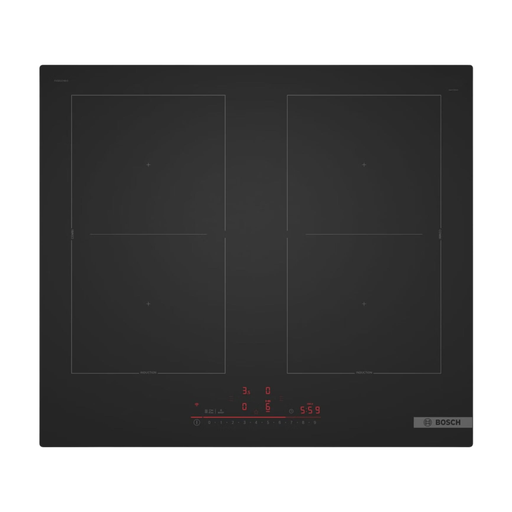 No image available
CombiZone combines two zones for large cookware; check that your pan’s base suits this layout.
60 cm wide, with four cooking zones and TouchSlider controls. The cut-out and electrical connection need to be suitable for installation.
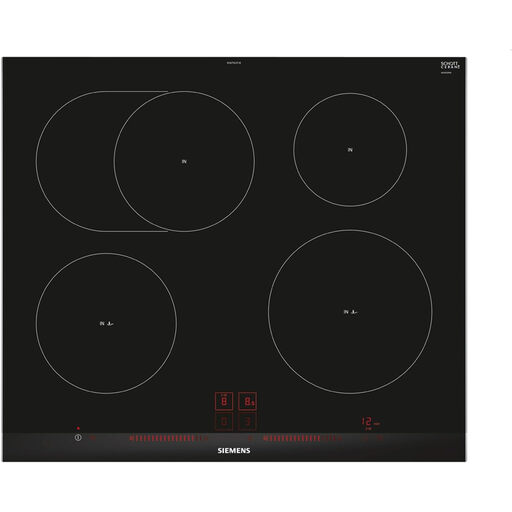 No image available
The extended oval roasting zone is designed for a pan with a suitably elongated base; don’t assume it will also suit a large round pan.
Four cooking zones, touch controls and a stated connection rating of 7400 W. The product information specifies installation by a qualified electrician.
 No image available
FlexZone may suit anyone who wants flexibility when positioning pans; check that your pan’s base and preferred layout are compatible.
83 cm wide, with four cooking zones and Boost Flex Zone. The installation kit is sold separately; the stated cut-out dimensions are 830 × 490 mm.
Check that the pan’s base is suitable for induction and compare its diameter with the cooking zone. Consumentenbond warns that a significant difference in size can lead to uneven heating. Consumentenbond and Milieu Centraal give different advice about whether the base needs to be completely flat, so follow the guidance from the pan and hob manufacturers.
Have the electrical connection and connection rating checked before installation, and follow the instructions for your chosen model. Consumentenbond recommends getting professional help to install and connect a powerful hob, and says models above 3.65 kW need a higher-capacity connection and a 5-pin Perilex socket.
Keep fish and shellfish chilled, store raw and cooked food separately, and cook raw fish and shellfish thoroughly. This is the advice from Voedingscentrum; a hob function or timer doesn’t prove that the stew has been heated or stored safely throughout.
It depends on what you’re doing: NVWA outlines the requirements for people who sell food from home or provide catering. That information doesn’t establish that the same business requirements automatically apply to a private meal where no food is sold.
According to the Dutch Government, the seller must provide a solution if a product is faulty. The Netherlands has no fixed statutory guarantee period; what you can reasonably expect from a hob depends on factors including the product, its price and the information provided. Any manufacturer’s guarantee is in addition to this.