
Vandaag of morgen in huis

Kwaliteit gegarandeerd

Welkomstaanbiedingen ontgrendelen: GRATIS bezorging | Tot 80% korting | Gratis 30 dagen JoyPlus-proefperiode
Download de app
An induction hob can be a great fit for a new kitchen, studio or flat, but the options vary considerably. A low price tells you little about the connection, available cooking area or controls. If you only look at the number of cooking zones, you could later find that the cut-out is the wrong size, the circuit is overloaded or your pans are incompatible.
These points will help households in the Netherlands compare their options more effectively.
A 60 cm induction hob is usually about 59 cm wide, but the cut-out dimensions can vary between models. So check more than just the external dimensions: make sure you also check the required width, depth and height of the cut-out. Some models need a cut-out of around 56 × 49 cm, while a compact hob may fit a smaller opening.
If you’re replacing an existing hob, it’s a good idea to measure the cut-out before you order. A rim, frame or ventilation space can also affect how the hob fits.
A hob with four zones may have a connected load of around 6,000 to 7,400 watts. That doesn’t automatically mean you can plug it into a standard socket. Some models require two phases, a Perilex connection or a fixed connection installed by a qualified professional.
A portable 2,000-watt induction hob generally works differently from a built-in model. Always check the manual, the number of phases and whether a cable or plug is included. Make sure the electrical connection is installed in accordance with the applicable Dutch regulations.
An app, flexible cooking zone or boost function can be useful, but only if you’ll actually use it. A hob with touch controls, for example, is easy to clean, but may be less responsive if the control panel is wet or greasy. A timer is most useful when it works independently for each zone and switches it off automatically.
Also look for child lock, residual heat indicator, automatic switch-off and pan detection. These are features you can verify in the product specifications or manual.
Check the diameter of the zones too. A large pan won’t work efficiently on a small zone. A flexible cooking zone or bridge function can combine several induction elements to accommodate a roasting tin, griddle or long pan.
The total power determines how much heat the hob can provide when several zones are in use at once. A hob with a boost function can temporarily increase the power to a zone, for example to heat something quickly. Make sure the electrical system and chosen connection can support it.
With an electric or ceramic hob, the surface itself heats up and continues to give off heat after it’s switched off. With induction, it’s mainly the compatible pan that heats up, although the glass can also get hot from contact with the pan. That’s why a residual heat indicator is still important.
A hob with touch controls usually has a flat surface without protruding knobs. Check the number of power settings and how you select the zones. Slider controls can be quicker to use than separate plus and minus buttons.
At a minimum, check for:
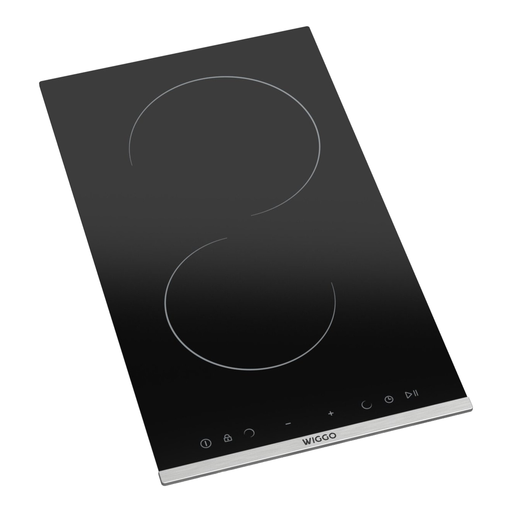
Why it suits this profile: This compact built-in induction hob has two cooking zones rated at 1,400 and 1,800 watts. It’s a good fit for a small kitchen, studio or domino-style set-up.
The dimensions and two separate zones are clearly specified. Be sure to check the cut-out and required electrical connection first.
30 cm wide, touch controls, timer, boost function and child lock.
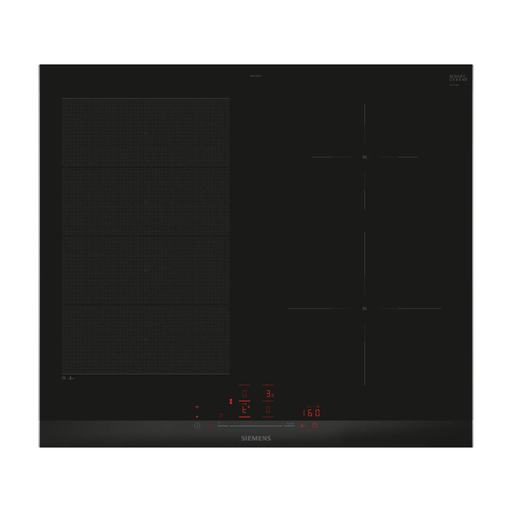
Why it suits this profile: For anyone who cooks often and values flexibility, this 60 cm model offers a flexInduction zone for pans up to 24 cm, and for griddles or roasting tins up to 40 cm, according to the product description.
The flexible zone means you’re not limited to fixed pan diameters. Check the connection and cut-out before installation.
flexInduction, touchSlider, fryingSensor Pro and Home Connect, according to the product specifications.
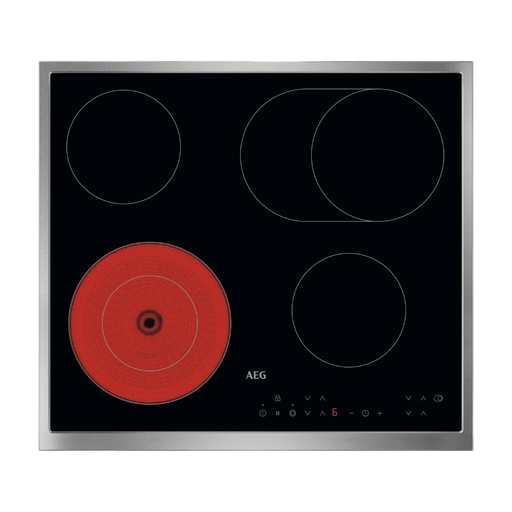
Why it suits this profile: This ceramic hob has four electric cooking zones and an expandable zone. That’s practical for households preparing several dishes at once.
The specifications state the cut-out size of 56 × 49 cm, the connected load of 7,000 watts and the requirement for a professional connection.
Four zones, variozone, 99-minute timer, pause function and child lock.

Why it suits this profile: This portable induction hob is designed for temporary or occasional use, for example in a student room, small kitchen or on an extra worktop.
The product lists its maximum power, suitable pan diameter of 12–26 cm, and protection against overheating and operation without a pan.
2,000 watts, eight power settings, seven programs, timer up to three hours and child lock.
We’ve put together a complete, up-to-date list of products that meet these strict selection criteria and the applicable European safety regulations.
Use pans with a flat, magnetic base. A simple magnet test can show whether a pan is suitable: if the magnet sticks to the base, the pan is generally compatible. Also check the recommended pan diameter for the hob.
It depends on the model. Some hobs support a single-phase connection, while others require a two-phase or Perilex connection. Check the connected load and technical manual, and have the connection installed by a qualified electrician.
Running costs depend on the power, cooking time, number of zones in use and current electricity tariff. Lower power or shorter cooking times will reduce consumption, but the exact cost varies from household to household. So don’t use the connected load as a direct estimate of daily energy consumption.
