
Making gravy for several portions
You often leave a large pan to reduce gently over a long period and want to adjust the heat without the gravy catching.


Choose a hob with a usable zone that suits the base of your largest gravy pan, and compare how gently it simmers on the lowest setting. A boost function alone doesn’t prove that gravy will reduce evenly. The Consumers’ Association assesses simmering separately on the lowest setting. If you’re preparing other dishes at the same time, also consider the number of usable zones and the electrical connection. A freestanding hob avoids the need for built-in installation, but its available power may be a limiting factor.
You often leave a large pan to reduce gently over a long period and want to adjust the heat without the gravy catching.
You prepare other parts of a meal alongside the gravy, so you need enough usable pan space and cooking zones.
You want to keep using your existing pan or kitchen, or you’re looking for a portable hob. The pan base, worktop and electrical connection all determine which type will suit you.
Suitable for: a wide, round gravy pan and a kitchen with suitable built-in space and an appropriate connection.
Bear in mind: a larger zone or boost function doesn’t guarantee even heating; also check how well the hob simmers on its lowest setting.
Suitable for: long cookware or if you want to be able to adjust the shape of the cooking zone.
Bear in mind: a flexible zone isn’t automatically better for one round gravy pan; check the dimensions and shape of the combined zone.
Suitable for: if you don’t want to cut a hole in your worktop and cooking with one pan at a time is enough.
Bear in mind: in tests by the Consumers’ Association, lower-powered portable hobs took longer to boil water than more powerful built-in models. This wasn’t a test of gravy or of every portable model.
| What to consider | What should you check? | Who is this important to? |
|---|---|---|
| Reducing gravy gently | Compare how well the hob simmers on its lowest setting. The Consumers’ Association tested this with oil, not gravy. Assess boost as a separate function. | I want to reduce a large quantity of gravy slowly over a low heat and adjust it as I go. Around 36% of consumers give the low setting top priority. |
| Space for pans | Measure the base of your largest pan and compare it with the cooking zone. The Consumers’ Association warns that an oversized pan may only heat up in the middle. | If I’m making gravy and other dishes at the same time, I want to know whether my pans will fit on the available zones. Around 29% of consumers prioritise having enough space for their pans. |
| Connection and installation | Check the recess and connection details for the exact model and compare them with your kitchen. Liander points out that the connection required depends on the type and brand of hob. | I want to know in advance whether the hob will fit my worktop and can be connected to my electrical system. Around 21% of consumers make the connection their top priority. |
| Positioning and use | Compare a freestanding hob with a built-in one in terms of available space and connection capacity. Stay nearby while cooking. | If I’d rather not cut a hole, I’m looking for a practical solution to install that suits the way I cook. Around 14% of consumers start by prioritising ease of installation and use. |
The Consumers’ Association assesses simmering separately on the lowest setting and doesn’t use boost in its comparative cooking tests.
Compare information about the lowest setting separately from rapid heating. Reducing something slowly and bringing water to the boil quickly are different tasks.
A combined zone changes the available cooking area, but an oversized round pan may still heat unevenly.
Measure the pan base and compare it with the shape and dimensions of both the individual and combined zones.
AEG SenseBoil’s published instructions specify how much water to use and don’t show that it works with thickened sauces.
Only choose this type of function for uses described in the manual for the exact model.
The connection required depends on the hob. For the ETNA KIF5580ZT, the model page and general support page give different information about the phase connection.
Check the recess and the model-specific installation instructions. Get any uncertainty about the connection checked before you buy.
The Dutch model page for the PIX631HC1E describes a 60 cm built-in hob with FlexInduction and DirectSelect.
The manufacturer describes the TI84IB1FFB as a built-in hob with four zones and a bridge function.
The EX807NVV6E is described as an 80 cm built-in hob with five zones and flexInduction.
The model page describes the KIF5580ZT as an 80 cm built-in hob with five zones and individual zone controls.
This selection includes freestanding and built-in induction hobs for gently reducing gravy and cooking with several pans at once.
 No image available
The product name lists simmering and slow cooking over a low heat as suitable uses for this freestanding hob.
The product name specifies 2 cooking zones and 5 temperature settings.
 No image available
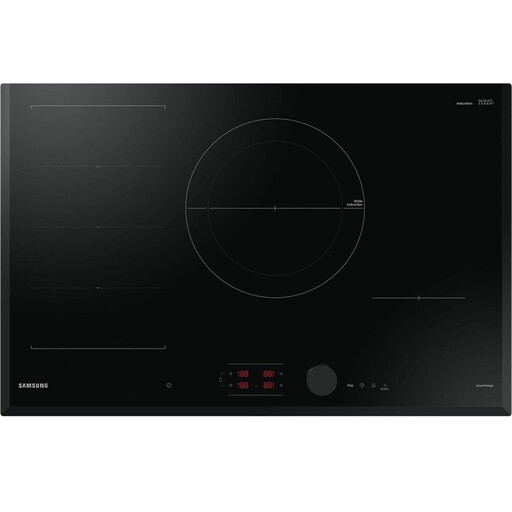
This built-in hob is worth comparing if you use several pans; check that the worktop cut-out and electrical system are suitable.
The product name specifies 80 cm and 4 cooking zones. The description mentions Flex Zone Plus for large or multiple pans and installation by an electrician.
 No image available
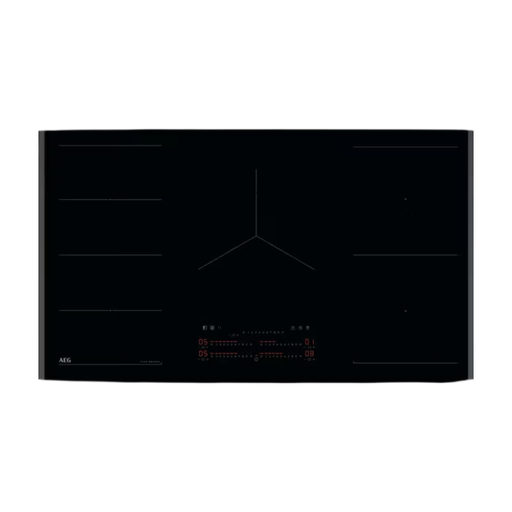
The description mentions Flex Bridge for large pans or several dishes; check that the zone shape suits your cookware.
The product name specifies 4 cooking zones and a bridge zone. The description mentions PowerSlide for switching between higher and lower heat. Check that the worktop cut-out and installation are suitable for a built-in hob.
 No image available
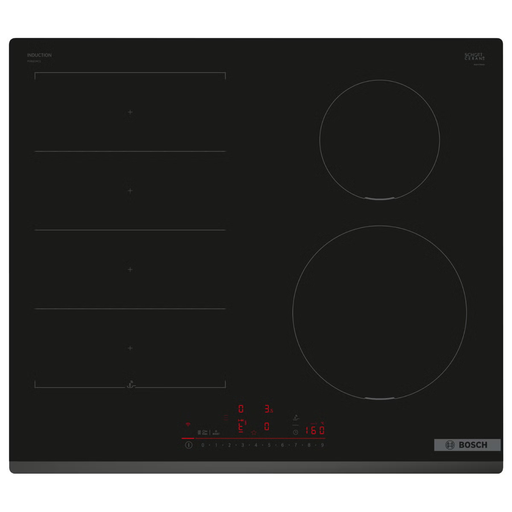
This built-in hob is worth comparing if you want to use a larger pan and adjust the heat directly while cooking.
The product name specifies 60 cm, 4 zones and DirectSelect. The description mentions FlexInduction for larger pans; check that the cut-out dimensions suit your worktop.
 No image available
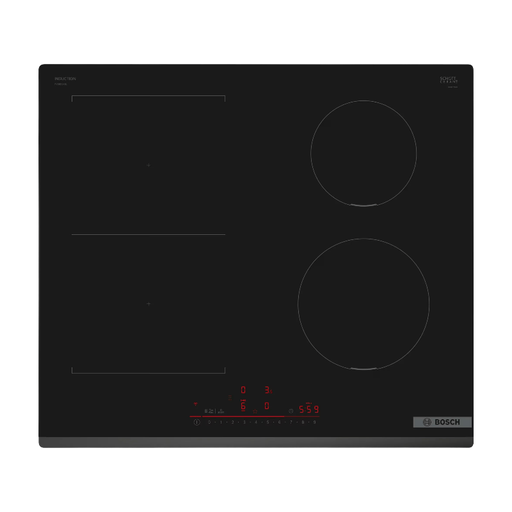
The four zones are worth considering if you want to prepare several dishes at once; also check the heat settings for reducing gravy.
The product name specifies 60 cm and TouchSlider. The description states a connection rating of 6900 W; check the installation details for the exact model.
Check that the pan base is magnetic and compare its size with the cooking zone. The Consumers’ Association warns that an oversized pan may only heat up in the middle; bear this in mind when reducing gravy.
Don’t assume it will unless you’ve checked information about the exact model and this particular use. AEG describes SenseBoil as a function for boiling water, not as an automatic control for thickened gravy. Keep an eye on the pan and adjust the heat manually if needed.
Cool leftovers quickly, store them in a sealed container and don’t leave them out of the fridge for more than 2 hours. The Netherlands Nutrition Centre recommends keeping leftovers for 2 days in the fridge or 3 months in the freezer.
According to ACM ConsuWijzer, the seller is responsible for the statutory guarantee. If a product breaks during normal use sooner than you could reasonably expect, the seller must offer an appropriate solution free of charge. A manufacturer’s guarantee doesn’t replace this right.