
Coulis demonstrator
You heat a small pan of fruit coulis and want to adjust the heat as you stir. Compare the controls and settings; a selected temperature isn’t a measured sauce temperature.


For one small pan of coulis at a temporary workstation, a portable single-zone hob is a sensible option. Focus on the controls, settings and permitted pan-base size. A higher maximum power rating doesn’t prove that a hob can regulate low heat more precisely for coulis. If you’re setting up several cooking stations, you’ll also need to consider the available electrical circuits and table space.
You heat a small pan of fruit coulis and want to adjust the heat as you stir. Compare the controls and settings; a selected temperature isn’t a measured sauce temperature.
You want participants to cook at the same time. So don’t just assess the number of zones: consider the available worktop space and the load on the electrical circuits too.
You use pans brought by different participants. Check that their bases are magnetic and fall within the size specified by the manufacturer for the hob.
A good choice if: participants use one pan at a time and you want to put the hob away after the workshop.
Bear in mind: you only have one cooking zone; also compare the pan size and controls for each model.
A good choice if: participants need to cook at the same time at separate workstations.
Bear in mind: using several hobs at once can put a strain on the available electrical circuits. You’ll also need to consider cables and supervision.
A good choice if: you have a permanent workshop set-up where several pans can be placed together.
Bear in mind: check the total connected load and the connection required. Consumentenbond notes that some freestanding models above 7000 W require a Perilex socket and a 2-phase connection.
| What to consider | What should you check? | Who should pay particular attention? |
|---|---|---|
| Heat control | Look at the controls and the available power or temperature settings. The manufacturer’s settings don’t measure the temperature of the coulis. | If I’m using a small pan, I want to be able to adjust the heat as I stir; about 33% of consumers prioritise controllability. |
| Power and set-up | Check the connected load, plug, available circuits, cable route and clear workspace before deciding how many hobs you need. | If several participants are cooking at once, I want to set up the workstations without overestimating the available power; about 27% of consumers make the set-up their top priority. |
| Pan base | Check with a magnet that the pan base is suitable for induction, and compare its diameter with the model specifications. Milieu Centraal describes the magnet test as a practical check. | When using participants’ pans, I want to know in advance whether the hob will detect the base and whether it’s within the hob’s size range; about 20% of consumers prioritise pan compatibility. |
| Shared use and aftercare | Compare the child lock, residual heat indicator, cleaning instructions and warranty. Before use, also check the applicable Dutch product requirements; the NVWA stresses that a CE marking is not, in itself, an independent safety test. | When the hob is shared, I want clear controls and good supervision, even if it has a timer; about 20% of consumers make safe use and aftercare their top priority. |
A stated wattage or number of settings doesn’t tell you how the coulis in your pan will heat on a low setting.
Compare the controls and the suitable pan size. Treat a selected temperature as an appliance setting, not a guaranteed sauce temperature.
Not every freestanding hob can be used with the connection at your workshop venue without further checks.
Before setting up, check the connected load and the connection required for the exact model.
A similar name alone doesn’t confirm that the heating technology and specifications are the same.
Compare the full model number, heating technology, connection and specifications on the product detail page.
HENDI describes the Kitchen Line 239230 as a portable single-zone hob.
Maxima presents its 09371000 single-zone hob for cookery workshops and home use.
CASO Design describes the portable Pro Menu 2100, article 2224, as a single-zone hob.
According to Inventum, the KI120T is a compact single-zone hob for an earthed Dutch socket.
The freestanding Princess 303010, article 01.303010.01.001, is a single-zone alternative with touch controls.
The selection below includes portable induction hobs for one pan and models with several cooking zones, to suit workshops with different workstation layouts.
 No image available
With two cooking zones, this model is suited to a workstation where you need to use two pans at once.
The product name specifies five temperature settings.
 No image available
This tabletop hob has one cooking zone, making it suitable for a temporary cooking station with one pan.
The product name specifies five power settings and 1000 W.
 No image available
This compact model is designed for a temporary cooking station with one pan.
Before use, check the connection and controls for the exact model.
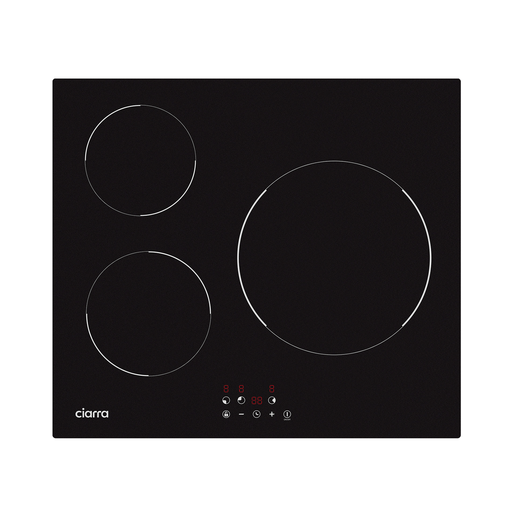 No image available
With three cooking zones, this model is suited to a set-up where several pans are used at once.
The product name specifies 5600 W, nine power settings and touch controls. Check that the connection is suitable for your workshop venue.
 No image available
This portable model is designed for a cooking station where you want to be able to move the hob after use.
The product name specifies 2000 W, ten power settings and a safety lock.
Only if the base is suitable for induction and fits the size range of the hob you’ve chosen. Milieu Centraal recommends checking whether the base is magnetic with a magnet. Compare the diameter of the base, not just the top rim.
First check the available electrical circuits and the connected load of each hob. Consumentenbond notes that models above 7000 W may require a Perilex socket and a 2-phase connection. Also allow for cable routes and clear workspace.
No. The Dutch Fire Service advises staying near the hob. Follow the instructions for positioning and ventilation too; the Inventum KI120T manual requires at least 10 cm of clear space at the sides and back.
If you buy as a consumer, you’re covered by Dutch statutory consumer rights as well as any manufacturer’s warranty. ACM ConsuWijzer explains that the seller is responsible for providing an appropriate solution if, under normal use, the product doesn’t meet what you could reasonably expect. There isn’t automatically a fixed two-year time limit.
If you sell food or drink to customers as a business, you must follow the NVWA’s rules for food-safe working. These include having a food safety plan or hygiene code based on HACCP. This doesn’t necessarily apply to every private workshop. Also check the applicable product requirements and mandatory CE marking for electrical equipment sold in the Netherlands; a CE marking is not, in itself, an independent safety test.