
Cooking with one pan of mash
You cook the potatoes and kale together and mainly need a zone that suits your pan. The Netherlands Nutrition Centre describes this as a one-pan dish.


If you’re cooking kale and potatoes together in one suitable pan, a single cooking zone may be enough. If you also want to prepare a side dish at the same time, you’ll benefit from having several usable zones. Before buying, check that your pans are suitable for the zones and that your existing electrical connection is compatible, especially with a built-in hob.
You cook the potatoes and kale together and mainly need a zone that suits your pan. The Netherlands Nutrition Centre describes this as a one-pan dish.
You want to fry onions or heat milk alongside your pan of mash, for example, so you need room for more than one pan.
You’re considering a fixed built-in hob and want to check in advance that the cut-out and electrical connection are suitable for your chosen model.
Choose this option if: you mainly cook potatoes and kale together in one pan and want to be able to put the hob away. Inventum specifies pans measuring 15–20 cm for the KI120T.
Bear in mind: to use a second pan at the same time, you’ll need another heat source or to cook in a separate session.
Choose this option if: you want to use a second pan alongside your pan of mash without installing a built-in hob. Inventum lists four zones and automatic power distribution for the VKI6010ZWA.
Bear in mind: having several zones doesn’t mean each one can run at full power at the same time; check how the specific model manages power.
Choose this option if: you want a permanent cooking space with several zones and can adapt your kitchen to the model you’ve chosen. ETNA specifies a two-phase connection for the KI1160ZT.
Bear in mind: the cut-out and electrical installation must be suitable. The fact that an appliance has a power cable doesn’t automatically mean it will work with your existing connection.
| What to consider | What should you check? | Who should pay attention to this? |
|---|---|---|
| Electrical connection | Check the connection rating and installation instructions for the specific model. For a built-in hob, also check the circuit, socket and housing dimensions. | If I’m considering a built-in hob, I want to know first whether my kitchen has the required connection. This is the deciding factor for around 33% of consumers. |
| Cooking at the same time | Compare the position of the zones, the space available for pans and the total connected load. | If I want to use a second pan while cooking, I consider both the usable space and the power the zones can share. Around 27% of consumers prioritise being able to cook at the same time. |
| Pan size and base | Use a magnet to check that the pan base is magnetic, then compare its diameter with the model specifications. | If I want to keep using my existing pan for kale and potato mash, I check that its base is suitable and fits the zone. This is the main consideration for around 20% of consumers. |
| Space | Measure the available worktop and storage space. For a built-in hob, check the required cut-out dimensions. | If I want to keep my worktop clear after cooking, I’ll consider a freestanding hob that I can put away. For a built-in hob, I’ll measure the available space. This is the most important consideration for around 20% of consumers. |
Inventum says that the VKI6010ZWA automatically distributes power across the zones in use. This may be a factor if you want to prepare mash and a side dish at the same time.
Check the total connected load and how the specific model distributes power between zones in use at the same time.
ETNA specifies a particular housing width for the KI1160ZT and says it must be connected to two phases. So, a hob that looks like it will fit on your worktop won’t necessarily fit the cut-out or electrical installation.
Measure the housing and have a professional check that your available connection meets the installation requirements for the model you’ve chosen.
Induction requires a magnetic pan base. Inventum also specifies a pan size of 15–20 cm for the KI120T.
Test the base with a magnet and compare your pan’s diameter with the specifications for the specific model.
These examples cover different types of hob and model specifications. The features apply to the product lines mentioned and aren’t recommendations for an entire brand.
Inventum offers examples of both a freestanding single-zone hob and a freestanding four-zone model.
The KI1160ZT is an example of a fixed, four-zone built-in hob.
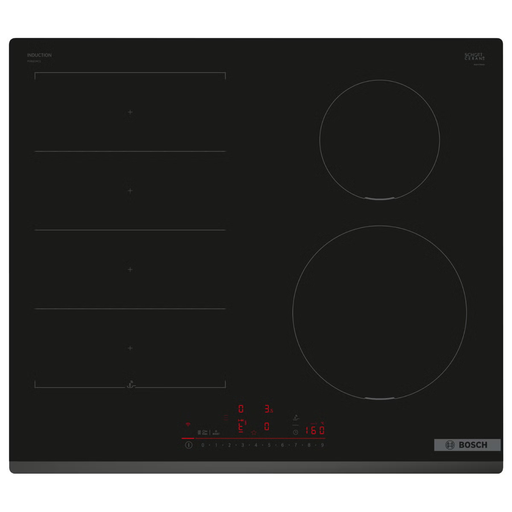
The PIE661BB5E is an example of a four-zone built-in hob for a housing 56 cm wide.
This selection includes freestanding hobs with one or more zones, as well as built-in models for cooking kale and potato mash on its own or alongside a second pan.
 No image available
A built-in option to consider if you want to use several pans in a permanent cooking space.
The specified cut-out is 560 × 490–500 mm and the connected load is 7.4 kW. Check that the housing and electrical connection are suitable for your kitchen.
 No image available
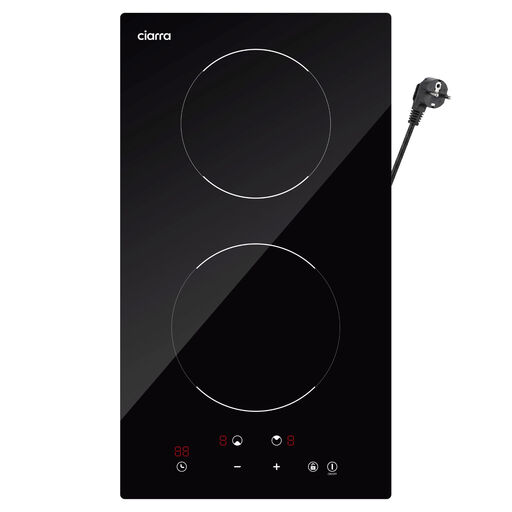
An option to consider if you want to use your pan of mash and a second pan at the same time.
The product name specifies 3,000 W and nine power settings. The specified cut-out is 270 × 490 mm; the product information says installation must be carried out by a qualified electrician. The pan size ranges differ by zone: 120–260 mm and 120–200 mm.
 No image available
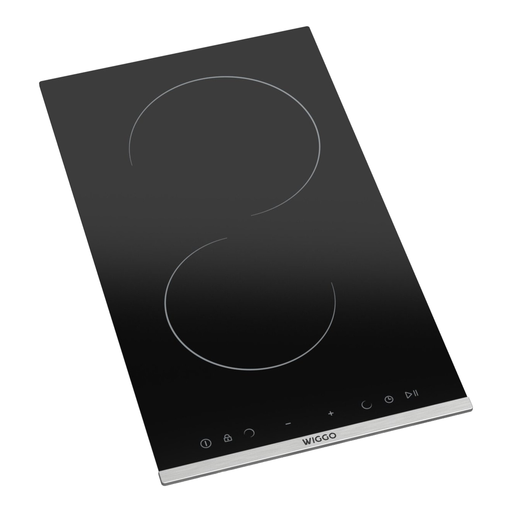
A compact built-in option to consider if you want a permanent cooking space with room for a second pan.
The product name specifies a single-phase Plug & Play version. Check the installation instructions and make sure your existing connection is suitable.
 No image available
A freestanding hob to consider if you cook potatoes and kale together in one pan.
The product name specifies 2,000 W and a zone for pans up to 26 cm in diameter. The product information gives a pan size range of 12–26 cm; use a flat, magnetic pan base. To use a second pan at the same time, you’ll need another heat source or to cook in a separate session.
 No image available
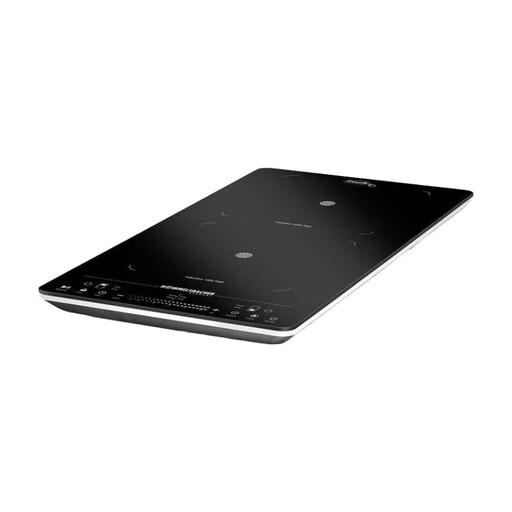
A portable option to consider if you want to use a second pan alongside your pan of mash.
Check that the flat, magnetic pan bases you want to use fall within the specified diameter range of 120–260 mm.
Yes. The Netherlands Nutrition Centre describes a recipe in which potatoes and kale cook together in one pan for 20–25 minutes. To use a second pan, for example for onions, you’ll also need another cooking zone or to cook in a separate session.
No, it depends on the model. Inventum specifies a standard earthed plug for the KI120T, while ETNA requires a two-phase connection for the KI1160ZT. Follow the installation instructions for your chosen model and check your existing connection.
The Netherlands Food and Consumer Product Safety Authority states that CE marking is compulsory for electrical products, including electrical kitchen appliances. Independent testing is not compulsory for this product group. Check the marking on the specific appliance. A CE mark on its own is not an independent comparative test.