
Careful curd-maker
You want to heat the egg mixture gently and adjust the heat as you stir. Rutger Bakt recommends using a low heat and stirring continuously; the Consumers’ Association tests simmering on the lowest setting as a separate measure.


For a single pan of lemon curd, a freestanding single-zone hob may be enough. If you’re cooking other dishes at the same time, extra cooking zones are more practical, but remember to check the space and connection requirements too. Don’t choose based on boost power or a sensor alone: consider how well the hob controls low heat, your pan size and the electrical connection.
You want to heat the egg mixture gently and adjust the heat as you stir. Rutger Bakt recommends using a low heat and stirring continuously; the Consumers’ Association tests simmering on the lowest setting as a separate measure.
You’re looking for extra cooking space without cutting a hole in your worktop. A freestanding hob may be a good fit, but check the connection requirements and make sure you have enough worktop space. The Consumers’ Association points out that some freestanding models require a Perilex connection and a two-phase electrical connection.
You want to make the curd while cooking other parts of dinner. Look at the number of usable zones and the power available when they’re used at the same time, not just the high boost setting.
Choose this if: you’re making one pan of curd and don’t need to use another pan on the hob. Inventum lists the KI120T as having one zone and being suitable for pans measuring 15–20 cm.
Bear in mind: there’s only one pan position. A freestanding hob doesn’t need a cut-out, but connection requirements vary by model.
Choose this if: you want to use a second pan alongside the curd without installing a built-in hob. Inventum says the VKI3020ZWA has two zones side by side.
Bear in mind: check that your pans will fit side by side and that your connection can support using both zones at the same time.
Choose this if: you use several pans during dinner and your kitchen is suitable for a built-in hob, or you’re having alterations made. Bosch lists the PIE631HC1M as having four zones and a connected load of 7400 W.
Bear in mind: check the cut-out dimensions and electrical connection; installation may require alterations. A sensor function alone doesn’t prove that the hob will automatically keep lemon curd at the temperature you want.
| What to consider | What should you check? | Who is this important for? |
|---|---|---|
| Heat control | Look for test results on simmering at the lowest setting and check whether you can adjust the setting easily. Rutger Bakt recommends using a low heat and stirring continuously; the Consumers’ Association tests simmering on the lowest setting separately. | When I make curd, I want to be able to adjust the heat as I stir. Around 36% of consumers say control over low heat is their main reason for buying. |
| Positioning and connection | Compare the connection and connected load of the exact model with what’s available in your kitchen. The Consumers’ Association says some high-powered freestanding hobs require a Perilex socket and a two-phase connection. | If I don’t want a cut-out in my worktop, or want my connection to determine what’s suitable, this is what I pay most attention to. Around 29% of consumers say positioning or connection is their main reason for buying. |
| Cooking at the same time | Count the pans you really need to use on the hob at once, then consider the available space and power when cooking simultaneously. | If I use several pans during dinner, I want enough usable pan positions. Around 21% of consumers say being able to cook at the same time is their main reason for buying. |
| Pan compatibility | Use a magnet to check whether the pan base is magnetic, and compare its diameter with the stated pan size range for your chosen zone. Milieu Centraal describes the magnet test as a way to check whether a pan base is magnetic. | If I want to keep using my existing saucepan, I check that its base is suitable and fits the zone. Around 14% of consumers say pan compatibility is their main reason for buying. |
A high peak power rating doesn’t tell you how evenly a hob heats on its lowest setting. For lemon curd, Rutger Bakt recommends using a low heat and stirring continuously; the Consumers’ Association tests simmering separately.
Where possible, look for model-specific results on low-temperature stability, and stay by the pan while heating.
The Consumers’ Association says some high-powered freestanding hobs require a Perilex socket and a two-phase connection.
Check the manual and connected load for the exact model before assuming a standard earthed connection will be suitable. Changes to your electrical installation may involve extra work and costs.
A different full model code may mean the features or installation requirements vary. So don’t compare products based only on the brand or the first part of the model name.
Check the full model code, relevant specifications and included parts before treating a product as identical.
The Inventum models reviewed offer a freestanding cooking option with one or two zones.
The PIE631HC1M reviewed is a multi-zone built-in hob for those who use more pans during dinner.
The EX87BNVV6E reviewed is a wider built-in option for those who need five zones and have enough kitchen space.
These product picks focus on multi-zone built-in induction hobs for those who use different pans during dinner.
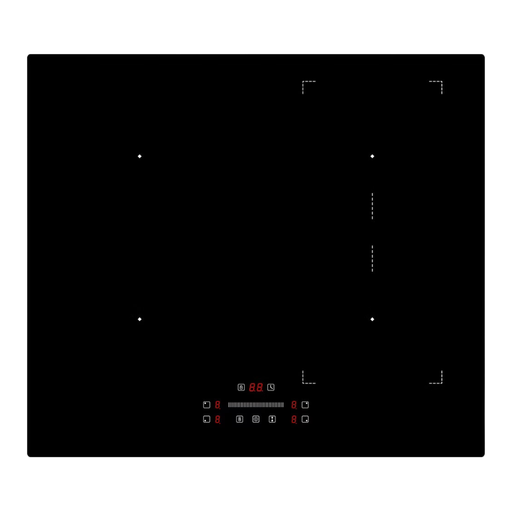 Image unavailable
Suitable if you want to adjust the setting as you stir while using other pans as well.
The product description lists nine settings, slider controls and four cooking zones. The cable is supplied without a plug, so check the connection before installation.
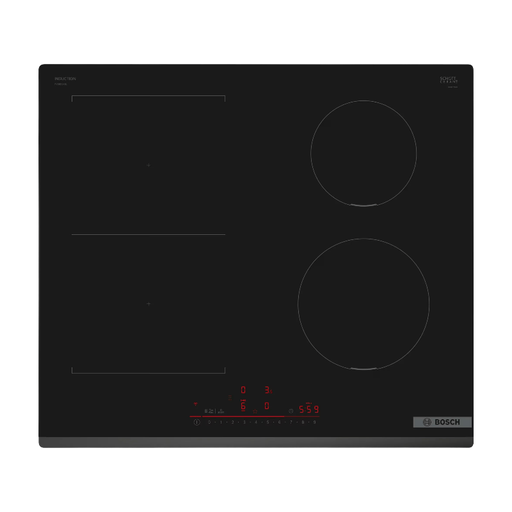 Image unavailable
Worth considering if you want several pan positions and can check the installation space in advance.
The product name specifies a width of 60 cm and four zones, with TouchSlider controls and ReStart. Check that your existing cut-out matches the installation dimensions.
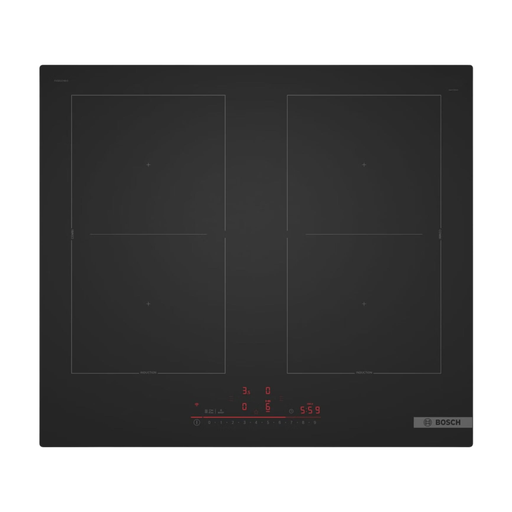 Image unavailable
Could suit a dinner where you use several pans and want the option to combine zones.
The description lists four zones, a combinable zone, a timer and 17 power settings. The stated connected load is 7,4 kW; check that your kitchen’s electrical installation is suitable.
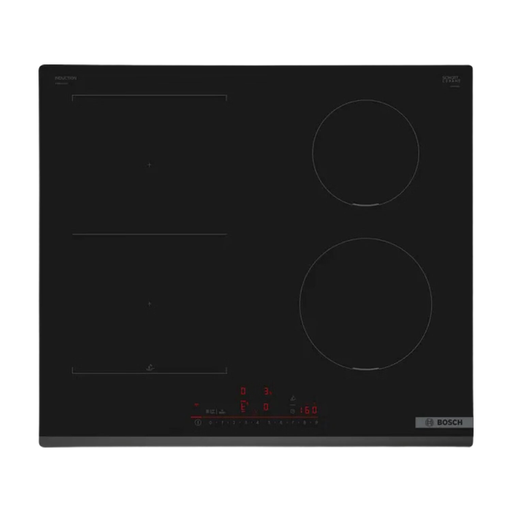 Image unavailable
An option if you want to use several pans at once and are looking for a built-in hob.
The description lists four zones, a touch control panel, a timer and automatic pan detection. The hob requires fixed wiring and installation by a qualified electrician.
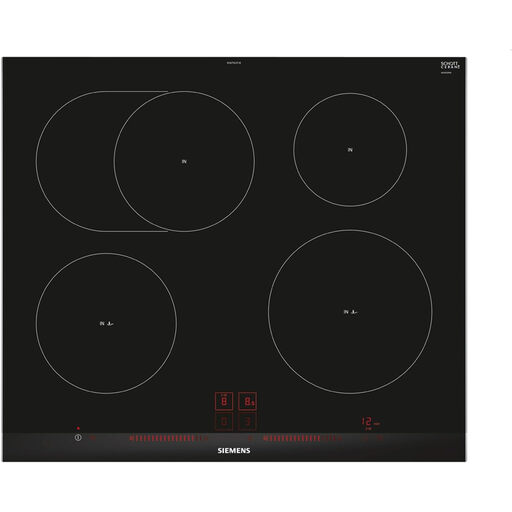 Image unavailable
Could suit a dinner where you’re preparing several dishes at once and want to adjust the controls while cooking.
The product information lists four zones, dual lightSlider controls, a timer with automatic shut-off and a frying sensor. The sensor function hasn’t been shown to control lemon curd automatically; check the connection and installation requirements.
No. In Rutger Bakt’s recipe, the curd is heated over a low heat and not brought to the boil. The author gives about 82 °C as the cooking temperature for that recipe; a hob setting doesn’t guarantee that the curd itself will reach this temperature. Rutger Bakt says that using a bain-marie is a slower alternative, with less risk of overheating.
Check whether the base has a magnetic layer, for example by using a magnet, and compare its diameter with the stated pan size range for your chosen zone. Milieu Centraal describes the magnet test as a way to check whether a pan base is magnetic.
No, this doesn’t apply to every model. The Consumers’ Association lists some high-powered freestanding hobs that need a Perilex socket and a two-phase connection; follow the connection requirements for the exact model.
Keep the prepared curd covered and chilled. The Netherlands Nutrition Centre advises putting leftovers in the fridge within two hours. If you’re serving a pregnant guest, the Netherlands Nutrition Centre advises eating homemade dishes containing raw egg only if the egg has been thoroughly heated. A hob setting alone doesn’t confirm how hot the curd itself has become.
According to the Netherlands Food and Consumer Product Safety Authority, electrical equipment covered by the Commodities Act Decree on Electrical Equipment and with a rated AC voltage of 50 V to 1000 V must carry a CE mark. The mark alone doesn’t prove that an individual item on sale meets all the requirements. The product must also meet the standard you could reasonably expect during normal use. ACM ConsuWijzer says that if a product develops a fault too soon, the seller must put it right free of charge, for example by repairing or replacing it, or giving you your money back.