For custard, start by choosing a hob with a zone that suits your pan and lets you keep the heat low. Keep stirring as the custard thickens. If you’re preparing the rest of the meal at the same time, compare the usable zones and the power available when they’re all in use. A hob with a standard plug may distribute its power, while a built-in hob also requires you to check the cut-out and electrical connection.
Which hob is right for you?
If you mainly make custard
You’ll want to heat the milk and thickener gently, keep stirring as the mixture thickens and use a pan that suits the cooking zone. The Voedingscentrum recommends continuing to stir during preparation. The Consumentenbond assesses simmering, among other things, by how consistently the temperature stays low.
If you cook other dishes too
You’ll want to use several pans alongside the custard, so cooking zones that suit your pans are useful. Also check the power available when several zones are on at once; a single-phase hob may distribute its power between them.
If you want to use your existing connection
You’ll want to know whether the hob will fit your kitchen and electrical connection before you choose. A freestanding hob with a standard plug and a powerful built-in hob have different installation and connection requirements.
What should you consider when choosing?
Portable single-zone hob
Choose this option if: you mainly make custard in one pan or need an extra cooking spot.
Trade-off: one zone won’t replace the cooking space you need for a full meal with several pans.
Four zones with a standard plug
Choose this option if: you want to use several pans without installing a built-in hob, provided your electrical circuit is suitable.
Trade-off: when cooking on several zones at once, the available power may be shared between them.
Built-in hob with several zones
Choose this option if: the hob will be your permanent cooking spot and the cut-out, pans and connection are suitable for the model.
Trade-off: you may need to check the cut-out and connection in advance. Ask a qualified professional to assess any installation work required.
For custard, the pan matters just as much as the number of heat settings. The Consumentenbond recommends using a pan with a base roughly the same size as the cooking zone. The Voedingscentrum recommends stirring continuously as the mixture thickens.
| What to consider |
What to look for |
Who should pay particular attention? |
| Gentle thickening |
Where possible, look for a simmering test of the exact model; don’t just focus on the number of heat settings. |
When I make custard, I want to keep the heat low and watch the pan. That’s why around 36% of consumers make gentle thickening their top priority. |
| Cooking several dishes at once |
Compare the layout of the zones with your pans and check the power available when they’re all in use. |
When I’m preparing other dishes too, I want space for several pans and to know how much power will be available. Around 29% of consumers prioritise cooking several dishes at once. |
| Connection and installation |
Check the connection, electrical circuit and any required cut-out dimensions; ask a qualified professional for advice if needed. |
I want to know in advance whether the hob will fit my kitchen and work with my connection. For around 21% of consumers, connection and installation are their main concern. |
| Your existing pan |
Check that the pan is suitable for induction and compare the base size with the cooking zone. |
If I want to keep using my existing custard pan, it needs to work on the hob and suit the zone. That’s why around 14% of consumers prioritise keeping their existing pan. |
Common buying mistakes
-
Assuming lots of heat settings mean it will simmer evenly
The number of settings doesn’t tell you how consistently a particular model maintains a low temperature. In its simmering test, the Consumentenbond measures how low and consistent the temperature stays over 30 minutes.
Where possible, look for an independent simmering test of the exact model, and keep an eye on the custard and stir it as it thickens.
-
Assuming four zones with a standard plug means four zones at full power
With a single-phase hob, power may be shared between the zones when you use several pans at once.
Check how many pans you want to heat at the same time and what the model specifications say about using several zones together.
-
Focusing only on the hob when choosing a built-in model
The cut-out and electrical connection also need to be suitable. More powerful built-in models may need to be installed by a qualified professional.
Check the model’s dimensions and connection requirements. If needed, ask an installer what work will be required before you choose.
Depending on your kitchen, adapting the worktop or electrical connection may involve extra work.
-
Assuming any existing pan will work
The pan must be suitable for induction and its base needs to suit the cooking zone you want to use.
Check the base of your pan and compare its size with the stated zone dimensions. If it doesn’t fit, you may need a different pan.
Brands and models to consider
Inventum
The KI120T is a portable single-zone hob, while the VKI6010ZIL is a freestanding four-zone hob for a different type of use.
- Inventum lists one zone for pans with a diameter of 15–20 cm for the KI120T. For the VKI6010ZIL, Inventum specifies a standard plug and automatic power distribution across the zones in use.
- The specifications don’t include an independent test of how consistently either model heats custard at a low temperature.
ETNA
The built-in KIF6472ZT is an option to consider if you want to compare zone controls, linked zones and automatic programmes.
- ETNA lists six automatic programmes for the KIF6472ZT, including a simmer programme, and a connection that can be configured for 1 or 2 phases.
- The simmer programme is a manufacturer specification, not an independent test of custard preparation.
Bosch
The built-in PIE661BB5E is a 60 cm four-zone hob to consider if you’re comparing options for a permanent cooking spot.
- Bosch lists Touch Select controls and a switch-off timer for this model.
- The specified cut-out width of 56 cm applies to the PIE661BB5E. Check the cut-out and connection requirements for each model individually.
Siemens
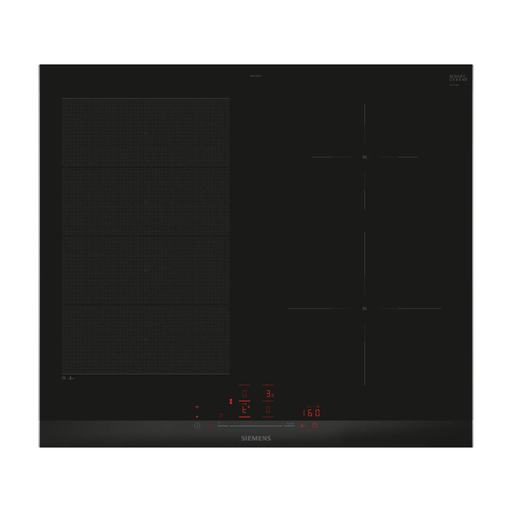
The EX651HEC1M is a built-in four-zone option to consider if you want to compare flexible pan placement and slider controls.
- Siemens lists flexInduction and fryingSensor for the EX651HEC1M.
- A frying sensor isn’t, on its own, proof of automatic temperature control while custard thickens.
Joybuy products
These Joybuy products are built-in induction hobs with several zones, for anyone who wants to use different pans when cooking a family meal. Check each model’s pan layout, connection and installation requirements.
 No image available
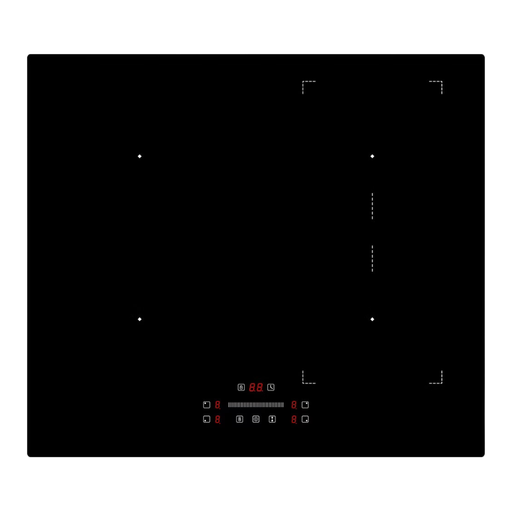
Exquisit EKI624-30 induction hob
For anyone who wants to use several pans on a built-in hob; the description specifies professional installation.
Four cooking zones, touch controls, PowerBoost and a safety lock. Supplied with a cable but no plug.
View at Joybuy
 No image available
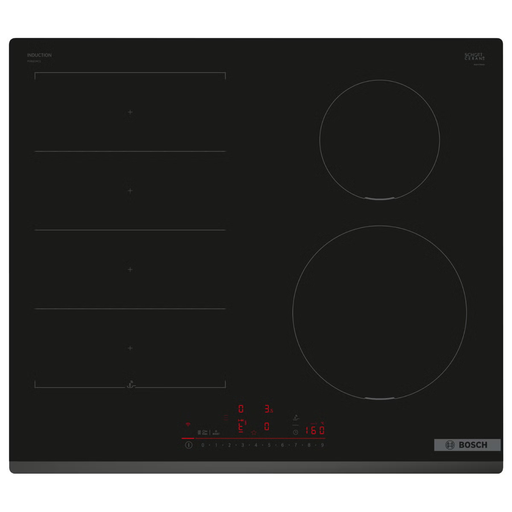
Bosch PIX631HC1E induction hob
For anyone considering a built-in hob with four zones and flexible pan placement; check the connection and cut-out for your kitchen.
60 cm wide, with four cooking zones and DirectSelect controls. The product description also mentions FlexInduction and PowerBoost.
View at Joybuy
 No image available
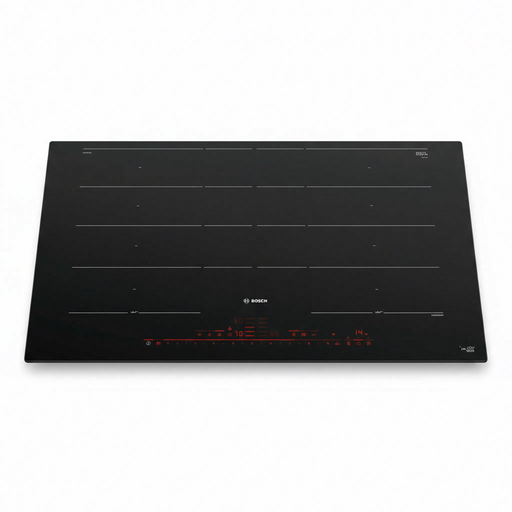
Bosch PXY801DW4E Flex Induction hob
For anyone considering an 80 cm built-in hob with a flexible cooking zone; check that the available cut-out suits the model.
The product name specifies Flex Induction and a width of 80 cm. The product description mentions a flexible zone for different pans.
View at Joybuy
 No image available
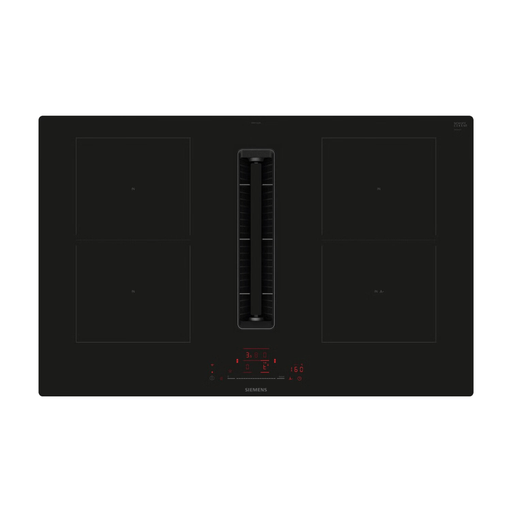
Siemens iQ500 ED811HQ26E
For anyone comparing permanent built-in hobs with four zones; the description specifies professional installation.
Black, 80 cm wide and with four zones. The product description refers to a built-in hob.
View at Joybuy
 No image available
Siemens EX675HEC1E iQ700
For anyone comparing built-in hobs with a flexible zone; the product description specifies installation by a qualified professional.
The product name specifies 60-Inch and a bevelled edge. The description mentions touchSlider, flexInduction and fryingSensor Pro.
View at Joybuy
Frequently asked questions
How do you thicken custard on an induction hob?
Keep stirring the custard and turn off the heat as soon as it has thickened. The Voedingscentrum describes bringing milk to the boil, then adding a mixture of cornflour and cold milk. Adjust the heat setting to suit your pan and recipe.
Why does the heat fluctuate on a low setting?
According to ETNA, many induction hobs regulate low settings by briefly switching the zone on and off. You may notice this more with a light pan containing only a small amount. ETNA recommends considering a pan with a thick base.
Which pans are suitable for an induction hob?
Use a pan that’s suitable for induction and has a base roughly the same size as the cooking zone. Compare the pan’s base with the model specifications before choosing a hob.
Does an induction hob always need a higher-capacity electrical connection?
Switching to induction doesn’t always require a higher-capacity connection. The Rijksoverheid recommends checking your existing connection and asking an installer whether it needs to be upgraded. For a powerful built-in hob, the Consumentenbond recommends professional installation.
Does induction automatically make custard with egg safe to eat?
No. A hob’s features don’t prove that a dish containing raw egg has been heated sufficiently. The Voedingscentrum recommends heating dishes containing raw egg thoroughly.


