
Cooking with a large curry pan
You want to know whether your pan’s base will fit on a suitable cooking zone and whether there’ll still be room for other dishes. The Consumentenbond recommends comparing the base of your pan with the cooking zone.


Start by checking the base diameter of your curry pan, which pans need to be on the hob at the same time, and what type of connection your kitchen can support. A spacious built-in hob may accommodate several pans, while a freestanding model may not need to be installed. However, when you cook several dishes at once, it may distribute the available power between them, and you’ll need enough room for your pans.
You want to know whether your pan’s base will fit on a suitable cooking zone and whether there’ll still be room for other dishes. The Consumentenbond recommends comparing the base of your pan with the cooking zone.
You use several pans at once. So, don’t just look at the number of zones: check how much room there is for your pans and how much power is available when they’re all in use.
You’re looking for a freestanding cooking option and want to check that your socket, electrical circuit, worktop and pans are all suitable.
A built-in hob, a freestanding four-zone hob and a compact extra cooking zone each suit different kitchen needs. First, choose the option that works for your meal and kitchen. Then check your pan size, available space and electrical connection.
Best for: a large curry pan and other pans, provided the cooking zone, cut-out and connection are suitable for your kitchen.
Bear in mind: a flex zone won’t necessarily suit every round pan; you may also need to modify the worktop or electrical installation.
Best for: cooking without a built-in hob, provided you have a suitable earthed socket and enough worktop space.
Bear in mind: four zones don’t mean you can cook with several pans on the highest setting at once; the available power may be shared between them.
Best for: cooking a side dish in an extra spot, if your existing hob can already accommodate your large curry pan.
Bear in mind: this won’t help if your curry pan itself doesn’t fit a suitable zone; also check the pan size and electrical circuit.
| What to consider | What should you check? | Who is this important for? |
|---|---|---|
| A suitable zone for your curry pan | Measure the base of your pan and compare it with the diameter of a round zone or the usable dimensions of a flex zone. | If I’m making a large batch of curry, I want to know whether the pan base will fit the intended zone. Around 36% of consumers say that a suitable fit for their curry pan is their top priority. |
| Cooking several dishes at once | Check the position of the zones and how power is distributed when several pans are in use. | When I’m making curry and side dishes at the same time, I look for enough space and power for all my pans. Around 29% of consumers prioritise cooking several dishes at once. |
| Kitchen and connection | For a built-in hob, compare the cut-out with the model’s specified dimensions. For a plug-in hob, check the earthed socket and the electrical circuit’s capacity. | If I don’t want to modify my kitchen, I want to know whether the hob will fit the space and connection I already have. Around 21% of consumers say that their existing connection is their main consideration. |
| Extra cooking space | Check that the pan for your side dish will fit the extra zone, and that you have enough worktop space and capacity on your electrical circuit. | If my current hob can already accommodate my curry pan, I’m mainly looking for somewhere to cook a side dish. Around 14% of consumers put an extra cooking zone at the top of their list. |
The overall width of the hob doesn’t tell you whether the base of your curry pan will fit a suitable cooking zone. What matters is the size of the pan base and the dimensions of the zone.
Measure the base of your own pan and compare it with a specific round zone or the usable dimensions of a flex zone.
An unsuitable pan or zone could mean you need different cookware.
On a freestanding hob, power may be shared between the zones in use. The Consumentenbond notes that cooking on high settings at the same time can be a consideration with single-phase hobs.
Decide which pans need to cook at the same time, then check how the hob distributes power and what your electrical circuit can handle.
Built-in dimensions and installation requirements vary by model. Your existing electrical installation also determines which type of connection needs to be assessed.
Compare the specified dimensions with your cut-out, and have the required connection assessed in line with the model’s installation instructions.
A built-in hob may require changes to your worktop or electrical installation; what’s needed depends on your kitchen.
A manufacturer’s or retailer’s warranty doesn’t replace your statutory rights with the retailer.
Compare any extra cover with your rights and keep your proof of purchase. ACM ConsuWijzer explains that statutory guarantees apply alongside a retailer’s warranty.
Paid-for extra cover may overlap with rights you already have if a product is faulty.
If you’re considering a spacious built-in hob with a large round zone, Siemens lists five zones and an expandable 32 cm zone for the EX977NVV6E.
If you’re considering five cooking zones on an 80 cm built-in hob, Bosch specifies this combination for the PXV875DC1E.
If you’re considering a built-in hob with four zones and a connectable zone, AEG lists Flex Bridge for the NII84F00UB.
For a freestanding cooking option, Inventum describes both the four-zone VKI6010ZIL and the compact two-zone VKI3020ZWA as plug-in models.
If you’re comparing extra pan space and connectable zones, ETNA specifies an 80 cm built-in width and flexible cooking zones for the KIF6480ZT.
This Joybuy selection features built-in hobs with four cooking zones. Some models list a flexible zone for larger pans or several pans; always check the pan size, built-in dimensions and connection for your kitchen.
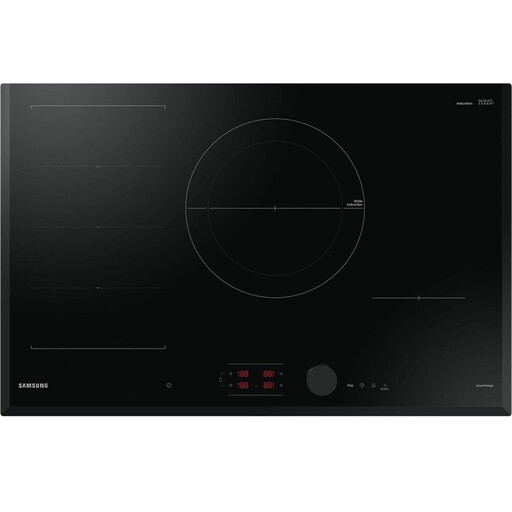 No image available
Flex Zone Plus is designed for large pans or several pans.
4 cooking zones; Flex Zone Plus: 210 × 380 mm.
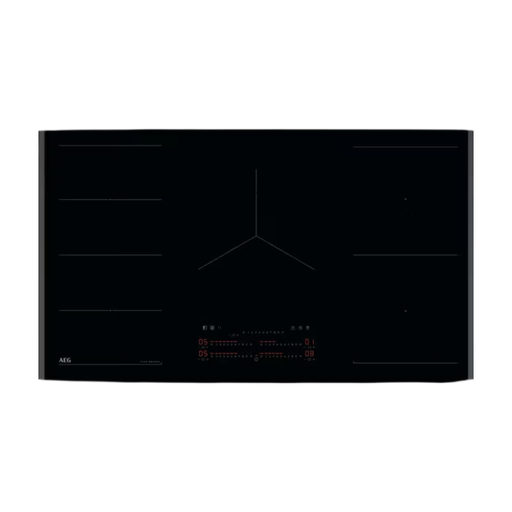 No image available
Flex Bridge can connect cooking zones for use with large pans or several dishes.
4 cooking zones; Flex Bridge.
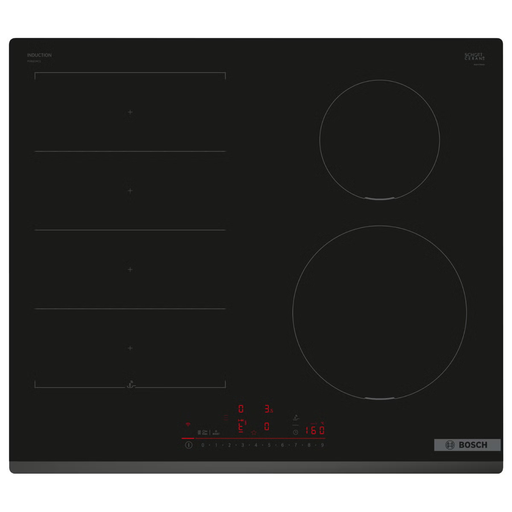 No image available
FlexInduction is described as a larger cooking zone for large pans.
60 cm; 4 cooking zones; DirectSelect controls.
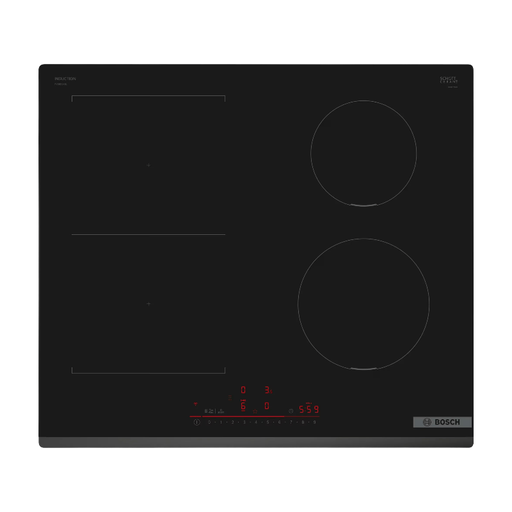 No image available
With four cooking zones, you can compare the space for several pans with the layout of your own kitchen.
60 cm; 4 cooking zones; TouchSlider controls.
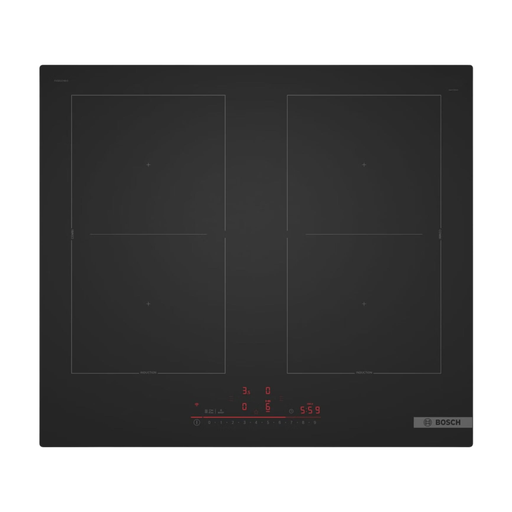 No image available
CombiZone is designed to combine zones for larger pans.
60 cm; 4 cooking zones; FlexInduction zone.
Check whether the base is magnetic, for example by testing it with a magnet, and compare its size with the intended cooking zone. A large rim tells you little about the size of the base that will sit on the hob.
Don’t assume so. According to Inventum, the power on the freestanding VKI6010ZIL is automatically shared between the zones in use. The Consumentenbond notes that cooking on high settings at the same time can be a consideration with single-phase hobs. Also check what your electrical circuit can supply at the same time.
No, not automatically. On 30 June 2026, the Dutch government said that many households can cook electrically without a higher-capacity connection and advised them to have their existing connection checked and consult an electrician. This doesn’t mean every hob will suit every kitchen’s electrical installation.
Milieu Centraal recommends cleaning it with a cloth and washing-up liquid. Remove the pan first and check for any residual-heat indicator: the absence of a flame doesn’t mean the surface has cooled down straight away.
No. According to ACM ConsuWijzer, if you use a product normally, you’re entitled to a product that meets what you could reasonably expect. If a product is faulty, the retailer is responsible for providing an appropriate solution. The duration of your rights isn’t simply the same for every hob as the stated manufacturer’s warranty period.