
Chutney cook sharing a worktop
You usually cook in one pan and want to clear the cooking area after use. A portable single-zone hob could suit your space, as long as your pan is compatible.


If you usually cook chutney in one pan and want to clear the shared worktop afterwards, start by looking at a portable single-zone hob with a cooking zone that suits the base of your pan. Two zones are most useful if you regularly prepare something else at the same time. Check the available space and electrical connection too, as having two zones does not automatically mean you can always use both at full power.
You usually cook in one pan and want to clear the cooking area after use. A portable single-zone hob could suit your space, as long as your pan is compatible.
You want to prepare something else alongside the chutney. Two cooking zones give you a second place to cook, but consider whether you have enough worktop space and electrical capacity.
You want to keep using your current pan. Check that its base is magnetic and that its diameter falls within the range supported by the hob you choose.
First decide whether you’ll use one pan or regularly need a second one at the same time. Then check the pan base, controls and connection.
| What to consider | What should you check? | Who should pay attention to this? |
|---|---|---|
| Electrical connection and simultaneous power | Compare the rated connection and plug type with the available circuit; check the instructions for using multiple zones at once. | If I cook while other people are using appliances, I want to know whether the circuit can handle the load. Around 25% of consumers prioritise the connection and simultaneous load. |
| Adjusting the heat as the chutney reduces | Check the settings and controls available on the exact model; keep an eye on the chutney and stir it while it cooks. | If I want to adjust the heat while stirring, I look for controls that are practical to use. Around 25% of consumers give cooking controls top priority. |
| Worktop space and number of pans | Measure the available space and compare the dimensions; decide whether you need one or two cooking zones. | If the worktop is shared, I weigh up storage space against the option of using two pans at once. Around 25% of consumers make space and the number of cooking zones their main consideration. |
| Pan compatibility | Use a magnet to check whether the base is suitable for induction, and measure its flat diameter. | If I want to keep using my existing chutney pan, I first check that its base suits the cooking zone. Around 25% of consumers prioritise whether their own pan is compatible. |
When connected to a single-phase supply, high settings on multiple zones may be limited, especially if other appliances are connected to the same circuit.
Compare the rated connection with the available circuit and follow the manufacturer’s instructions for using multiple zones at once.
The two zones may offer less usable power at the same time than you expect.
For induction, the pan base must be compatible and within the size range supported by the model you choose.
Test the base of your chutney pan with a magnet and measure its flat base before choosing a hob.
If your pan isn’t compatible, you may need another suitable pan.
A timer can end the set cooking time, but it won’t tell you whether the contents are sticking or boiling over in the meantime.
Use the timer as a handy aid, and keep checking and stirring the chutney.
Before choosing, check that the product information clearly states the exact model and type of hob.
Compare the full model number with the manufacturer’s documentation, and ask the seller to confirm if anything is unclear.
The TILLREDA range includes portable models with one or two zones. The number of pans you use and the storage space available can help you decide which version to look at.
The KI120T is a single-zone option to compare if you want to use an existing pan and its base size falls within the stated range.
The freestanding KIV12ZIL has two zones, making it an option if you regularly need a second pan while cooking.
Severin describes the KP 1071 as a portable single-zone induction hob.
This selection includes portable single-zone hobs and models with multiple zones. Compare how many pans you want to use at once with the worktop space and electrical connection available.
 No image available
An option to consider if you regularly want to use two pans at once while cooking.
Two cooking zones; five temperature settings.
 No image available
A single-zone model to compare if you use one pan and want to be able to move the hob.
One cooking zone; five power settings; 1,000 W.
 No image available
If you’re looking for a portable induction hob, check whether this model’s pan compatibility and controls suit the way you cook.
 No image available
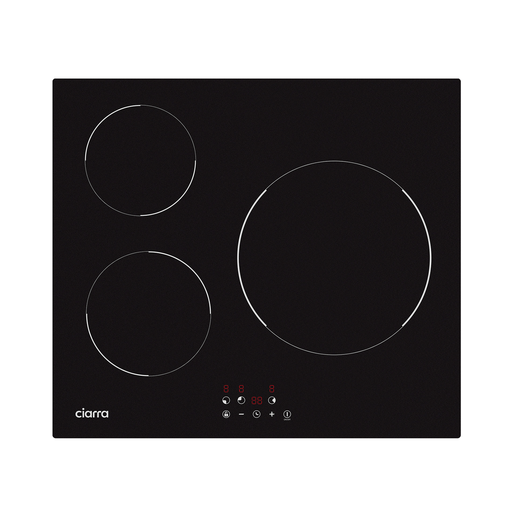
Three cooking zones may be useful if you want to use more than one extra pan at once. Check that the hob and electrical connection suit your kitchen.
Three cooking zones; nine power settings; 5,600 W; timer up to 99 minutes.
 No image available
A portable model to compare if you’re looking for an extra cooking spot that you can put away after use.
2,000 W; ten power settings; six functions; safety lock.
First check the connection required by the model you’ve chosen and the circuit available. The Consumentenbond points out that a single-phase circuit must be able to handle the combined load, including when other appliances are in use.
Check whether a magnet sticks to the base, then compare the diameter of the flat base with the instructions for the exact model. For example, Inventum gives a pan size of 15 to 20 cm for the KI120T; that range doesn’t automatically apply to other hobs.
Follow the instructions for your model and let the surface cool first. For the TILLREDA, IKEA recommends removing food residue with a damp cloth and a mild cleaner, then drying the surface with a soft cloth.
No. Cooking or reducing the chutney alone doesn’t prove that a homemade recipe can be stored safely without refrigeration. According to the National Center for Home Food Preservation, the shelf life of chutney in jars depends, among other things, on having enough acidity and on how the filled jars are processed.
Electrical equipment covered by the EU Low Voltage Directive must carry a CE mark when sold in the EU. EUR-Lex explains this requirement; the mark alone doesn’t prove that an individual appliance has been connected correctly or is being used safely.