
Cooking chutney in one pan
You mainly want a separate spot to cook your chutney gently and need to know whether a compact hob will fit your pan. Inventum specifies that the KI120T has a cooking zone for pans with a diameter of 15–20 cm.


A single-zone portable hob may be enough for one pan of chutney, as long as the base of your pan fits the cooking zone. If you want to cook other dishes while the chutney simmers, compare hobs with multiple zones and check the available connection power. Before you buy, check your pan, your space and your electrical connection: a simmer programme or boost function on paper won’t tell you how evenly your chutney will cook in your pan.
You mainly want a separate spot to cook your chutney gently and need to know whether a compact hob will fit your pan. Inventum specifies that the KI120T has a cooking zone for pans with a diameter of 15–20 cm.
You want to use other pans while the chutney simmers. So don’t just look at the number of cooking zones; check the available connection power too, as zones may share power when the connection is limited.
You’re considering a built-in induction hob and need to check that the cut-out and electrical connection are suitable. The Consumers’ Association advises having a hob that requires a high-voltage connection professionally installed and connected.
| What to consider | What should you check? | Who is this important for? |
|---|---|---|
| Gentle simmering | Look at how the hob performs on a low setting; a function listed in the specifications alone doesn’t prove it will maintain a stable temperature. | If I want to reduce my chutney slowly, I need to be able to control the low setting well. Around 28% of consumers prioritise control when simmering. |
| Several pans at once | Compare the number of zones with the space for your pans and the connection power. | If I want to cook other dishes alongside the chutney, I need to know whether there’s room for extra pans at the same time. Around 22% of consumers prioritise cooking several things at once. |
| Connection and installation | Check the connection requirements for the exact model and, if necessary, have your existing installation assessed. | If my kitchen’s electrical installation determines which hob I can choose, I need to know in advance what it can support. Around 22% of consumers want to check the connection first. |
| Space and positioning | Measure your worktop or cut-out and follow the model’s installation instructions. | If I have limited space or want a built-in hob, its dimensions need to suit my kitchen. Around 17% of consumers focus mainly on the space available. |
| Pan suitability | Check that the base is magnetic and compare its size with the cooking zone. | If I want to keep using my current chutney pan, it needs to be suitable for induction and fit the zone. Around 11% of consumers want to use their existing pans. |
ATAG’s stated simmer setting of 94 °C is not an independent measurement of chutney cooking in your pan. The Consumers’ Association tests simmering with oil, not tomato chutney.
Where possible, compare measured performance on a low setting, and check and stir the chutney as it reduces.
When the connection power is limited, power may be shared between several zones. So more zones don’t automatically mean you can use them all at the highest setting at the same time.
As well as checking the number of zones, check the connection power and whether the exact model shares power between zones.
A built-in model may need a different connection or changes to your kitchen.
Measure the cut-out and, if necessary, have your existing electrical connection assessed before choosing a model.
Induction requires a pan with a magnetic base. The Netherlands Nutrition Centre advises against using aluminium pans to prepare highly acidic foods.
Check the base with a magnet, compare its size with the cooking zone and consider the material your pan is made from.
The KI120T is a portable single-zone hob that gives you an extra cooking spot.
The TILLREDA range includes portable hobs with one or two zones, for an extra cooking spot or a smaller kitchen.
The PIX631HC1E is a 60 cm built-in model with four zones and FlexInduction.
The HI39571TF is a 90 cm built-in model with five zones.
This selection includes induction hobs with two to four cooking zones, for anyone who wants to use other pans while the chutney simmers.
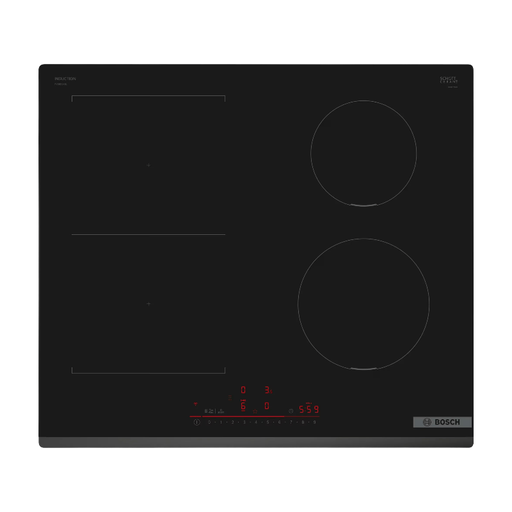 Image unavailable
The four cooking zones give you room to use other pans while the chutney simmers.
Built-in model; the description specifies a cable without a plug and a direct connection. It also lists nine settings and a timer.
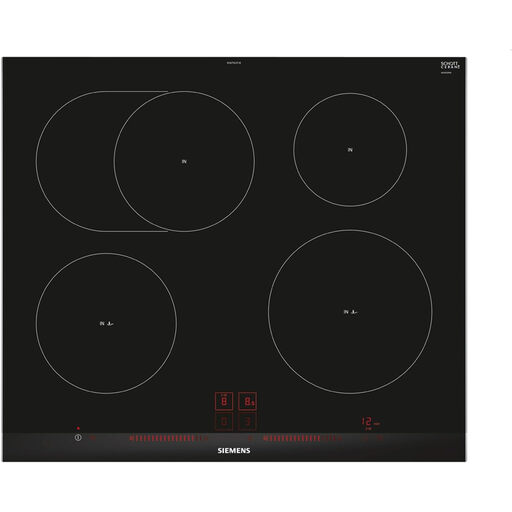 Image unavailable
With four cooking zones, you can use other pans alongside your chutney.
The description lists a timer with automatic switch-off. The model is hard-wired; the description recommends installation by a qualified electrician.
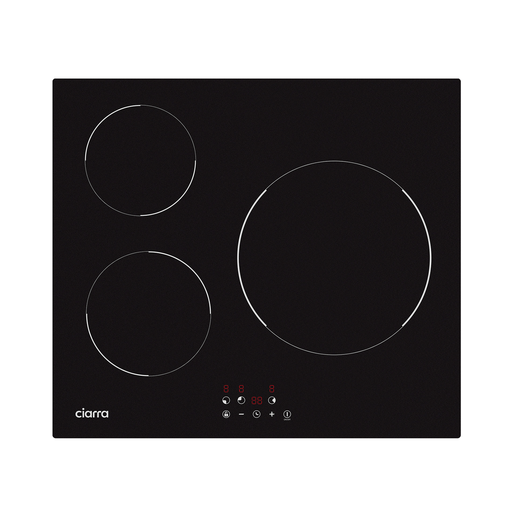 Image unavailable
The three cooking zones give you space for several pans during the meal.
The description lists nine power levels and a timer of up to 99 minutes.
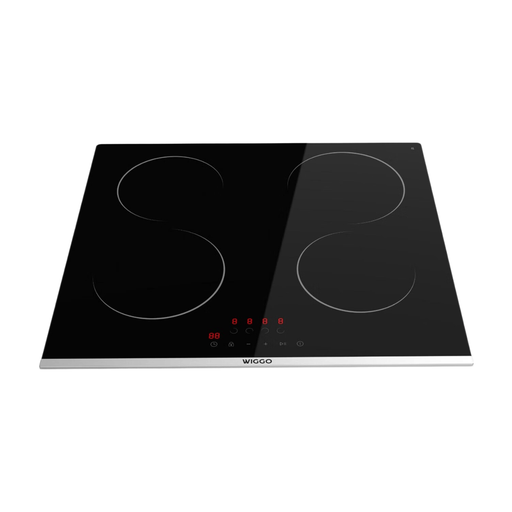 Image unavailable
The four cooking zones are useful if you want to use several pans while the chutney simmers.
This is a built-in model; check that the specified niche dimensions fit your worktop.
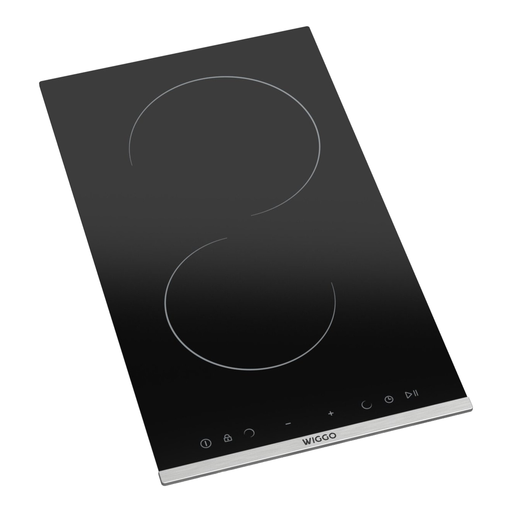 Image unavailable
The two cooking zones may suit a smaller built-in setup where you want to use two pans at once.
The product name specifies a single-phase connection and plug-and-play; check the connection and installation requirements for your kitchen.
Don’t just look at the boost function or the number of settings. In its simmer test, the Consumers’ Association measures whether the temperature stays low and constant on the lowest setting for 30 minutes. This is a useful indication, but it isn’t a test of tomato chutney in your pan.
It depends on the model and the electrical circuit. Inventum specifies a standard plug for the KI120T; IKEA lists 2,200 W or 3,500 W settings for the two-zone TILLREDA. Check the manual and what else the circuit needs to power at the same time.
Follow the instructions for the exact model. For the KI120T, Inventum specifies a flat, heat-resistant surface and at least 10 cm of space at the sides and back.
In the Netherlands, there’s no fixed statutory guarantee period, according to the government. However, you’re entitled to a product that meets what you could reasonably expect. If a fault isn’t due to misuse or normal wear and tear, contact the retailer. A manufacturer’s guarantee doesn’t replace this right.
No, domestic hobs don’t require an energy label. The European Commission does set ecodesign rules for hobs, but an energy label isn’t how you compare models’ cooking performance.