
Cooking with your usual chutney pan
You want to check that the base of your existing pan is magnetic, flat and the right size for the cooking zone you choose. The Consumers’ Association recommends using a flat base that fits the zone well.


If you’re mainly making chutney in one pan, start with a standalone single-zone hob whose cooking zone suits the flat, magnetic base of your pan. If you want to cook other dishes at the same time, compare a two-zone hob with a fixed multi-zone hob, and check the total power and electrical connection as well as the available space. More zones don’t automatically mean you can use all your pans at a high setting at the same time.
You want to check that the base of your existing pan is magnetic, flat and the right size for the cooking zone you choose. The Consumers’ Association recommends using a flat base that fits the zone well.
You want to make chutney while other pans are on the hob too. So look beyond the number of cooking zones and consider the available space and total power as well.
You’re weighing up an extra cooking spot that you can put away against a permanent installation, and checking that the hob will fit your worktop and cut-out and suit your electrical connection.
Suitable if: you’re making chutney in one suitable pan and want a cooking spot you can put away after use.
Bear in mind: there’s no second cooking zone on the same hob for a side dish.
Suitable if: you want to use a second pan while making chutney, without cutting a hole in your worktop.
Bear in mind: the hob needs more worktop space. Check the set power limit for the electrical connection, and don’t assume both zones can deliver maximum power at the same time.
Suitable if: you want a permanent cooking set-up for several pans and your kitchen can be fitted accordingly.
Bear in mind: check the cut-out dimensions, installation instructions and electrical connection before choosing a model.
| What to consider | What to look for when buying | Who is this important for? |
|---|---|---|
| Suitable pan base | Check that the base is magnetic and flat. Measure it and compare it with the size or range specified for the exact model. | I want to keep using my familiar chutney pan; around 31% of consumers prioritise a suitable pan base. |
| Cooking at the same time | Count the pans you’ll need at once and compare the cooking-zone sizes and total power for the electrical connection. The Consumers’ Association points out that freestanding hobs with limited total power may not be able to run multiple zones at a high setting at the same time. | I want to cook a side dish alongside the chutney; around 25% of consumers prioritise cooking several things at once. |
| Adjusting the heat | Compare the lower settings and controls on the model. A timer or stated temperature setting doesn’t prove that the temperature in the pan will stay constant. | I want to be able to turn down the heat while cooking; for around 25% of consumers, this level of control is the most important factor. |
| Positioning and connection | Check the available space, wiring diagram and electrical connection. For a built-in hob, also measure the cut-out using the documentation for the exact model. | I need to know whether the hob will fit in my kitchen and work with my electrical connection; around 19% of consumers prioritise positioning and connection. |
With induction, the properties and size of the pan base matter. Measuring across the rim won’t tell you whether the base is suitable for the cooking zone.
Measure the flat base of the pan you want to use for chutney and compare it with the specifications of the model you’ve chosen.
On freestanding hobs, the total power for the electrical connection can determine how much power is available when several zones are on at once.
Compare the total power and power settings, not just the number of zones.
A hob may need a different cut-out size or electrical connection from the one your kitchen has.
Check the installation instructions before buying and, if necessary, ask someone to assess what changes will be needed.
Cooking chutney or storing it in a sealed jar doesn’t prove that it’s safe to keep outside the fridge. The Netherlands Nutrition Centre advises against preserving vegetables at home because of the risk of botulism.
Keep cooking and preserving separate, and follow the Netherlands Nutrition Centre’s storage advice for leftovers.
The KI120T is an example of a standalone single-zone hob for a suitably sized chutney pan.
The TILLREDA versions offer either one portable cooking zone or two portable zones.
The IK-6179 is a manufacturer example of a standalone two-zone hob for anyone who wants to use a second pan alongside the chutney.
The PUE611BB5D is an example of a fixed four-zone hob for a kitchen set up to use several pans at once.
This selection includes portable single- and two-zone hobs as well as fixed built-in models. Compare them by pan size, number of zones, electrical connection and available kitchen space; check the documentation for the specific model before connecting it.
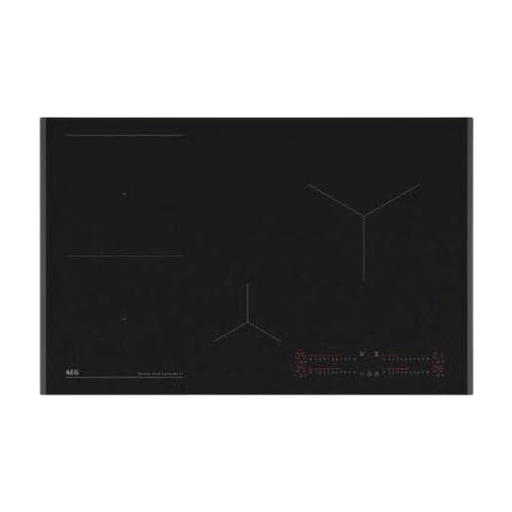 Image unavailable
A fixed built-in hob to consider if you’re planning a permanent cooking set-up and have checked the available space and electrical connection.
The product information lists a width of 80 cm, slider controls and nine heating elements. Professional installation is recommended.
 Image unavailable
A portable two-zone hob to compare if you want to use a second pan while making chutney.
The product name lists five temperature settings. The product information recommends ensuring adequate ventilation and warns against leaving the hob unattended while in use.
 Image unavailable
A portable hob to compare if you want an extra cooking spot for one pan.
The product name lists five power settings and 1000 W. The product information recommends ensuring adequate ventilation and warns against leaving the hob unattended while in use.
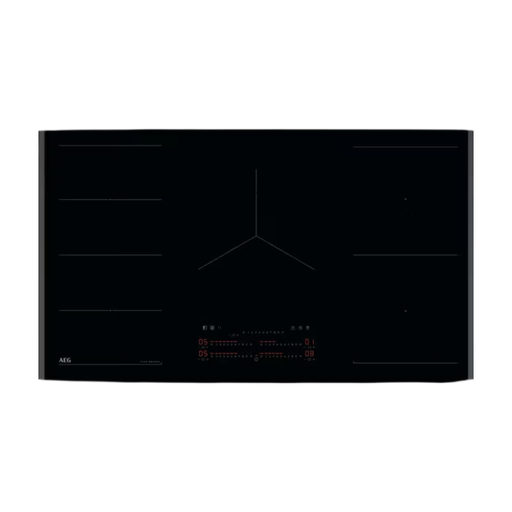 Image unavailable
A fixed built-in hob to compare if you want to use several pans on a permanent cooking set-up.
The product name lists four cooking zones, touch controls, PowerBoost and a Bridge zone. Check the installation dimensions and electrical connection for your kitchen.
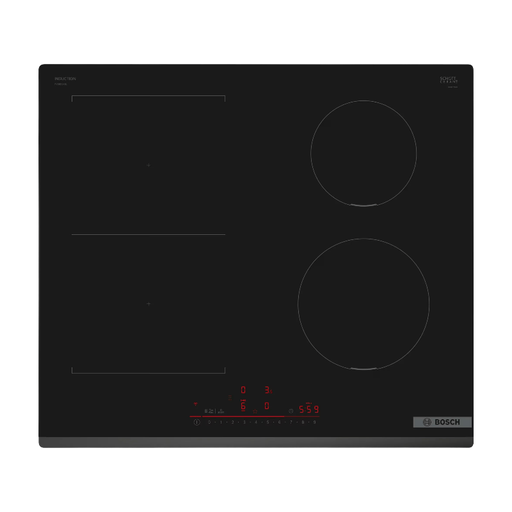 Image unavailable
A fixed four-zone hob to compare for a kitchen set-up with several pans.
The product name lists a width of 60 cm and TouchSlider controls. The product information gives a connected load of 6900 W; have the electrical connection checked for suitability before installation.
It will if the pan base is magnetic and the right size for the hob’s cooking zone. Check that the base is flat too: the Consumers’ Association recommends a flat base that fits the zone well.
Don’t rely on the number of zones or the plug alone. Check the total power, the instructions for the exact model and what else is already being used on the same circuit. IKEA lists different power settings for the TILLREDA 705.931.21.
Compare the lower settings and controls on the exact model, but don’t take a stated setting or timer as proof that the temperature in your pan will remain constant. Keep an eye on the chutney and stir it when needed.
Don’t assume that leftovers which haven’t been preserved can be stored outside the fridge. The Netherlands Nutrition Centre advises cooling leftovers quickly, not leaving them out of the fridge for more than two hours, and storing them in a sealed container in the fridge or freezer. It advises against preserving vegetables at home because of the risk of botulism.
Electrical equipment designed for 50–1.000 V AC and falling within the scope of EU low-voltage rules must meet safety requirements and carry CE marking when placed on the market. This obligation applies to economic operators; check the documentation for the specific model, as a brand name alone doesn’t establish that an individual product complies.
Report the fault to the seller. ACM ConsuWijzer explains that your statutory guarantee applies alongside any manufacturer’s guarantee. What you could reasonably expect from the product is important, and statutory protection is not simply the same as a fixed manufacturer’s guarantee period.