
Workshop instructor with one demonstration pan
Wants to adjust the heat as the sugar colours and keep a close eye on one pan. Rutger Bakt explains why sugar can either fail to caramelise properly or burn.


For one demonstration pan, a portable induction hob is a practical option if the pan size, power settings and connection suit your workspace. If participants are cooking at the same time, first work out how many pans you need and check that the cooking zones and electrical connection can handle them. A selected setting does not measure the temperature of the sugar, so keep an eye on the pan as the caramel colours.
Wants to adjust the heat as the sugar colours and keep a close eye on one pan. Rutger Bakt explains why sugar can either fail to caramelise properly or burn.
Needs a cooking station that can be moved, and checks the pan size, socket, electrical circuit and space around the hob in advance. The Consumers’ Association explains that a freestanding hob does not need a cut-out in the worktop.
Needs enough separate cooking stations and takes account of the available power, space around the pans and access to the controls. The Consumers’ Association highlights space for pans and controls as factors to consider with hobs that have multiple zones.
Suitable when: you use one demonstration pan or need an extra cooking station that you can move between workstations.
Trade-off: you can only use one pan at a time, and you’ll also need to plan for storage and ventilation space.
Suitable when: participants are using separate pans at the same time and the hob and electrical installation can handle it.
Trade-off: check the total power and connection; multiple zones on high settings have different requirements from one portable hob.
Rutger Bakt warns that sugar can either fail to caramelise properly or burn. Compare the controls, but don’t treat a selected hob setting as a measurement of the sugar in the pan.
| Factor to consider | What should you check? | Who is this important for? |
|---|---|---|
| Adjusting the heat | Check the power settings available on the exact model and try it with your chosen pan before the workshop. | When I’m making caramel in one pan, I want to be able to adjust the heat without assuming the display measures the sugar’s temperature. Around 31% of consumers prioritise being able to adjust the heat while caramelising. |
| Moving and connecting the hob | Check the plug, rated power, electrical circuit and the clear space specified in the manual. | When my workstation changes, I want to know whether the hob can be set up safely there and whether it’s suitable for the available circuit. Around 25% of consumers prioritise portability and power supply. |
| Supervision and positioning | Check the model’s features and choose a stable spot where participants won’t bump into the pan or cable. | When participants are moving around the cooking station, I want to keep my attention on the hot pan and set the hob up securely. Around 25% of consumers put supervision and safe positioning above other considerations. |
| Pans used at the same time | Count how many pans you’ll need at once and check their dimensions, the space around the controls and the connection. | When participants are cooking at the same time, I want enough usable cooking zones without exceeding the total power. Around 19% of consumers prioritise capacity for simultaneous cooking. |
The selected hob setting does not measure the sugar in the pan. Sugar can fail to caramelise properly or burn.
Compare the controls and practise with the pan and method you plan to use. Stay with the pan as the sugar colours.
With a connection that has limited total power, you can’t necessarily use several high settings at once. A more powerful set-up may require a different connection and professional installation.
Count the pans that will be used at the same time and check the hob’s power rating, electrical circuit and installation before choosing a model.
The base must be magnetic, and its diameter must be within the size range specified for the model you choose.
Check the base of the pan, for example with a magnet, and compare its diameter with the specifications for that exact hob.
The brands listed can help you compare models and their stated features. Their inclusion does not indicate availability or proven performance when making caramel sauce.
The PRO Menu 2100 is worth considering if you use one pan and its stated pan size and adjustment steps suit the way you work.
The Kitchen Line 239391 is designed for kitchen use and may be suitable for a demonstration station.
The KI120T is a compact single-ring hob for an extra cooking station, provided your pan is within the stated size range.
The IK-6178 is a portable single-ring hob for an extra demonstration or practice station.
This selection includes single-ring hobs and hobs with multiple zones for workshops where you demonstrate with one pan or use several pans at once.
 No image available
Could suit one demonstration pan if its flat, magnetic base is within the stated size range.
2000 W; eight power settings; temperature setting from 60–270 °C; 3-hour timer; suitable for flat, magnetic pans measuring 12–26 cm.
 No image available
A single-ring option to consider for a demonstration station where you’d like to adjust the heat setting.
2000 W; ten power settings; touch controls; safety lock; six cooking functions.
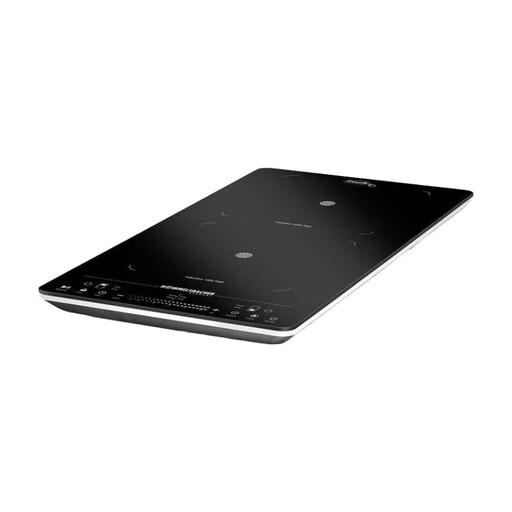 No image available
The two cooking zones may be useful if your workshop needs an extra station for cooking at the same time as the demonstration pan.
Two cooking zones; ten power settings and ten temperature settings; timer; suitable for flat, magnetic pans measuring 120–260 mm.
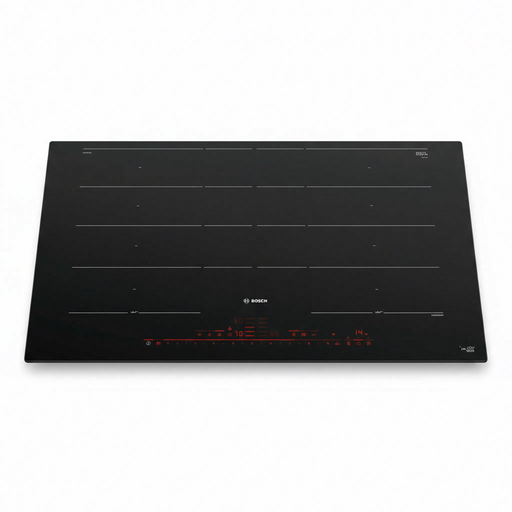 No image available
The connectable FlexInduction zones may be useful if you’re using several pans on one hob.
80 cm wide; FlexInduction; pan temperature sensor with five settings; connectable zones.
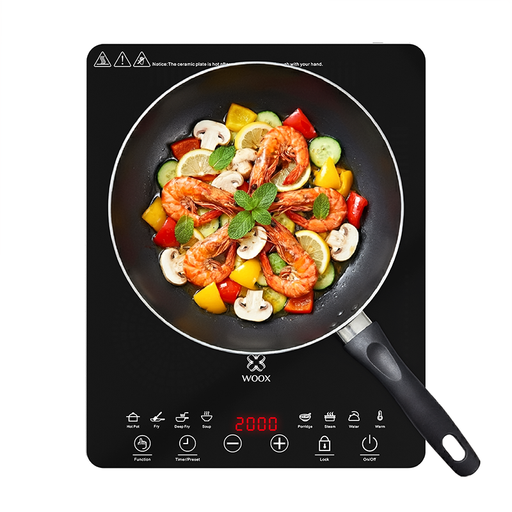 No image available
A portable single-ring hob to consider for a demonstration station where you’d like to adjust the settings.
2000 W; eight temperature and power settings; automatic pan detection; child lock; 1.5 m cable.
Check whether the base is magnetic and compare its diameter with the suitable size range for the hob. Milieu Centraal suggests using a magnet as a simple way to check whether a pan has a magnetic base. The base also needs to be the right size.
Don’t assume you can. Check the rated power of the appliances and what else is connected to the same circuit. If the total power is limited, cooking on high settings at the same time may not be possible. Ask a qualified professional to assess any changes needed for a higher-powered connection.
No. A selected setting does not measure the sugar in the pan. Rutger Bakt explains that sugar won’t caramelise if it isn’t heated enough, and can burn if it gets too hot. Stay with the pan and adjust the heat if needed.
The appliance must comply with the applicable European product regulations. Ondernemersplein states that the manufacturer must apply the required CE marking and draw up and sign an EU Declaration of Conformity. This does not prove that every model mentioned or every workshop set-up has been assessed individually.
Let the hob cool down as instructed in the manual before cleaning it. Milieu Centraal recommends cleaning an induction hob with a cloth and washing-up liquid. Also follow the care instructions for the exact model and keep the ventilation openings clear.