What should you consider when choosing?
Portable single-zone hob
A good fit if: your existing cooking setup can handle dinner and you only need an extra spot for the sauce.
Bear in mind: one zone isn’t designed for cooking several pans on this hob at once. Check the pan size and electrical connection, too.
Freestanding hob with several zones
A good fit if: you want to cook the sauce and other parts of dinner on separate zones without fitting the hob into a worktop.
Bear in mind: on a single-phase hob, you may not be able to run several zones at high power at the same time. ETNA lists four zones and a total connection rating of 3500 W for the KIV364RVS.
Built-in hob
A good fit if: you want a permanent cooking setup and the available space and electrical connection are suitable.
Bear in mind: check the cut-out dimensions and have the connection assessed before choosing a powerful hob. Installation may require alterations.
| What to consider |
What should you check? |
Who is this important for? |
| Controls and pan size |
Compare how you adjust the setting for each zone with the base size and induction compatibility of your saucepan. A displayed temperature setting does not necessarily reflect the actual temperature of the sugar. |
If I want to keep a close eye on the sugar as it caramelises, I want to be able to adjust the heat easily and know that my saucepan fits the zone. Around 42% of consumers prioritise adjustable heat and a suitable pan for caramel. |
| Number of zones and power |
Count the pans you’ll genuinely use at the same time, then compare that with the number of zones and the total connection rating. Don’t add together individual boost ratings and treat them as the total available power. |
If I’m making the sauce alongside other dishes, I need enough separate zones and want to know how much power they can use together. Around 33% of consumers prioritise cooking several dishes at once. |
| Connection and installation |
Check the connection requirements for the exact model, the socket and the load on the circuit. For a built-in hob, also check the cut-out dimensions and have the installation assessed. |
If I want to keep using my existing kitchen and electrical connection, I want to know in advance whether my chosen hob will be suitable. Around 25% of consumers prioritise installation without renovation. |
Also check the CE marking on the specific appliance. The Netherlands Food and Consumer Product Safety Authority states that CE marking is mandatory for electrical products placed on the Dutch market.
Joybuy products
This selection includes portable single-zone hobs for an extra spot for your sauce, as well as built-in hobs with several zones for cooking different dishes at the same time.
 No image available
Fritel Induction Cooktop IP 1266
Could suit you if you’re looking for an extra portable zone for the sauce; you can’t cook several pans on this hob at once.
One cooking zone; 2000 W; stated pan base size 12–26 cm; 10 power settings; adjustable range 60–240 °C; touchscreen and rotary control; timer up to 3 hours.
Purchase link unavailable
 No image available
Rommelsbacher CT 2002/IN
Could suit you if you’re looking for an extra portable zone for the sauce; the hob has one cooking zone and isn’t designed for using several pans at once.
Stated pan base size 12–23 cm; 10 power levels; 10 temperature settings from 60–240 °C; touch controls and timer.
Purchase link unavailable
 No image available
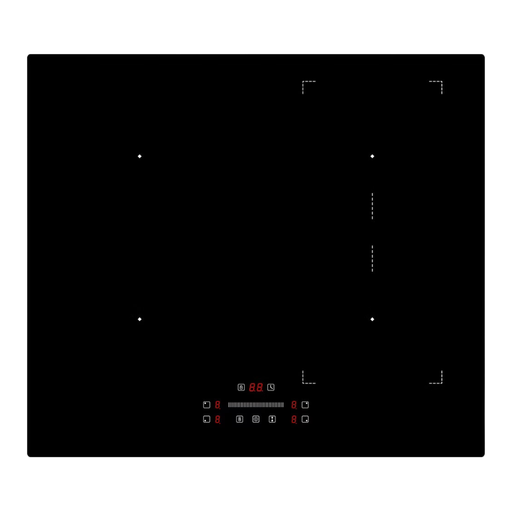
Exquisit EKI624-30
Could suit you if you want to cook several pans at once on separate cooking zones; this is a built-in model.
Four cooking zones; bridge function to combine two zones; nine settings; slider controls; specified for connection to one or two phases. The cable is supplied without a plug, so make sure the connection is suitable.
Purchase link unavailable
 No image available
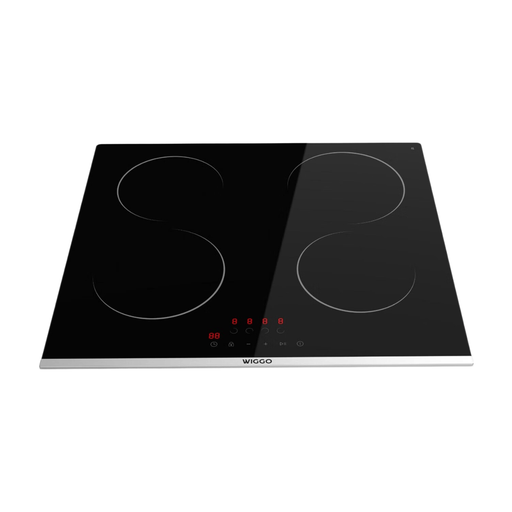
Wiggo WH-E614G(B)
Could suit you if you want to cook the sauce and other dishes on separate zones; built-in installation is required.
Four induction zones; rated at 1.8 kW per zone. Check that the cut-out dimensions are suitable.
Purchase link unavailable
 No image available
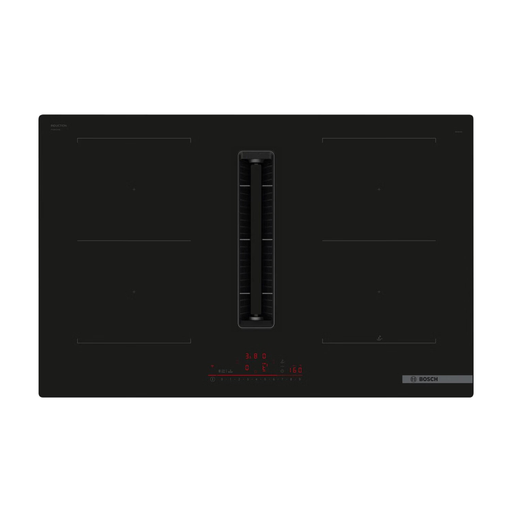
Bosch PVQ811H26E
Could suit you if you want to use several pans at once and are looking for a hob with an integrated extractor; professional installation and connection of the extractor are required.
Four cooking zones; DirectSelect controls; CombiZone for larger pans; integrated extractor.
Purchase link unavailable
Frequently asked questions
Do I always need a new electrical connection for a portable induction hob?
No, it depends on the model and your existing connection. Inventum states that the KI120T connects to an earthed Dutch socket; ETNA says the same for the KIV364RVS. Check the specifications for the exact model and the load on the circuit.
Can I use my existing saucepan to make caramel sauce?
You can if the pan is induction-compatible and has a flat base that fits the cooking zone. The Consumentenbond highlights the importance of a magnetic, heat-conducting base. Check the base size, too; a pan that’s too small may not be detected.
What does a keep-warm or cooking-temperature function mean for caramel?
A function like this doesn’t guarantee that sugar will caramelise properly on its own. ETNA lists a keep-warm function for dishes at 70 °C on the KIV364RVS; Bosch describes a PerfectFry sensor for the PIE631HC1M. These descriptions don’t establish that either model has a specific caramel function.
What should I know about CE marking and the guarantee in the Netherlands?
The Netherlands Food and Consumer Product Safety Authority says CE marking is mandatory for electrical products placed on the Dutch market; check the marking on the specific appliance. You also have statutory guarantee rights against the seller if a product is faulty. The guarantee period depends on what you could reasonably expect from the product, according to ACM ConsuWijzer.
Do I need to request a higher-capacity electricity connection for induction cooking?
Not necessarily. According to the Dutch Government, many households can cook electrically without a higher-capacity connection, but your existing connection needs to suit your needs. Since 1 July 2026, priority rules have applied to new or higher-capacity connections; availability varies by region.


