
Vandaag of morgen in huis

Kwaliteit gegarandeerd

Welkomstaanbiedingen ontgrendelen: GRATIS bezorging | Tot 80% korting | Gratis 30 dagen JoyPlus-proefperiode
Download de app
Choosing a new induction hob may seem straightforward on paper. Yet the key differences are often not in the appearance, but in the connection, dimensions and how the power is distributed. For example, a hob may have four zones, but that does not always mean all four can be used at full power simultaneously.
Terms such as PowerBoost, flex zone and scratch-resistant glass also deserve a sensible assessment. According to a brand’s own research, a surface may be several times more scratch-resistant than a standard version, for example, but its lifespan also depends on pan bases, cleaning products and everyday use.
An induction hob 60 cm is usually approximately 59 cm wide, but the cut-out size in the worktop may vary. Therefore, always check each of the following separately:
For example, a built-in induction hob with an external width of 590 mm may require a cut-out of approximately 560 × 490 mm. So do not rely solely on the “60 cm” label.
A hob rated at 7,200 W sounds powerful, but the total power is divided between the zones. When connected to a single phase, a power limiter may also be required. Therefore, check that the consumer unit, fuse and connection are suitable.
For a model without a plug, such as some built-in hobs, connection by a qualified electrician is required. The inclusion of a cable does not automatically mean that you may or can connect the appliance yourself.
An induction hob with flex zone can combine two zones for a griddle or elongated pan. This is useful, but only if your cookware has a suitable magnetic base and is large enough. An induction hob with PowerBoost temporarily uses additional power, so the function is not intended as a permanent cooking setting.
Wi-Fi, apps and automatic extractor fan control can be practical, but they do not automatically make a hob suitable for your kitchen. Start with the essentials: controls, cut-out dimensions, connection, pan detection and safety features.
An induction hob with 2 zones is suitable for a studio flat, small kitchen or as an additional cooking surface. For a family or anyone who uses several pans at once, an induction hob with 4 zones is generally more practical. Also pay attention to the diameter of the zones. A large pan will not heat efficiently on a zone that is too small.
A portable induction hob usually has a single zone and works via a plug socket. This is suitable for temporary cooking, a student room, office or holiday home, but provides less workspace than a fixed hob.
Check the connected load, rather than just the number of cooking settings. Nine or ten settings offer useful control, but they do not indicate how much power a zone actually delivers. A timer for each zone is useful when you want to cook pasta, rice or a sauce in a controlled way.
With powerful models, pay attention to:
An induction hob with touch controls is easy to keep clean because it has few protruding buttons. However, the controls work less effectively when the panel is wet or greasy. A rotary dial may be more comfortable for some users, particularly when adjusting the power quickly.
Useful features include:
Induction uses a magnetic field to heat suitable pans. A simple magnet test can check whether the base of a pan is suitable. Aluminium, copper and ceramic cookware will not always work unless they have a magnetic base.
A ceramic hob and an induction hob are not the same. Both may have a black glass-ceramic surface, but a ceramic hob heats through elements beneath the glass. Induction heats the suitable pan directly. In both cases, do not use an abrasive sponge, and clean up spilled sugar or baked-on residue according to the instructions.

Why it suits this profile: This portable hob is useful in a small kitchen, student room or as an additional zone. The controls combine touch sensors with a rotary dial.
The specifications state a zone diameter of 12 to 26 cm, ten power levels and a timer of up to three hours. This makes the key usage limitations clear.
2000 W, 10 settings, temperature control from 60–240 °C, automatic switch-off and overheating protection.
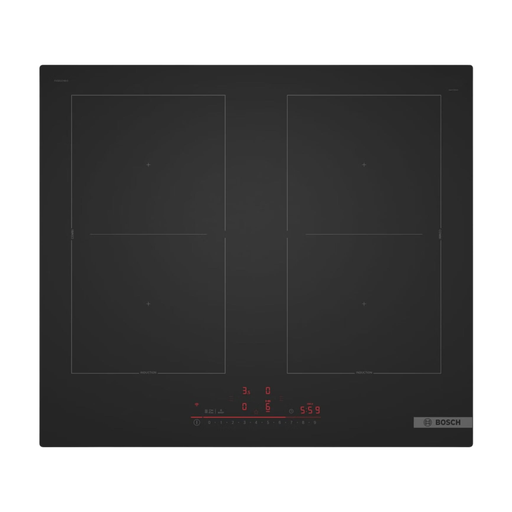
Why it suits this profile: Suitable for anyone looking for a fixed hob with four zones, flexible pan placement and comprehensive controls.
The stated cut-out dimensions, connected load of 7.4 kW and load management function make the installation requirements more specific than simply “60 cm”.
Four zones, CombiZone, 17 power levels, timer, child lock and residual heat indication.
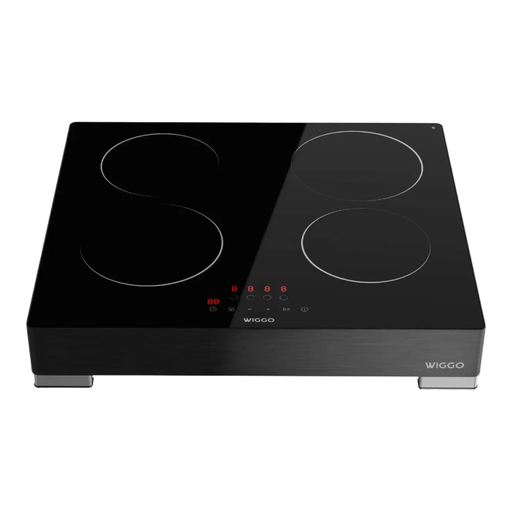
Why it suits this profile: A household that uses several pans at once gets four zones and a freestanding design with an EU plug.
The product information lists 9 levels, boost, a timer for each zone, child lock and protection against overheating and voltage problems.
Four zones, 7200 W total power, touch controls, individual timers and a black glass surface.

Why it suits this profile: A single induction zone is a useful addition when you temporarily need more cooking space or have limited worktop space.
The compact design prevents you from paying for zones you do not use. The product description also specifies pan detection and a 99-minute timer.
One zone, 2000 W, 10 power levels, touch controls, automatic pan detection and a glass-ceramic surface.
We have compiled a complete, up-to-date list of products that fully meet these strict selection criteria and the applicable European safety regulations.
Yes. The pan must have a magnetic, flat base. Hold a magnet against the underside: if it sticks, the pan is usually suitable. Also check the minimum pan diameter specified by the manufacturer for each zone.
Induction heats the pan directly, meaning less heat is lost to the surrounding area. Actual energy consumption depends on cooking time, power, pan size and the electricity tariff. Therefore, consider how you will use the hob and its connected load, rather than relying solely on marketing claims about energy savings.
Its lifespan depends on build quality, ventilation, connection and usage. Have a built-in model installed correctly, do not block the ventilation openings and do not use a damaged hob. Only clean the surface once it has cooled down, and follow the maintenance instructions in the manual.
