
Vandaag of morgen in huis

Kwaliteit gegarandeerd

Welkomstaanbiedingen ontgrendelen: GRATIS bezorging | Tot 80% korting | Gratis 30 dagen JoyPlus-proefperiode
Download de app
An induction hob may seem straightforward to choose at first glance. However, an unsuitable connection, an incompatible pan or a cooking surface that is too small can all lead to disappointment. This is particularly important when replacing an existing hob: you need to look beyond the number of cooking zones and the smooth black surface.
As a Joybuy Product Recommendation Officer, I filter product information based on practical considerations. Below, you’ll find what to look for when choosing an induction hob, ceramic hob or another electric hob.
A hob with a high total power rating can support several cooking zones at the same time, but not every home has the right connection for this. A single-phase induction hob connection generally works up to around 3.7 kW, depending on the installation. Models with a higher connected load often require two or three phases.
Therefore, check:
A hob with a cable but no plug must not simply be connected using a standard plug.
An induction hob measuring 60 cm is not always exactly 60 cm wide. The external width may be 59 cm, for example, while the required cut-out is 56 × 49 cm. Measure the existing cut-out before ordering and always check the installation manual.
For a built-in induction hob, these dimensions are particularly important:
A cut-out that is too small may make installation impossible. A cut-out that is too large may require additional modifications to the worktop.
Terms such as touchscreen, timer, PowerBoost and flex zone sound appealing, but check exactly what they mean. A timer may work for each individual zone or simply function as a general kitchen timer. A bridge function connects two zones, while a true flex zone is designed to provide a larger, flexible cooking area.
Pay attention to the controls, too. A slider can respond quickly, but the control panel must be kept clean and dry. According to the safety information for various models, spilled liquids can unintentionally activate touch controls.
For a household of one or two people, a hob with two zones may be sufficient. Families and keen home cooks often choose a 4-zone induction hob. Don’t just look at the number of zones; also check their diameter and power rating.
Make sure your pans are suitable for the stated zone. Some models have a bridge or flex zone for a griddle or larger pan. A larger zone is not automatically suitable for every type of cookware.
An induction hob heats a suitable magnetic pan directly. This means you need pans with a magnetic base, such as cast iron or magnetic stainless steel. A simple magnet test can help.
A ceramic hob uses electric heating elements beneath the glass. This means there are usually fewer restrictions on the pans you can use, but the hob itself may remain hot for longer after being switched off. A ceramic hob with a residual heat indicator and automatic switch-off is therefore a practical choice for everyday use.
An induction hob with touchscreen or slider controls provides a flat surface that is easy to clean. Check whether the model includes:
These features help with safety and ease of use, but they do not guarantee that cooking is safe without supervision. Never leave oil, fat or a switched-on cooking zone unattended.
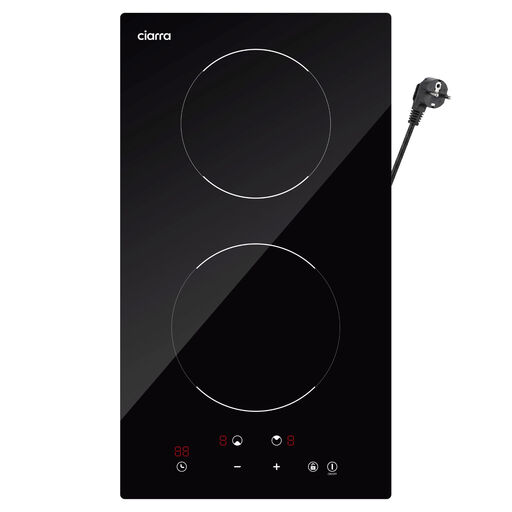
Why it suits this profile: This built-in model takes up little space and offers two cooking zones, making it suitable for smaller kitchens, studios and households that usually use one or two pans.
The product specification states 3000 W, a 16A fuse and a cut-out of 270 × 490 mm. However, check these details against your own installation.
9 power levels, an individual timer of up to 99 minutes, child lock, residual heat indicator and pan detection.
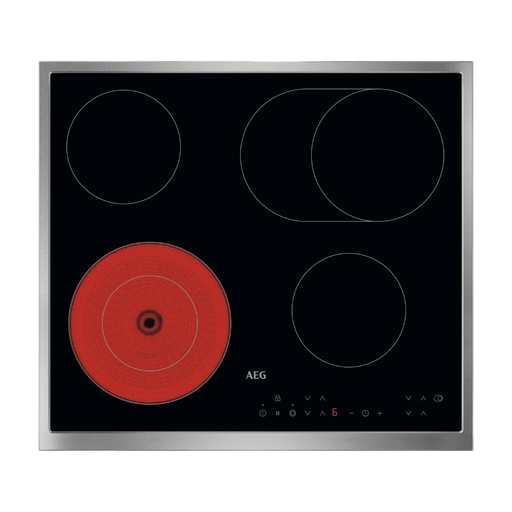
Why it suits this profile: If you’re looking for a 60 cm-wide built-in solution with four zones and flexible cooking options, this ceramic hob features a stainless steel edge.
The stated cut-out size is 56 × 49 cm and the model specifies a 400V 2N connection. This makes it clear in advance that professional installation may be required.
4 zones, extendable cooking zones, pause and resume function, child lock and a timer of up to 99 minutes.
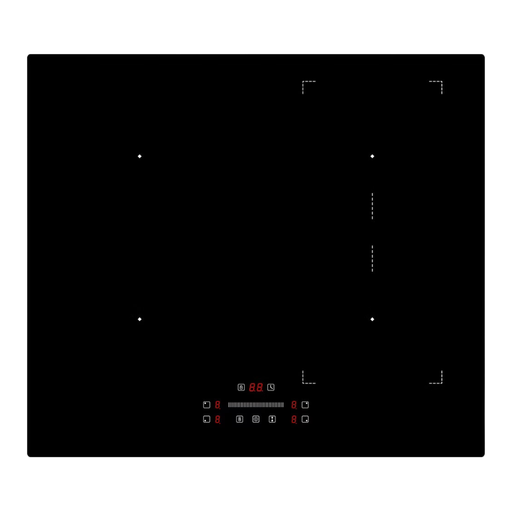
Why it suits this profile: This model is designed for households that use several pans at once and want to combine a bridge function, slider controls and PowerBoost.
The product specification states both single-phase operation up to 3.7 kW and two-phase operation up to 7.6 kW. Before buying, check which option your kitchen installation supports.
4 cooking zones, 9 levels, PowerBoost, timer, pan detection, child lock and one bridge zone.

Why it suits this profile: This compact hob is suitable as an additional cooking zone, for a student room or for anyone who does not want to install a built-in model straight away.
The stated suitable pan diameter is 12–26 cm. This means you can check in advance whether your existing magnetic pans will fit.
Power from 100 to 2000 W, temperature setting from 60 to 270 °C, timer of up to 3 hours and child lock.
We’ve put together a complete, up-to-date list of products that fully meet these strict selection criteria and the applicable European safety regulations.
Have a built-in model connected in accordance with the installation manual and local regulations. If in doubt, consult a qualified electrician. Keep ventilation openings clear and do not install the hob above an oven if the manual does not permit this.
Use a flat pan that is suitable for induction and clean the surface with a soft, damp cloth. Do not use abrasive products. If the glass is cracked, switch the appliance off and do not use it again until it has been inspected.
That depends on the model and its total power rating. Some hobs support single-phase operation up to around 3.7 kW; others require two or three phases. Check the product specification and have the connection assessed by an electrician.
Its lifespan depends on use, installation, ventilation and maintenance. A hob that is connected correctly, does not overheat and is used with suitable pans can operate for many years. A crack, damaged cable or recurring error message is a reason to stop using the appliance.
The cost depends on the electricity tariff, cooking time, power rating and frequency of use. Features such as a timer, zone layout and power control can help you cook more efficiently. Therefore, don’t just compare the maximum wattage; also consider how often you use several zones at the same time.
