
Vandaag of morgen in huis

Kwaliteit gegarandeerd

Welkomstaanbiedingen ontgrendelen: GRATIS bezorging | Tot 80% korting | Gratis 30 dagen JoyPlus-proefperiode
Download de app
A new kitchen or a renovation is a major undertaking. Choosing a new induction hob can be overwhelming due to the vast array of specifications and features. Are you looking for a model that fits seamlessly into your design, or do you need advanced features for your culinary ambitions? This article will help you understand the most important characteristics and provide concrete recommendations, so you can make an informed decision that suits your cooking style and kitchen.
Before you choose a model, it's helpful to consider a few key points. These will determine how the hob functions in your daily life.
The standard width for a built-in induction hob is often 60 cm, but wider models are popular for more cooking space and flexibility. An 80 cm induction hob already offers considerably more comfort, while a 90 cm induction hob often has space for five pans at once. Consider a hob with a flex zone: this allows two or more cooking zones to be combined into one large surface. This is ideal for large roasting pans, grill plates, or multiple small pans simultaneously.
An induction hob with integrated extraction incorporates the extractor hood directly into the cooktop. Cooking vapours and odours are drawn away right at the pan, which is often more effective than a traditional overhead extractor hood. This not only ensures cleaner air but also creates a sleek and open design in the kitchen, without a bulky hood obstructing the view. This is a popular choice for kitchen islands and minimalist kitchens.
The modern smart hob offers connectivity and automation that make cooking easier. Think of a Wi-Fi connection that allows you to monitor the hob via an app on your smartphone. Some models can automatically communicate with a matching extractor hood, which turns itself on and adjusts the suction power. Features like cooking and frying sensors help to keep the temperature constant, reducing the risk of food burning.
Based on specifications and functionalities, we have highlighted a number of models that meet the needs of the modern home chef and design-conscious homeowner.
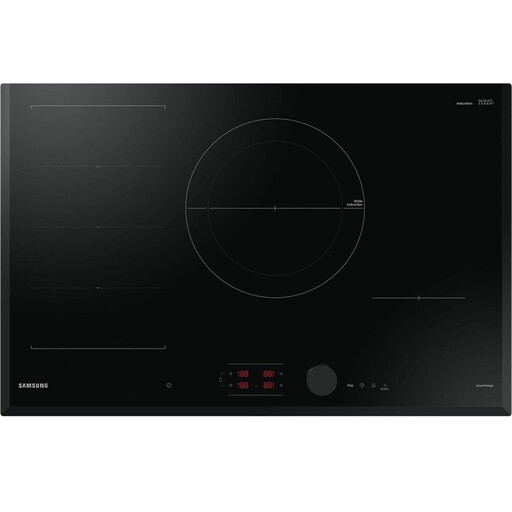
Why it stands out: This Samsung induction hob combines a spacious, flexible cooking area with smart connectivity. The Flex Zone Plus automatically adapts to the size and number of pans, offering great freedom.
Benefits:
Who is it for? Ideal for the tech enthusiast looking for a flexible 80 cm induction hob that integrates seamlessly into a smart home.
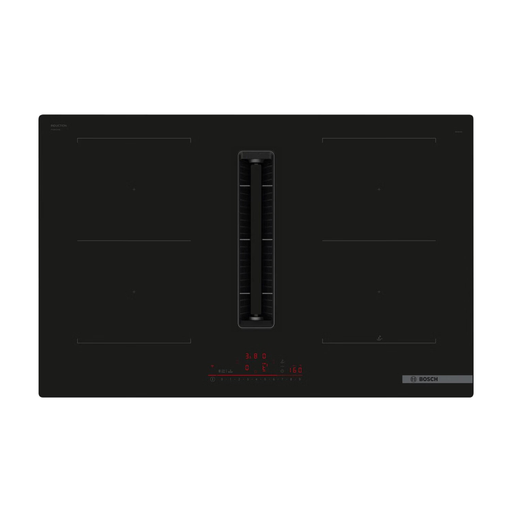
Why it stands out: This Bosch induction hob is a prime example of integration. The powerful extraction module is placed in the centre of the hob, ensuring a sleek appearance and direct extraction of cooking vapours.
Benefits:
Who is it for? Perfect for the design-conscious cook who desires an open and uncluttered kitchen, especially with a kitchen island.
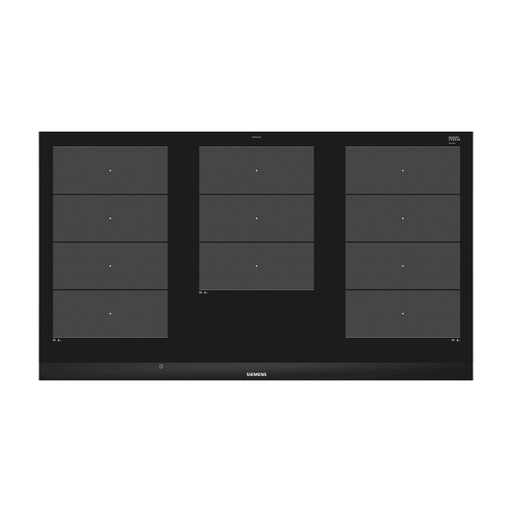
Why it stands out: With a width of over 90 cm and 5 cooking zones, this Siemens induction hob offers maximum space and control. The advanced flexInduction zones and powerMove Plus function are aimed at the serious home chef.
Benefits:
Who is it for? The ambitious home cook who wants to make no compromises on space, power, and advanced cooking functions.
The choice of an induction hob is personal and depends heavily on your kitchen layout and cooking habits. The models mentioned above represent popular configurations, but there are many more possibilities.
Are you curious about other sizes, brands, or specific features? View our full range of induction hobs for more options.
Induction cooking is fast, energy-efficient, and safe. The hob itself does not get hot, only the pan. As a result, the hob reacts instantly when you adjust the temperature. Because the heat is generated directly in the base of the pan, very little energy is lost. After cooking, the surface cools down quickly, making it safer in a household with children.
You need pans with a magnetisable base. You can easily check this by holding a magnet to the bottom of the pan. If the magnet sticks, the pan is suitable for induction. Most modern pans state on the packaging or base whether they are suitable for induction.
A hob with a flex zone has rectangular cooking zones instead of the traditional round ones. Within this zone, you can freely place pans of different sizes. You can also use the entire zone as one large cooking surface, for example, for an oblong fish pan or a large grill plate. This offers significantly more flexibility than fixed cooking zones.
