For one pan of brown bean soup, a portable single-zone induction hob may be enough, provided the pan base fits and the lowest setting keeps the simmer under control. A keep-warm function or high maximum power alone is no proof of a steady simmer. If you also need a second pan, compare a two-zone hob with a fixed cooking setup, and check the available electrical connection and space for positioning.
Who is this choice relevant for?
Workshop leader with one soup pan
You want to keep the soup on a low setting while explaining the recipe, then move the hob afterwards. Compare the low settings, timer and space required. The Consumentenbond assesses temperature stability at low heat separately.
Cook with a large workshop pan
Check that your existing pan has a flat, magnetic base and fits within the base-size and maximum-load limits of the hob you choose. The Consumentenbond explains the requirements for an induction pan; HENDI lists a maximum load of 15 kg for the Kitchen Line 239391.
Organiser using several pans
You want to prepare soup and a second dish at the same time. Compare the number of zones, any shared power and the available electrical circuit. CASO lists a combined output of 3500 W with Power Sharing for the S-Line 3500.
What should you look for in an induction hob for brown bean soup?
Portable single-zone hob
Ideal for: a workshop where one pan of soup is cooked at a movable cooking station.
Keep in mind: check the lowest settings, timer and pan size. A single zone leaves no room for a second pan.
Portable two-zone hob
Ideal for: a workshop where you need a second pan alongside the soup.
Keep in mind: CASO says the S-Line 3500 shares up to 3500 W across its zones. Also check the correct pan diameters for the exact model.
Fixed hob with multiple zones
Ideal for: a permanent workshop kitchen with an electrical connection suitable for the hob you choose.
Keep in mind: a fixed high-power hob is not automatically interchangeable with a portable hob with a standard plug, and more power does not guarantee steady low heat.
| What to consider |
What should you check? |
Who should pay particular attention? |
| Gentle simmering |
Compare the lowest available setting, controls and switch-off time. Keep checking how the setting affects the soup while it is cooking. |
If I want to keep the soup on a low setting while explaining the recipe, controllable heat is my main priority. Around 33% of consumers put gentle simmering first. |
| Suitable pan |
Check that the base is flat and magnetic, measure its diameter and check the maximum load for the exact model. |
If you want to use an existing pan that may be large or full, first make sure it will fit the hob. Around 27% of consumers prioritise pan compatibility. |
| Positioning and connection |
Compare the plug and power rating with the location, and follow the clearance requirements in the model’s manual. |
If my workshop table or available electrical circuit limits the setup, the hob needs to fit the space and be positioned according to the manual. Around 27% of consumers prioritise the workspace and electrical connection. |
| Using a second pan at the same time |
Decide whether you need to cook on both zones at once, then compare the zones, total power, pan diameters and connection. |
If I also want to prepare a second dish during the workshop, extra pan space and the available power matter. Around 13% of consumers prioritise cooking on more than one pan at a time. |
Common pitfalls when simmering on induction
-
Assuming high maximum power means it will simmer well
For soup that needs to cook for a long time, the heat at the lowest setting matters. The Consumentenbond tests temperature stability separately from maximum power.
Compare information about the low settings and any available independent model tests. Keep an eye on what is happening in the pan while you cook.
-
Measuring only the top of the pan
Induction requires a pan with a flat, magnetic base. If the pan is large and full, the hob’s maximum load may also matter.
Measure the base and check both the permitted base size and maximum load for the exact model.
If your existing pan is not suitable, you may need a different induction pan.
-
Expecting a two-zone hob to run two separate pans at full power
CASO says the S-Line 3500 shares its combined maximum of 3500 W across the zones.
Check the total power and consider whether both pans need to run on a high setting at the same time.
-
Relying on a timer or keep-warm setting to ensure food safety
A setting on the hob does not measure the soup’s temperature. Food safety rules may apply to food businesses, depending on the circumstances.
Find out which rules apply to your workshop and, where needed, use a digital probe thermometer to check the food temperature.
Relevant brands to consider
Inventum
The KI120T is a portable single-zone hob for a pan with a diameter of 15–20 cm, as specified by Inventum.
- Inventum lists 2000 W, a keep-warm function and a timer of up to 180 minutes.
- A keep-warm function does not prove that soup will simmer steadily. The KI120T manual requires a flat, heat-resistant surface and at least 10 cm of clearance at the sides and back.
HENDI
The Kitchen Line 239391 has specifications for pan-base size and maximum load, which may be useful when choosing a hob for a full workshop pan.
- HENDI lists 2000 W, a base diameter of 120–220 mm, a maximum load of 15 kg and a timer of up to 180 minutes.
- Check the combined weight of the pan and its contents. These specifications are not an independent test of simmering performance.
Tristar
The IK-6178 is a portable single-zone hob with temperature control and a timer.
- Tristar lists a maximum output of 2000 W, a timer of up to 180 minutes and automatic switch-off when the pan is removed.
- Temperature control is no independent confirmation that a particular pan of soup will simmer steadily.
Princess
The 303010 is a portable single-zone hob with a timer and touch controls.
- Princess lists a maximum output of 1800 W, a timer of up to 180 minutes and a temperature setting of 60–240 °C.
- A selected temperature does not prove how steadily soup will simmer in the pan you choose.
CASO
The S-Line 2100 has one zone, while the S-Line 3500 has two for situations where you need a second pan.
- CASO lists a combined output of 3500 W with Power Sharing for the S-Line 3500.
- The product page gives different upper limits for pan diameters. Check the manual for the exact model before choosing a pan.
Joybuy product picks for one or more cooking zones
This selection includes portable induction hobs with one or two zones, as well as fixed hobs with multiple zones. Choose according to your pan, the cooking space you need and the available electrical connection.
 No image available
Induction hob with two cooking zones
The product description lists two independently controlled zones and a smaller zone for simmering or keeping food warm. This is not an independent measurement of the soup’s temperature.
Five temperature settings.
View at Joybuy
 No image available
Ochama portable induction hob, 2000 W
A portable single-zone hob for a workshop station where you only need to use one pan at a time.
The product information lists ten power settings and six functions, including a soup function.
View at Joybuy
 No image available
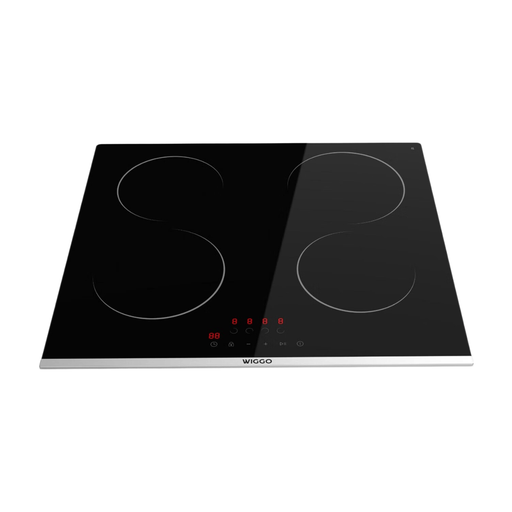
Wiggo WH-E614G(B) built-in induction hob
This fixed hob may suit a kitchen setup with several pans, provided the installation and electrical connection are right for the space.
The product description lists four zones and 1.8 kW per zone. It also specifies that installation must be carried out by a qualified electrician.
View at Joybuy
 No image available
Fritel IP 1266, one cooking zone
A portable hob for a cooking station where you need one pan. Compare the stated zone size with the base of your soup pan.
The product description lists 2000 W, a 12–26 cm cooking zone, ten power levels, a temperature range of 60–240 °C and a timer of up to three hours.
View at Joybuy
 No image available
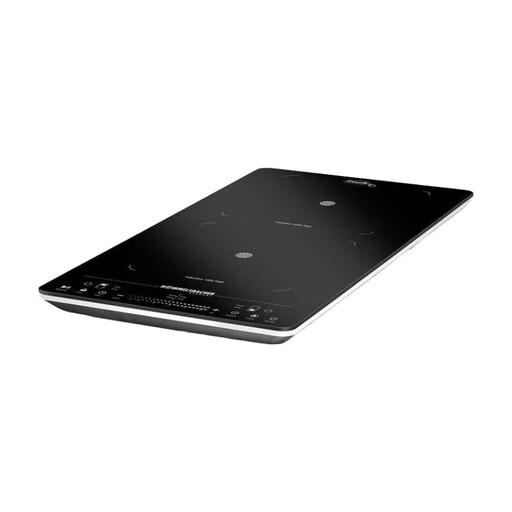
Rommelsbacher CT 3430/IN
This portable two-zone model may suit you if you need to cook soup and use a second pan at the same time.
The product description lists ten temperature settings, a range of 60–240 °C and a timer of up to 180 minutes.
View at Joybuy
Frequently asked questions
Can you use a keep-warm setting to simmer soup for a long time?
Not without checking how the setting affects the soup. Inventum lists a keep-warm setting for the KI120T, but its temperature cannot be adjusted. The Consumentenbond assesses steady simmering separately, using the lowest cooking setting. Food safety rules may also apply if you run a food business.
Which pan is suitable for a portable induction hob?
Use a pan with a flat, magnetic base and compare its actual base size with the specifications for the exact model. If the pan is large and full, also check whether a maximum load is specified.
How should you position a portable induction hob during a workshop?
Follow the manual for your chosen model. The Inventum KI120T manual specifies a flat, heat-resistant surface, indoor use and at least 10 cm of clearance at the sides and back. These distances do not automatically apply to other models. Brandweer Nederland advises plugging high-power appliances directly into a wall socket rather than using a multi-socket adaptor or cable reel.
Which food safety rules apply to a cooking workshop?
This depends on the organiser’s role and how the workshop is run. The Netherlands Food and Consumer Product Safety Authority (NVWA) says that food businesses which prepare, process or sell food must work with an HACCP food safety plan or an approved hygiene code. In the catering and sales contexts it describes, the NVWA specifies a temperature of 60 °C or above for keeping unpackaged perishable food hot. A setting on the hob does not measure the soup’s temperature; use a digital probe thermometer where needed.
Is a two-zone hob suitable if both pans need to cook on high power?
That depends on the total power and how it is shared between the zones. CASO lists a combined output of 3500 W with Power Sharing for the S-Line 3500, so both zones cannot each deliver their stated maximum at the same time. Also check that the electrical connection at the workshop location is suitable.


