
Small-batch cook
You want to toast breadcrumbs in a single frying pan, so a suitable pan size and adjustable heat matter more than extra cooking zones.


For small batches of breadcrumbs, look for an induction hob with a stated pan size that suits your frying pan and lets you adjust the heat. Extra cooking zones or a high maximum power rating aren’t benefits in themselves. Also check that the hob can be placed safely in the available space, in line with its instructions, and that the product documentation meets the relevant safety requirements. If someone you live with needs to avoid gluten, clean pans, utensils and worktops are just as important as the hob.
You want to toast breadcrumbs in a single frying pan, so a suitable pan size and adjustable heat matter more than extra cooking zones.
You want to be able to plug in and position the hob safely, then let it cool and put it away after use without taking up unnecessary shared worktop space.
If someone in your shared kitchen needs to avoid gluten, clean equipment and keeping ordinary breadcrumbs separate matter more than any supposed gluten-free feature of the hob.
Start with the pan you want to use and how you’d like to control the heat. Then check that the hob is suitable for the available space and the arrangements in your shared kitchen.
| What to consider | What should you check? | Who is this important for? |
|---|---|---|
| Adjustable heat | Compare the controls and number of settings on the exact model. The number of settings doesn’t tell you how evenly breadcrumbs will brown in your pan. | If you want to adjust the heat as you toast small batches, temperature control is your priority. Around 36% of consumers put this need first. |
| A suitable frying pan | Check that the pan base is flat and magnetic, then compare its diameter with the hob’s stated range. Inventum lists 15–20 cm for the KI120T; CASO Design gives a range of 12–24 cm for the Touch 2000. | If you want to keep using your existing pan, compatibility and size are important. Around 29% of consumers give pan compatibility top priority. |
| A safe position and connection | Compare the dimensions and clearance specified in the model’s instructions with the space available. Brandweer Nederland advises plugging high-power appliances directly into a socket rather than using a multi-way adaptor or cable reel. | If you need to use the hob on a shared worktop, you’ll want to know whether there’s enough space and how its connection will work alongside other appliances. Around 21% of consumers put a shared workspace first. |
| Cleaning and cross-contamination | Check how to clean the surface according to the instructions, and agree how to handle the pan, utensils and worktop. A smooth cooking surface doesn’t prevent cross-contamination by itself. | If you want to leave the kitchen clean, ease of access and clear cleaning arrangements matter. Around 14% of consumers make cleaning their top priority; cross-contamination is especially important if someone needs to avoid gluten. |
A pan that’s well outside the stated range may not be recognised or heated properly. Induction also requires a flat, magnetic pan base.
Measure the base of your pan and compare it with the exact model’s specifications before buying.
You may need a suitable induction pan if your current pan isn’t compatible.
A shared kitchen may have little free space and several appliances on the same circuit. The clearance needed for ventilation varies by model.
Follow the instructions and consider the available space and existing electrical load. Don’t automatically use a multi-way adaptor as a solution: Brandweer Nederland advises plugging high-power appliances directly into a socket instead.
A child lock or automatic shut-off doesn’t mean you can leave the hob unattended or that breadcrumbs will toast evenly in your pan.
Stay with the hob while cooking and use any safety features alongside the guidance in the instructions.
Crumbs can also be transferred via the pan, utensils or worktop. Voedingscentrum points out that even a stray breadcrumb can matter to someone with coeliac disease.
Agree how to handle ingredients, separate clean equipment and clean the workspace. This may mean extra cleaning or using separate utensils.
The features listed apply to the specific models below and aren’t recommendations for the brand as a whole. A brand appearing in this guide also doesn’t mean every model is available.
The KI120T is a freestanding single-zone hob to compare for pan size, controls and the space needed around the appliance.
The Touch 2000 is a portable single-zone hob with a stated pan range you can compare with the size of your own pan.
The freestanding 303012 is an option to compare if you prefer rotary controls.
The IK-6178 is a freestanding single-zone hob to compare if you want to assess a display and adjustable temperature.
The CT 2020/IN is a freestanding single-zone hob with slider controls and a stated zone size of 120–230 mm.
These are freestanding induction hobs with a single cooking zone, designed for cooking in one pan. Compare the stated pan size and controls with your own needs, and check the instructions and documentation for each model against the relevant safety requirements.
 No image available
The product description lists a single cooking zone and a portable design for use with one pan.
The description lists several power settings, adjustable temperature, pan detection and overheat protection. It also mentions a glass surface.
 No image available
The product description lists a portable single-zone hob with adjustable power and temperature settings.
The specifications list 8 settings, a temperature range of 60–270 °C and compatible pans with a flat, magnetic base measuring 12–26 cm.
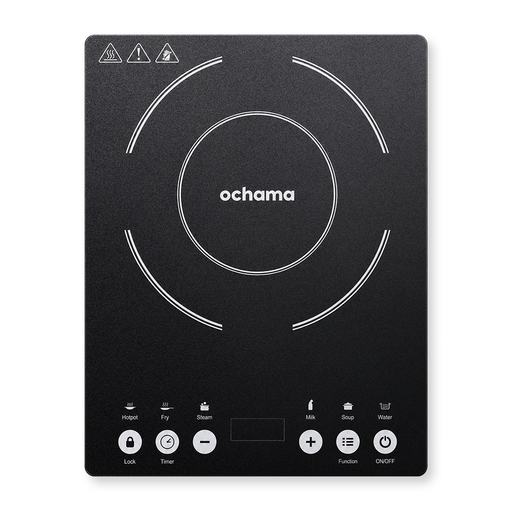 No image available
The product description lists a portable hob with adjustable heat for cooking on a single zone.
The specifications list 10 power settings, touch controls and a glass surface.
 No image available
The product description lists a single cooking zone and adjustable power for use with a suitable pan.
The specifications list a pan range of 12–26 cm, adjustable power from 200–2000 W and 10 power levels. Allow the hob to cool as instructed before cleaning or storing it.
It depends on the pan base and its size. Check that the base is flat and magnetic, then compare its diameter with the stated pan range for the exact model. A different size may affect whether the hob recognises or heats the pan.
Follow the instructions for your chosen model and leave the specified clearance around it. Inventum specifies a flat, heat-resistant surface and at least 10 cm of clearance at the sides and back for the KI120T; don’t assume the same distance applies to other models.
Brandweer Nederland advises plugging high-power appliances directly into a socket rather than using a multi-way adaptor or cable reel. Also check which other appliances are on the same electrical circuit.
No. Having your own hob doesn’t prevent cross-contamination by itself. Voedingscentrum says that even a stray breadcrumb can matter, so check ingredients and keep the pan, utensils and worktop clean and separate.
For electrical equipment covered by the relevant European safety requirements, the manufacturer must carry out an assessment, affix a CE mark and draw up an EU declaration of conformity. The Dutch government sets out this requirement for manufacturers; a product listing alone doesn’t prove that a specific item meets the requirements.
When you buy as a consumer in the Netherlands, you’re entitled to a product that meets reasonable expectations, but there’s no fixed statutory warranty period. The seller is your point of contact for a fault covered by your statutory rights; any manufacturer’s warranty is separate.