
Workshop host cooking successive batches
You use one pan at a time and want to be able to move or store the hob after the demonstration. Check that the pan base is within the specified range and follow the model’s placement instructions.


First decide how many pans need to be boiling at the same time, then check that the pan base, hob’s power and electrical connection are suitable for the workshop venue. A portable single-zone hob is ideal for demonstrations with successive batches; a two-zone hob gives you room for two pans, but its total power may limit using both zones on a high setting. A built-in hob or a high-powered model may also need a suitable electrical installation.
You use one pan at a time and want to be able to move or store the hob after the demonstration. Check that the pan base is within the specified range and follow the model’s placement instructions.
You want to use several pans at once. Match the number of cooking zones to your available worktop space, and check both the total connected load and the power per zone.
You’re looking for a permanent set-up for regular workshops. Measure the available recess or worktop space and have the electrical connection checked to make sure it’s suitable for your chosen hob.
| What to consider | What should you check? | Who is this important for? |
|---|---|---|
| Time between batches | Compare the specified power per zone with the pan and electrical connection; wattage alone won’t tell you how long your quantity of water will take to boil. | If I want to start the next batch quickly after each demonstration, how long my pan of water takes to heat is a key consideration. Around 36% of consumers prioritise having enough capacity for successive batches. |
| Using two pans at once | Check the total connected load and power per zone, and make sure there’s enough worktop space for both pans. | If I want to run two cooking stations at once, the number of zones and the space around them are crucial. Around 29% of consumers give simultaneous cooking stations top priority. |
| Connection and placement | Check the plug type, connected load, available electrical connection, and the space and ventilation requirements for the exact model. | If I want to use the hob at a specific workshop venue, the set-up must suit the available connection and worktop. Around 21% of consumers focus mainly on the connection and safe placement. |
| Pan and use | Check that the pan base is suitable and flat, and falls within the hob’s specified range and maximum load. | If I want to use an existing or larger pan of water, I want to know in advance whether it’s suitable for the hob and how to use the set-up safely. Around 14% of consumers prioritise pan compatibility and ease of use. |
With portable hobs that have limited total power, you can’t assume both zones can be used on a high setting at the same time. This may affect the pace of parallel demonstrations.
Compare the connected load with the power per zone, then decide how many pans really need to boil at once.
Allow for possible delays between demonstrations if the pans can’t both cook at the desired setting at the same time.
With induction, the pan base is what matters: it must be suitable and flat, and fall within the model-specific limits. The maximum load may also matter when using a heavy pan filled with water.
Measure the base and check it, along with the filled weight, against the specifications for the exact model.
If a pan doesn’t meet the specified requirements, you may need another suitable pan for the workshop.
A high-powered portable hob or a built-in model may require a different connection or changes to the electrical installation.
Check the connection at the venue and get advice on what your chosen model needs before you buy it.
Modifications or professional installation may be needed; the work will depend on the venue.
Inventum describes the KI120T as a portable single-zone hob for one compatible pan.
The DK 1031 is a portable two-zone hob for situations where you need two pans side by side.
Princess describes the 303011 as a portable double induction hob.
HENDI positions its Kitchen Line induction hob, code 239421, for professional kitchens; it may be worth considering if you’re using one larger pan.
The PIE661BB5E is a built-in induction hob for a kitchen with a suitable recess and electrical connection.
This selection includes portable hobs for one or two pans, as well as permanent multi-zone hobs for a dedicated workshop kitchen.
 No image available
Suitable for a workshop where you want to use two pans at the same time.
Specified power: 1500 W and 1000 W per zone. The product description lists five temperature settings.
 No image available
Suitable for successive demonstrations where you use one pan at a time and want a portable set-up.
The product description lists one cooking zone and a specified power of 2100 W. The product name lists 220 V/240 V.
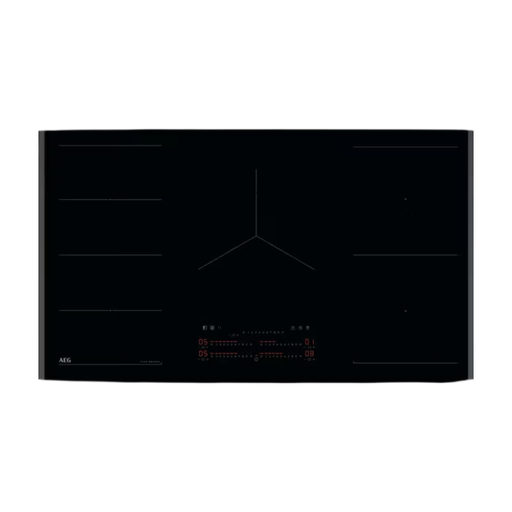 No image available
Suitable for a permanent workshop kitchen where you can use several pans at the same time.
This is a built-in model, not a portable hob. The product description lists PowerBoost, a timer for each zone and Flex Bridge.
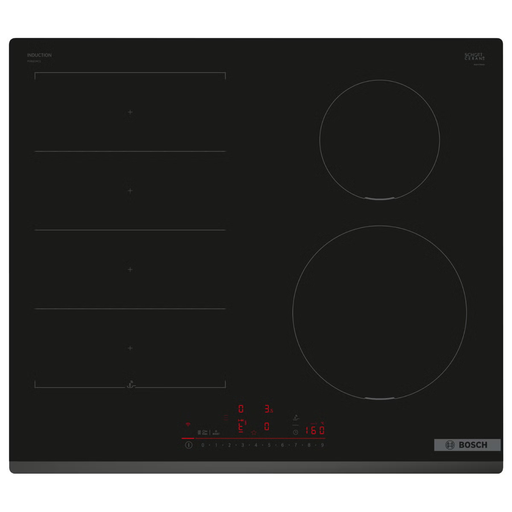 No image available
Suitable for a permanent kitchen set-up with several pans; check the built-in dimensions against the available recess.
The product name specifies a width of 60 cm and four cooking zones. The description mentions FlexInduction and Power Boost.
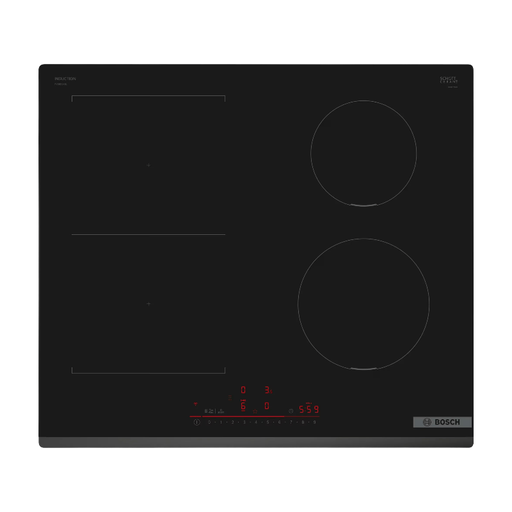 No image available
Suitable for a permanent workshop kitchen where several pans are used at once; check the installation dimensions.
The product name specifies a width of 60 cm and four cooking zones. The description mentions FlexInduction and Power Boost.
No, a special temperature setting isn’t essential: according to the Voedingscentrum, vegetables are briefly placed in boiling water and then straight into iced water. Choose your hob based on the pan you’re using, and check that the connection and appliance suit your set-up; the number of settings doesn’t guarantee a particular cooking time.
No, the pan base must be suitable and flat. The Consumentenbond recommends a magnetic, conductive base for induction; also check the pan range and maximum load for the exact appliance.
Follow the instructions for the exact model. For example, the manual for the Inventum KI120T specifies a flat, heat-resistant surface and at least 10 cm of clearance at the sides and back. Check the model-specific cleaning instructions; the Consumentenbond advises against using abrasive products on the cooking surface.
CE marking is compulsory for electrical equipment covered by the Dutch Electrical Equipment Decree, according to the NVWA. If the workshop is part of a business that prepares, processes or sells food, the NVWA also explains the requirement to work with an HACCP food safety plan or an approved hygiene code. The word ‘workshop’ alone doesn’t determine whether those business regulations apply.