
Vandaag of morgen in huis

Kwaliteit gegarandeerd

Welkomstaanbiedingen ontgrendelen: GRATIS bezorging | Tot 80% korting | Gratis 30 dagen JoyPlus-proefperiode
Download de app
An induction frying pan needs to do more than simply be magnetic. The base must make good contact with the cooking zone, the pan should suit your cooking style and the coating must be appropriate for the level of care you are realistically prepared to provide. The wrong choice can result in uneven heating, a wobbly pan or a non-stick coating that wears out sooner than expected.
Pay particular attention to these common pitfalls:
Induction works through magnetic transfer. Therefore, check that the product information explicitly mentions induction and, where possible, look at the base diameter. A base that roughly matches the cooking zone helps to make better use of heat and distribute it more evenly.
If you use several types of hob, you can choose an all-hob frying pan. Many models in the range are suitable for induction, gas, electric and ceramic hobs. This is practical if you move house or use a portable hob.
An aluminium pan generally heats up quickly and is relatively lightweight. Stainless steel is durable and suitable for high temperatures, but without a coating it requires more control when preheating and adding oil. A multi-layer pan combines different materials, but may be heavier.
With a non-stick frying pan, you should look beyond the name of the coating. Also check:
A PFAS-free frying pan may be worth considering if this feature is important to you. According to the product information for the WMF Durado and Brabantia Dusk and Onyx models, these products are PFAS-free. This is a product specification, not a general statement about cooking results or health. For other models, check the relevant product page; “non-stick” does not automatically mean PFAS-free.
A frying pan set containing, for example, 20 and 24 cm pans may be more economical than buying two separate pans if you often prepare different portion sizes. For stews or dishes that need to simmer, a frying pan with lid is more practical than a shallow frying pan.
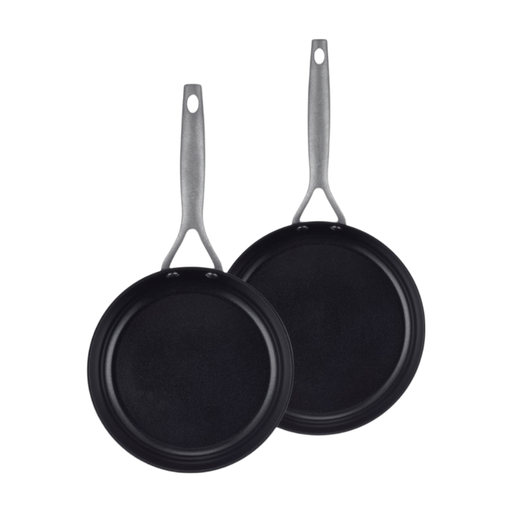
Why it suits this profile: The two sizes cover small and regular portions. According to the product information, both pans are suitable for induction, gas, electric, ceramic and halogen hobs.
The choice of sizes means you do not have to use the same pan that is too large or too small for every dish. The stated PFAS-free ceramic coating and induction compatibility are clearly specified.
20 and 24 cm set, 100% recycled forged aluminium, oven-safe up to 200 °C and dishwasher-safe according to the product information.
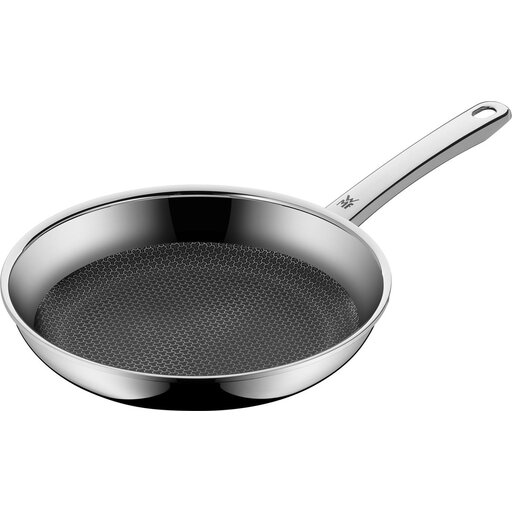
Why it suits this profile: According to the product information, the three-layer construction consists of an aluminium core, stainless steel and an outer chrome layer. The pan is designed for high temperatures and induction cooking.
The stated 28 cm size and TransTherm base provide greater clarity in advance about the dimensions and heat distribution. The pan is not dishwasher-safe, so hand washing is part of its care routine.
Induction-compatible, heat-resistant up to 260 °C, honeycomb structure and a stated 5-year manufacturer’s warranty.
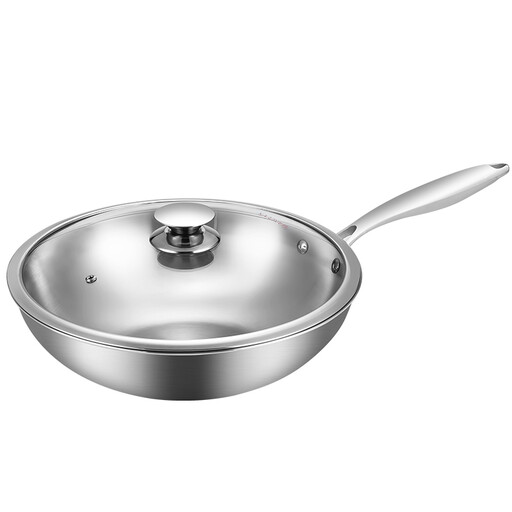
Why it suits this profile: According to the product information, this induction wok has no non-stick coating and is made from 304 stainless steel. It suits anyone who regularly stir-fries and is looking for an uncoated pan.
There is no unclear coating claim: the product information states that the surface is uncoated. This means you know that preheating and the hot-pan-cold-oil method are important.
28 cm, suitable for induction, gas, electric and ceramic hobs and dishwasher-safe according to the product information.
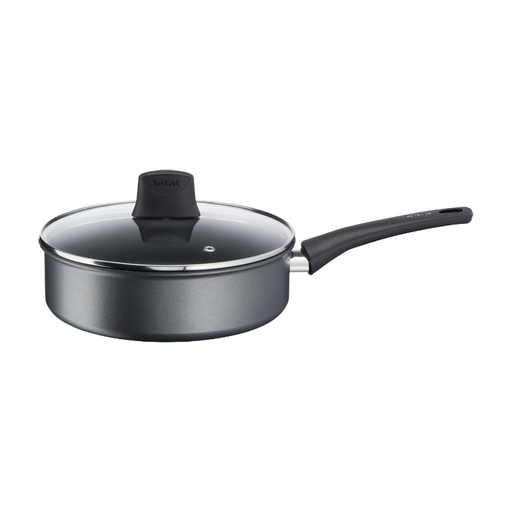
Why it suits this profile: The glass lid makes this pan practical for sauces, vegetables and dishes that need to cook through gently. According to the product information, the pan is suitable for all hobs.
The oven limit is clearly stated: up to 175 °C. This means you do not have to guess whether the pan can safely go from the hob to the oven.
24 cm, glass lid, induction-compatible base, titanium-reinforced non-stick coating and oven-safe up to 175 °C according to the product information.
We have compiled a complete, up-to-date list of products that fully meet these strict selection criteria and the applicable European safety regulations.
The lifespan of a coating depends greatly on how it is used. Do not leave an empty non-stick pan on a high heat setting for an extended period, and do not use metal knives or utensils when the manufacturer advises against them. Allow the pan to cool before washing it; a sudden change in temperature can cause warping.
A ceramic frying pan and other coated models will generally remain usable for longer if you use a soft sponge and mild washing-up liquid. Even if a pan is dishwasher-safe, hand washing can help preserve the coating and its appearance. Also check regularly that the handle is securely attached and that the coating is not becoming damaged.
No. The product information must explicitly state that the pan is induction-compatible. A magnetic base is essential, but the diameter and flatness of the base also affect how it performs.
For one person, 20 cm is often sufficient. A 24 cm pan is versatile for everyday meals. Choose 28 cm for larger portions or when you want to fry several ingredients at the same time. Match the base to the induction zone as closely as possible.
No. PFAS-free and scratch-resistant are different properties. Check both claims separately in the product information and use suitable kitchen utensils. No coating is designed for unlimited use with sharp metal objects.
