
Vandaag of morgen in huis

Kwaliteit gegarandeerd

Welkomstaanbiedingen ontgrendelen: GRATIS bezorging | Tot 80% korting | Gratis 30 dagen JoyPlus-proefperiode
Download de app
An induction frying pan needs to do more than simply react to magnets. It should match the cooking zone properly, be large enough for your portions and suit the way you cook. A non-stick coating can be useful for eggs and pancakes, while stainless steel or a multi-layer pan is better suited to high temperatures and searing.
Many poor purchases result from three common pitfalls:
Induction works by transferring energy magnetically between the hob and the base of the pan. So check the product information for:
A 24 cm pan does not automatically have a 24 cm base. For efficient heating, the base should match the induction zone well. A pan that is too small may respond slowly; one that is too large may heat unevenly outside the heated area.
A frying pan for a gas hob may also be suitable for induction, but only when this is explicitly stated in the specifications. An aluminium frying pan without a magnetic base will generally not work on induction. If in doubt, a product listing stating “induction compatible” or “induction suitable” is more important than the pan’s material alone.
“Granite”, “stone effect”, “titanium” and “ceramic” are not fully interchangeable categories. Look at what is specifically stated:
According to Brabantia’s product description, the Onyx and Dusk series feature a PFAS-free ceramic non-stick coating. Other products, for example, may have a coating that the manufacturer states is free from PFOA, lead or cadmium. These are specific manufacturer claims, so always compare the complete product specifications.
The diameter determines how much you can cook at once:
An induction sauté pan generally has higher sides and is suitable for sauces, stews and one-pot meals. A frying pan with a lid is useful when you want to cook ingredients through or retain moisture. For stir-fries, an induction wok with a wide, flat base is more practical than a traditional round wok.
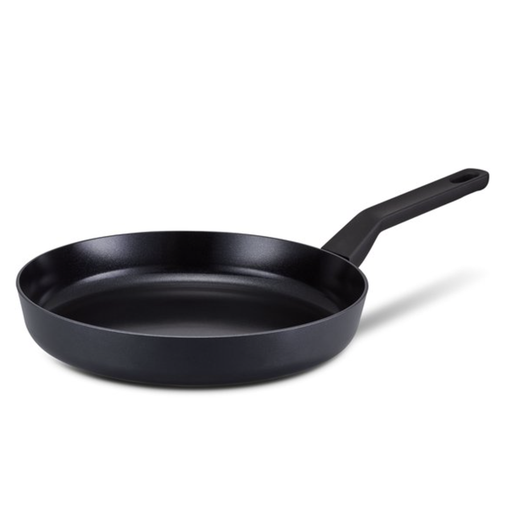
Why it suits this profile: The compact size is handy for single servings, eggs and omelettes. According to the product description, the pan is suitable for induction, gas, ceramic and electric cooking.
The product description explicitly mentions a PFAS-free ceramic coating and a diameter of 20 cm. This means you do not have to guess based solely on the term “stone effect”.
100% recycled aluminium, a PFAS-free ceramic coating and hand-washing recommended to help preserve the coating for longer.
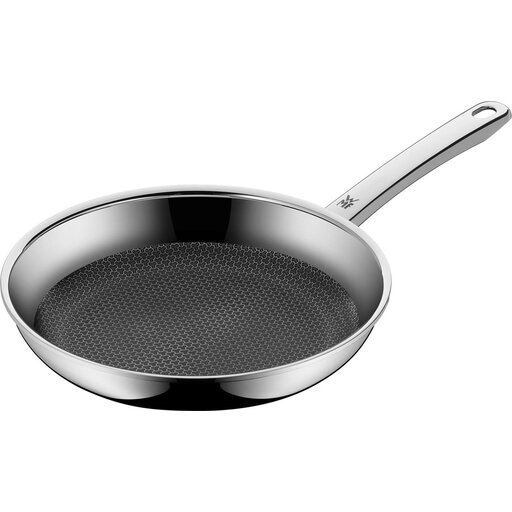
Why it suits this profile: This pan is aimed at anyone who alternates between cooking meat, poultry and omelettes and is looking for a combination of stainless steel, aluminium and a non-stick coating.
The product information specifies a three-layer construction, a honeycomb structure and a TransTherm base. This provides more detail than a general claim about “strength”.
Suitable for all heat sources, including induction, with a stated heat resistance of up to 260 °C. According to the information, the pan is not dishwasher-safe.
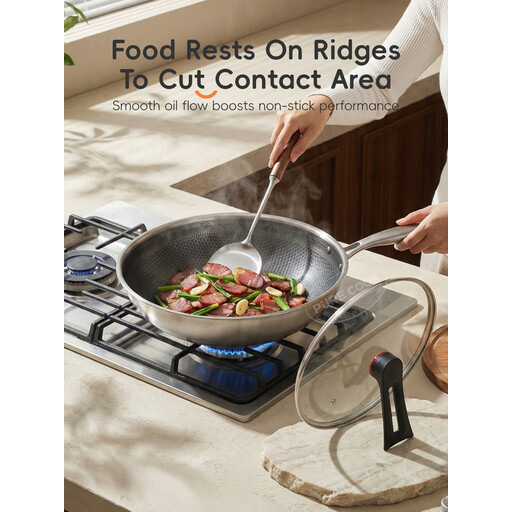
Why it suits this profile: The wide wok shape and included glass lid are well suited to stir-frying, stewing and larger family portions on induction, gas or ceramic hobs.
The specifications mention 304 stainless steel, a three-layer construction and compatibility with several types of hob. Hand-washing is also recommended, and users are warned against thermal shock.
32 cm diameter, a glass lid and a honeycomb surface according to the product description. Suitable for stir-frying, frying, braising and stewing.
We have put together a complete, up-to-date list of products that fully meet these strict selection criteria and the applicable European safety regulations.
A durable frying pan depends on more than just the material. Everyday use also makes a difference.
No. Aluminium is not magnetic on its own. An aluminium pan will work on induction when the manufacturer has fitted it with a suitable magnetic base and clearly states this. Always check compatibility in the product specifications.
This depends on the coating, temperature, utensils used and care. There is no fixed lifespan for every pan. Replace the pan when the coating is clearly damaged or coming away, or when the base is no longer flat.
The hob heats the pan directly via a magnetic field. Actual energy consumption depends on the cooking time, power setting, pan size and how well the base matches the cooking zone. A suitable, flat base helps limit heat loss while cooking.
