
Vandaag of morgen in huis

Kwaliteit gegarandeerd

Welkomstaanbiedingen ontgrendelen: GRATIS bezorging | Tot 80% korting | Gratis 30 dagen JoyPlus-proefperiode
Download de app
Choosing a new induction frying pan set might seem straightforward, until you have to consider the coating, base, handle, oven use and care. A pan may be suitable for induction but still heat unevenly. And “dishwasher-safe” doesn’t automatically mean the non-stick coating will last.
As a Joybuy Product Recommendation Officer, I look beyond the key product specifications and weigh common marketing claims against practical considerations. That way, you can compare ceramic frying pan sets and other induction frying pans based on what really matters in a British kitchen.
Induction requires a magnetic layer in the base. An aluminium pan won’t work on induction by itself. Check that the product information explicitly states induction compatibility and, ideally, specifies a magnetic stainless steel base.
A pan described as suitable for all hobs should also work on gas, electric and ceramic hobs. If you have an induction hob, check the diameter of the contact area too. A small pan on a large cooking zone may heat less efficiently.
A ceramic non-stick coating can be convenient when cooking with little oil, but it’s still susceptible to scratches, overheating and metal utensils. Durability claims come from the manufacturer or seller. For example, a brand’s own tests may show that certain coatings are several times more durable than standard coatings; that’s no guarantee for every kitchen or cooking method.
Use wooden, silicone or nylon utensils instead. Don’t leave an empty pan on a high heat for too long, and let it cool before washing.
“Oven-safe” may apply to the pan, but not necessarily to the handle, lid or coating at every temperature. Check the maximum temperature and whether the handle needs to be removed.
Dishwasher-safe claims also need a closer look. According to the product information, some pans are dishwasher-safe, while handwashing is recommended to help keep the coating in good condition for longer. That difference matters if you cook every day.
A 3-piece frying pan set with, for example, 20, 24 and 28 cm pans offers more flexibility than three pans of the same size:
For a household of one to three people, 20 and 24 cm pans may be enough. Families will usually get more use from a 28 cm pan. Also check that the base sits flat on your cooking zone.
When looking at PFAS-free frying pans, check exactly what the claim covers. “PFAS-free” may be included in the product specifications, but check whether the manufacturer states this and whether it applies to the whole pan or just the coating. Ceramic pans often have an aluminium base. Aluminium conducts heat quickly, but induction requires a magnetic base.
A stainless steel pan without a traditional non-stick coating calls for a different cooking technique: preheat it properly, use enough fat and don’t try to turn food too soon. A set with one coated pan and one uncoated pan can therefore be handy for different dishes.
A fixed stainless steel handle is generally sturdy and suitable for oven use if the manufacturer says so. A frying pan set with a removable handle takes up less cupboard space and can be easier to put in the oven or fridge. Just check that the handle is locked in place before lifting the pan.
Even if your frying pans are dishwasher-safe, it’s still best to care for them gently. Avoid scouring pads, harsh cleaning products and metal utensils. A soft sponge and mild washing-up liquid are usually enough.
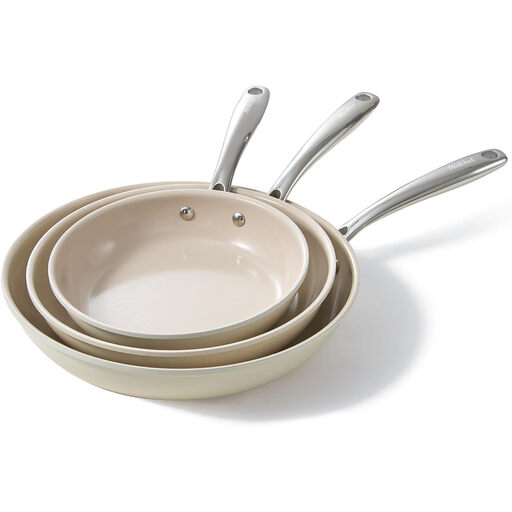
Why it suits this profile: The set includes 20, 24 and 28 cm pans and, according to the product information, is suitable for induction, gas and electric hobs. That makes it a practical choice if you’re looking for one basic set.
The three sizes and clearly stated induction compatibility make it easy to check whether the set is right for you. The manufacturer also says the pans can be used in the oven and dishwasher; handwashing is recommended to protect the coating.
20, 24 and 28 cm; ceramic coating; forged aluminium construction; stainless steel handles with double rivets.
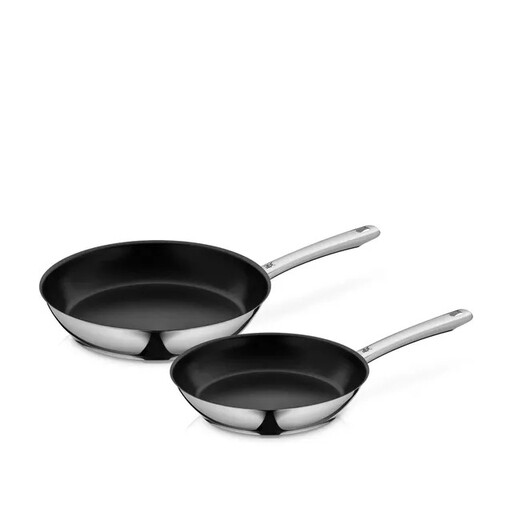
Why it suits this profile: The 24 and 28 cm pans are a good combination for everyday cooking and larger portions. According to the product information, they’re suitable for all hobs, including induction.
The stated 3-ply base helps address the risk of uneven heating. According to the product information, the Croma coating is made without PFOA.
24 and 28 cm; 3-ply base; suitable for induction; Cool+ handles, according to the product description.
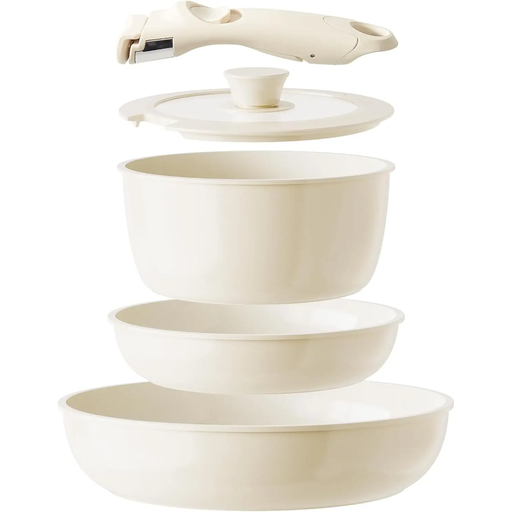
Why it suits this profile: The removable handle and stackable pieces are handy in small kitchens, campervans or if you often move from hob to oven.
The product information explicitly lists gas, electric and induction hobs as suitable. The handle can be removed for oven use; check that it’s properly locked in place before lifting the pan.
20 and 26 cm frying pans; saucepan with lid; removable handle; free from PFAS, PTFE and PFOA, according to the manufacturer.
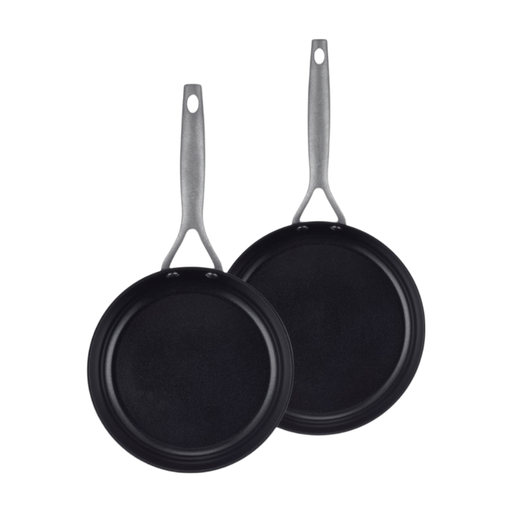
Why it suits this profile: The 20 and 24 cm sizes are well suited to everyday meals for one to three people, with easy cleaning in mind.
The product specifications list all common hob types, including induction, and a maximum oven temperature of 200°C. The pans can go in the dishwasher, but handwashing is recommended to help them last longer.
20 and 24 cm; ceramic coating; PFAS-free according to the product information; suitable for oven and dishwasher use.
We’ve put together a complete, up-to-date list of products that meet these strict selection criteria and the applicable European safety regulations.
A set with 20, 24 and 28 cm pans will cover most everyday needs. Choose a pan with a magnetic base that matches the cooking zone. A 28 cm pan is often handy for families, while 20 or 24 cm is enough for smaller portions.
Yes, ceramic frying pans can be suitable for everyday cooking, as long as you follow the instructions. Use a low to medium heat, avoid metal utensils and don’t use abrasive cleaning products. How long the pan lasts depends on the temperature, how often you use it and how well you care for it.
No. Dishwasher-safe means the product information says the pan can go in the dishwasher. Handwashing with a soft sponge is often the safer option for preserving a ceramic or other non-stick coating. Always check the instructions for the specific model.
