
Vandaag of morgen in huis

Kwaliteit gegarandeerd

Welkomstaanbiedingen ontgrendelen: GRATIS bezorging | Tot 80% korting | Gratis 30 dagen JoyPlus-proefperiode
Download de app
Choosing a new frying pan set for your induction hob seems simple. That is, until you notice your egg sticking again after a few months, the pan wobbling on the cooking zone, or that you never use half the set. Many marketing promises lead to disappointment and wasted money. Let's look at the three most common pitfalls so your next purchase is a resounding success.
To avoid these pitfalls, it's helpful to focus on a few concrete specifications. These aren't opinions, but factual characteristics that make the difference between a pan you replace after a year and a durable pan set.
The term PFAS-free frying pan set is a major selling point today. The most common variant is the ceramic pan set. These coatings, made from natural materials like sand and clay, contain no harmful chemicals. However, their durability heavily depends on the quality and thickness of the layers. A pan with multiple, reinforced ceramic layers will last significantly longer.
Also, consider the base material of the pan itself. Recycled aluminium pans are an environmentally conscious choice. Aluminium is lightweight and an excellent heat conductor, ensuring it heats up quickly and evenly. Stainless steel (SS) is heavier and more robust but often heats up a bit more slowly.
For induction cooking, the base of the pan is the most important element. A good induction pan has a thick, completely flat base made of multiple layers (a so-called ‘sandwich base’). This construction ensures:
Think carefully about which sizes you actually use. A set with a 20 and 24 cm frying pan is a perfect foundation for most households (1-3 people). A larger 28 cm pan is useful for families or if you like to cook larger portions.
Extra functionality can make a pan more versatile. An oven-safe frying pan allows you to start a dish on the hob and then finish it in the oven. Pay close attention to the handle material; not all handles can withstand high oven temperatures.
Below is a selection of pans that align well with different needs, based on their objective specifications.
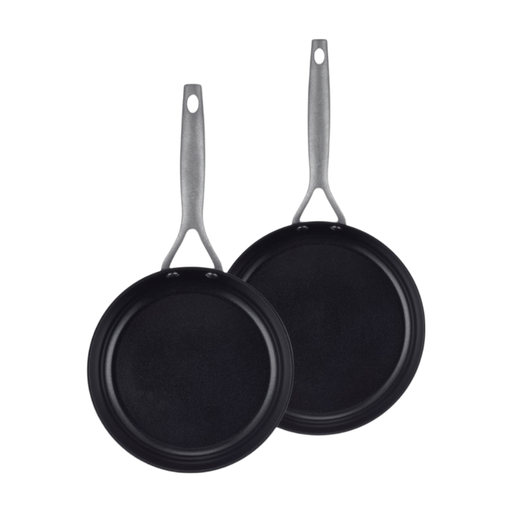
Why it's a match: Ideal for those who want to make a healthy and eco-conscious start. This set includes the two most-used sizes, is made from recycled material, and has a reliable PFAS-free coating. Perfect for daily use in a smaller household.
This set avoids the pitfall of impractical sizes by focusing on the essential 20 and 24 cm pans. The ceramic coating is from a reputable brand, and the use of recycled aluminium with an RCS certification avoids the trap of unclear material claims.
PFAS-free ceramic coating with a double layer for better scratch resistance. The pans are oven-safe up to 200°C, offering additional cooking options.
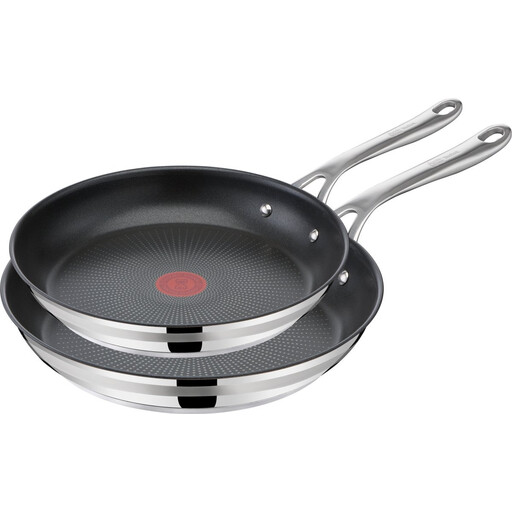
Why it's a match: For the cook who invests in durability and performance. These stainless steel pans with riveted handles are built for intensive use. The larger 24 and 28 cm sizes are ideal for preparing family-sized meals.
The robust stainless steel construction and Thermo-Fusion base are specifically designed to prevent warping on induction hobs. The coating is reinforced with titanium, which tackles the pitfall of a fast-wearing non-stick layer.
The Thermo-Signal technology indicates when the pan has reached the ideal cooking temperature. The pans are suitable for all heat sources and are dishwasher-safe.
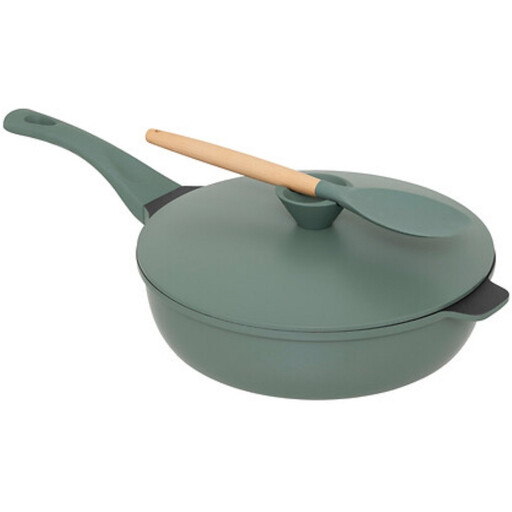
Why it's a match: For those who value efficiency and minimalism. This single pan replaces a frying pan, sauté pan, saucepan, and steamer. Ideal for kitchens with limited storage or for those who dislike a cluttered pan cupboard.
This product avoids the pitfall of an unused pan set. Instead of buying multiple pans, you invest in one multifunctional item that you can use for almost anything, from frying to steaming.
Highly multifunctional: functions as a frying pan, sauté pan, saucepan, and steamer. Comes with a lid, steamer basket, and spatula. Suitable for all heat sources, including induction.
We have compiled a complete, up-to-date list of products that meet these strict selection criteria and safety regulations.
The lifespan of a ceramic pan depends heavily on the quality of the coating and its maintenance. A high-quality pan with a multi-layer coating can last for several years with proper use (no metal utensils, no overheating, hand washing). Cheaper models with a thin layer can lose their non-stick properties within a year.
This is usually because the base of the pan is not completely flat or is too small for the cooking zone. A warped base makes insufficient contact, leading to inefficient and uneven heating. Always ensure that the diameter of the pan's base matches the cooking zone on your induction hob.
Not necessarily. A higher price is often linked to more expensive materials (like multi-ply stainless steel), a thicker base, a more durable coating, and a well-known brand. This can result in better performance and a longer lifespan. However, an affordable pan that meets the core criteria—a thick, flat base and a decent PFAS-free coating—can be an excellent choice for many home cooks. It's about matching the specifications to your cooking habits and budget.
