
Vandaag of morgen in huis

Kwaliteit gegarandeerd

Welkomstaanbiedingen ontgrendelen: GRATIS bezorging | Tot 80% korting | Gratis 30 dagen JoyPlus-proefperiode
Download de app
Buying an induction frying pan might seem straightforward – until you have to choose between aluminium, ceramic, stainless steel, different coatings and multiple sizes. Marketing terms like “extra strong”, “healthy” or “suitable for all hobs” don’t always tell the full story.
For British households, these three pitfalls are particularly relevant:
That’s why it’s wise to look beyond just the price or appearance, and consider material, base, size, maintenance and how you’ll use it.
A frying pan for all hobs should, according to the product information, be suitable for induction, gas, electric and ceramic hobs. Pay close attention to the exact description on the product page. “Suitable for gas” doesn’t automatically mean the pan will work on induction.
An induction hob heats via a magnetic field. The base must therefore be magnetic and make flat contact with the cooking zone. Place the pan as centrally as possible. A base smaller than the cooking zone may heat up less efficiently; a much larger pan can heat unevenly.
A non-stick frying pan can have different types of coatings. A ceramic layer is often described as PFAS-free, while other pans use a coating based on different materials. Always check exactly what claim the manufacturer makes.
For example: according to the product description from Brabantia, the Onyx series has a 100% PFAS-free ceramic double non-stick coating. With Naturepan, the manufacturer states that a ceramic coating is used which is free from PTFE, PFAS and PFOA. These are product claims from the brands and should not be confused with a general guarantee for every ceramic pan.
When using a coated pan, it’s best to use wooden, silicone or plastic utensils. Avoid metal spatulas if the product information advises against them. Let the pan cool down before washing it and don’t use steel wool or abrasive cleaners.
A 20 cm pan is practical for an egg, omelette or a small portion. With 24 to 28 cm you have more room for a meal for one to three people. For families or stir-fry dishes, an induction wok of 28 to 32 cm or a sauté pan with lid is often more convenient.
Also pay attention to the base diameter. This can be smaller than the top rim of the pan. With the Brabantia Onyx sauté pan of 26 cm, for example, a base diameter of 17 cm is stated. That’s relevant information when your hob works with fixed zones.
An aluminium pan generally heats up quickly and is relatively light. A durable aluminium frying pan can be a practical choice for daily use, but its lifespan depends heavily on temperature, utensils and cleaning.
Ceramic pans are interesting if you’re specifically looking for a ceramic frying pan or PFAS-free frying pan. The term PFAS-free should always be linked to the specific model and the official product information. A coating also still needs maintenance, even when the manufacturer states a higher scratch resistance.
Stainless steel is sturdy and suitable for high temperatures, but often requires more control when preheating and cooking. A composite base can improve heat distribution. If you’re looking for one pan for stir-frying, braising and boiling, a wok with lid or a sauté pan may be more practical than a shallow frying pan.
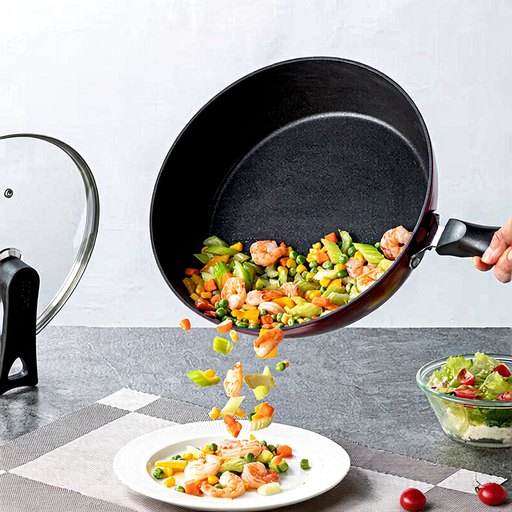
Why this fits the profile: The size is suitable for daily frying, stir-frying and simple family meals. According to the product description, this pan works on gas, electric, ceramic and induction.
The hob compatibility is clearly stated. The manufacturer recommends medium to low heat, not overheating an empty pan, and hand washing with a soft cloth.
28 cm diameter, aluminium body and a manufacturer-stated PFAO-free non-stick coating. Suitable for multiple heat sources.
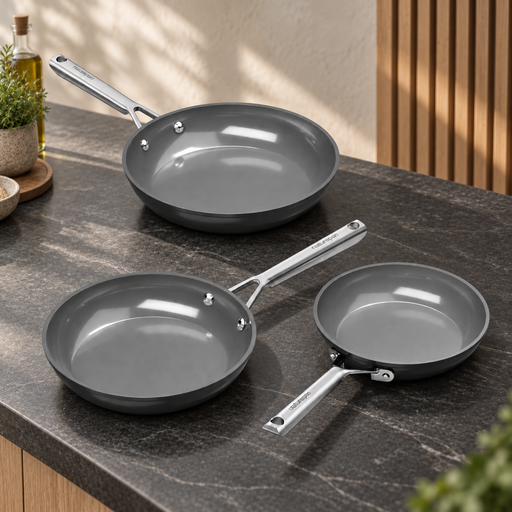
Why this fits the profile: The three sizes cover small portions, daily meals and larger preparations. The set suits anyone who wants to cover different cooking tasks with one purchase.
The set states induction compatibility, dishwasher safety and oven use up to 260 °C. The manufacturer still recommends hand washing and no metal utensils.
20, 24 and 28 cm in one set, ceramic coating stated by the manufacturer to be free from PTFE, PFAS and PFOA, plus stainless steel handles.

Why this fits the profile: The wok is designed for stir-frying, braising, boiling and deep-frying. The capacity and lid suit larger meals and more intensive kitchen use.
The composite base is stated in the product information to be suitable for induction, gas, electric and ceramic. Hand washing is recommended to preserve the structure and handle.
30 cm, 304 stainless steel, glass lid and a ceramic non-stick coating according to the product description.
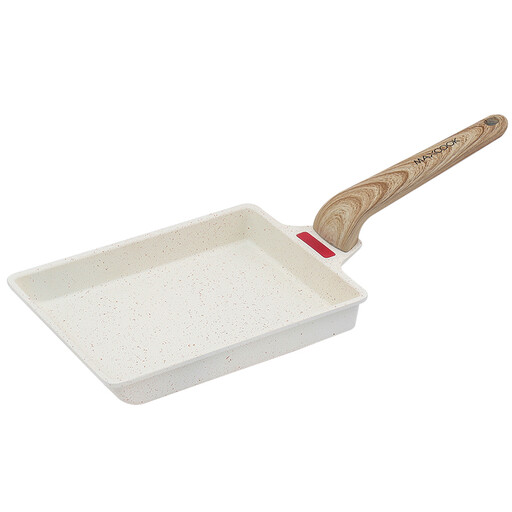
Why this fits the profile: The rectangular shape is designed for Japanese omelette dishes, small portions and compact cooking. This is a targeted addition, not a replacement for a large frying pan.
The specific size and suitability for induction and open flame are stated in the product name. Do check whether the base size fits your cooking zone.
Aluminium alloy, composite base and a compact size of 19 × 14 cm for tamagoyaki and similar dishes.
We’ve put together a full, up-to-date list of products that fully meet these strict selection criteria and current European safety regulations.
No. Check whether the manufacturer explicitly states induction compatibility. A flat, magnetic base is required. If in doubt, consult the product information or check with a magnet whether the base is magnetic, although that doesn’t give a complete guarantee about heat distribution.
That depends on use and maintenance. Don’t use unnecessarily high temperatures, don’t heat the pan empty and choose soft kitchen tools. Even a dishwasher-safe pan can last longer if you wash it by hand. Stop using it when the coating is clearly damaged or has come loose.
An induction pan set can be practical when you need multiple sizes. An individual pan makes more sense if you only use one size or are looking for a specific wok, sauté pan with lid or tamagoyaki pan. So compare the included diameters, materials, oven safety and care instructions before judging the price.
