
Vandaag of morgen in huis

Kwaliteit gegarandeerd

Welkomstaanbiedingen ontgrendelen: GRATIS bezorging | Tot 80% korting | Gratis 30 dagen JoyPlus-proefperiode
Download de app
An induction frying pan needs to do more than just react to a magnet. The base must stay flat, the size must suit your cooking zone, and the coating or material should match the way you cook. A pan that looks suitable for all hobs on the packaging can still be impractical in practice, due to a too-small induction base, a fragile non-stick coating, or tricky maintenance.
Watch out for these common pitfalls:
Look for a product listing that explicitly mentions induction. A pan suitable for all hobs will usually also mention gas, electric and ceramic cooking. That’s handy if you move house or use multiple heat sources.
The diameter of the pan is not the same as the diameter of the induction base. With the Brabantia Onyx casserole pan (26 cm), the base has a diameter of 17 cm according to the product information. With the Brabantia Onyx wok pan (28 cm), that’s 16 cm. So check whether the base aligns well with your cooking zone. A pan that’s too large on a small zone will heat less evenly.
An aluminium pan generally heats up quickly and is relatively light. That suits everyday frying, eggs and pancakes. A ceramic frying pan can be interesting if you’re looking for a coating explicitly described as PFAS-free. According to the product information for the Brabantia Onyx and Dusk models, these have a ceramic coating without PFAS.
A stainless steel pan without a non-stick coating is suitable for high temperatures and searing, but requires the right technique. The Maxcook Tri-Ply 304 stainless steel wok has no coating according to the product information and works on induction, gas, electric and ceramic. Heat the pan gradually, then add oil, and don’t use an unnecessarily high setting.
A cast iron frying pan retains heat for a long time and is suitable for small portions or slow cooking. The 10 cm Maxcook pan is intended, according to the product information, for melting butter, warming sauces and single-portion meals. Because this pan is uncoated, you need to season it before use and dry and lightly oil it immediately after washing.
A non-stick coating can make cooking and cleaning easier, but the usage instructions remain important. Avoid metal spatulas, overheating an empty pan, and abrasive scouring pads. “Dishwasher-safe” doesn’t automatically mean the coating will stay looking good for long. For many models, hand washing is recommended to extend the lifespan.
A casserole pan with a lid is practical for sauces, stews and vegetables. A glass lid lets you keep an eye on the dish without opening the pan. Do check whether the pan is oven-safe and up to what temperature. A wooden handle, as found on some stainless steel pans, isn’t always suitable for the oven.
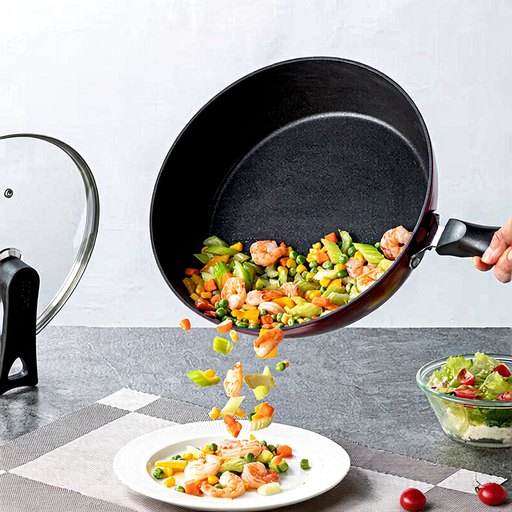
Why this fits the profile: The 28 cm size offers plenty of room for everyday meals. According to the product information, the pan is suitable for gas, electric, ceramic and induction hobs.
The compatibility with multiple hobs is clearly stated. Use medium to low heat and avoid metal utensils to protect the coating.
28 cm diameter; coating that is PFAO-free according to the product information; suitable for induction and other listed heat sources.

Why this fits the profile: The 24 cm size is useful for portions of up to around three people. The pan combines a PFAS-free ceramic coating with a stainless steel handle.
The product information explicitly states PFAS-free, induction-compatible and oven-safe up to 200 °C. This means important usage limits can be checked in advance.
24 cm diameter; two layers of ceramic non-stick coating according to the product information; dishwasher and oven safe within the stated conditions.
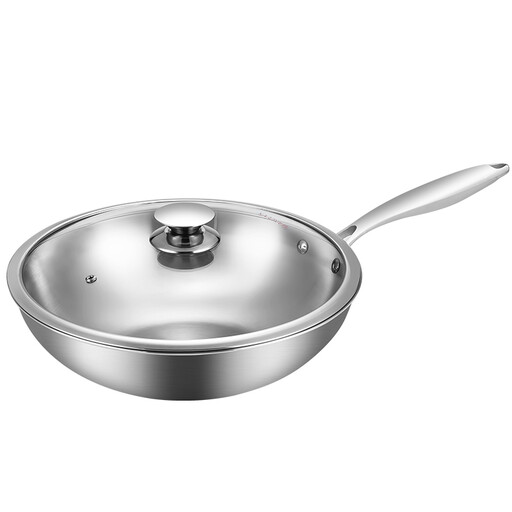
Why this fits the profile: This wok without a non-stick coating is ideal for stir-frying, searing and cooking on multiple heat sources. The glass lid is handy for simmering.
Because there is no coating according to the product information, you don’t have to worry about coating damage in your decision. However, the pan does require proper preheating and hand washing for a neat finish.
304 stainless steel; thick composite base; suitable for induction, gas, electric and ceramic cooking.
We’ve put together a full, up-to-date list of products that fully meet these strict selection criteria and comply with current European safety regulations.
For a one-person household or small portions, a small frying pan of around 20 cm is often enough. A 24 cm pan works well for meals for a couple of people. Choose 28 cm when cooking for a family, but always check the diameter of the magnetic base and the cooking zone.
No. PFAS-free describes the coating or material, whereas induction compatibility relates to the base. Check both features separately in the product information. A ceramic frying pan can be PFAS-free, but it also needs a suitable magnetic base.
That depends on the material, usage and maintenance. With a coated pan, don’t use metal utensils, don’t heat the pan empty, and let it cool down before washing. An uncoated cast iron or stainless steel pan can last a long time, but requires more cooking skill and careful drying. The lifespan isn’t determined by the material alone, but also by daily use and storage.
