
Vandaag of morgen in huis

Kwaliteit gegarandeerd

Welkomstaanbiedingen ontgrendelen: GRATIS bezorging | Tot 80% korting | Gratis 30 dagen JoyPlus-proefperiode
Download de app
Buying an induction frying pan seems straightforward, until problems start to crop up after a few months. The pan doesn’t heat evenly, the non-stick coating starts to peel or the base turns out not to be suitable for your hob. Terms such as “extra strong”, “durable” and “healthy cooking” don’t tell you much on their own without clear product specifications.
So, keep an eye out for these three common pitfalls:
Induction works using a magnetic field, so the pan needs a magnetic base, usually made from stainless steel or fitted with a magnetic plate. Don’t just check whether it says “induction”; make sure the pan is suitable for your other hobs too.
A pan set for all hobs is a practical choice if you switch between induction, gas, electric, ceramic or halogen hobs. Also look for a flat base. A warped pan won’t make proper contact with the hob and may not heat evenly.
The most useful sizes for households in the Netherlands are:
A 28 cm frying pan has more cooking surface, but may not heat evenly on a small induction zone. So, match the pan’s diameter to the diameter of the cooking zone.
A non-stick frying pan may have a traditional coating, a ceramic coating or a multi-layer construction. Check:
Being PFOA-free or PFOS-free doesn’t automatically mean a pan is described as completely PFAS-free. If you’re looking for a PFAS-free frying pan, check for an explicit product specification, as with the WMF Durado and Brabantia Onyx in the selection below.
A ceramic frying pan may be an alternative if you’re looking for a coating without PFAS. However, ceramic coatings can also wear down if overheated, cleaned with abrasive sponges or used with metal spatulas. Wooden, silicone or plastic utensils are best.
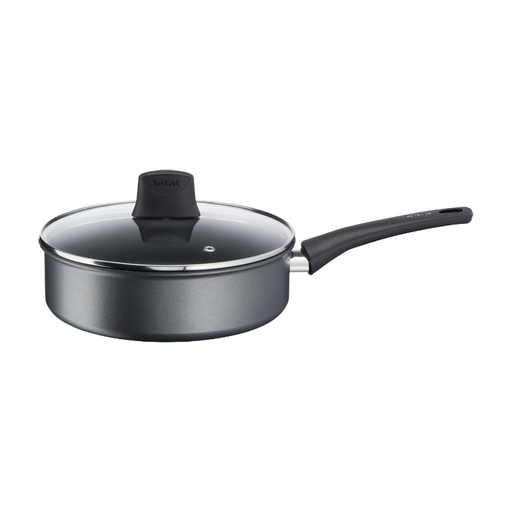
Why it suits this profile: The 24 cm size is practical for everyday cooking, and the glass lid is handy for simmering and cooking food through. According to the product description, this pan is suitable for all hobs, including induction.
The specifications explicitly state that it’s compatible with induction, has a base diameter of 21 cm and can be used in the oven up to 175 °C. This makes the main usage limits clear.
24 cm, glass lid, Tefal’s Thermo-Signal indicator and dishwasher-safe according to the product information. Hand-washing is recommended.
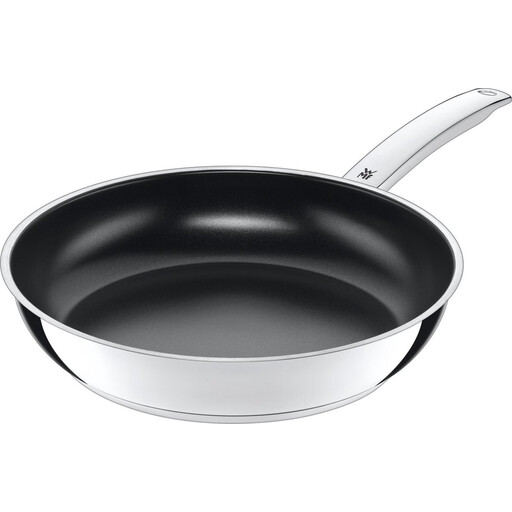
Why it suits this profile: This pan combines Cromargan 18/10 stainless steel with a ceramic coating. According to the product information, it’s PFAS-free and suitable for induction and other heat sources.
The product specifications state both the type of coating and that it’s PFAS-free. They also clearly state that the pan isn’t dishwasher-safe.
24 cm, ceramic coating, suitable for high temperatures on the hob and a stainless steel handle. Hand-washing is required.
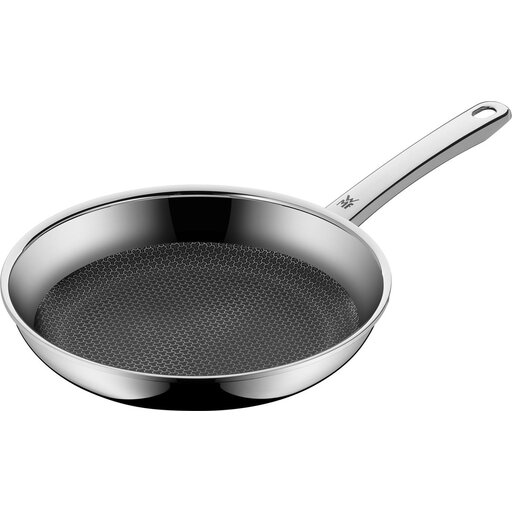
Why it suits this profile: Its three-layer construction, with an aluminium core and stainless steel, is designed to distribute heat evenly. The 28 cm diameter is suited to larger portions and frequent frying.
The specifications state that it’s heat-resistant up to 260 °C, compatible with induction and has a PermaDur coating. The manufacturer recommends hand-washing, so the care requirements are clear from the outset.
28 cm cooking surface, three-layer construction, honeycomb structure and a five-year manufacturer’s warranty according to the product information.
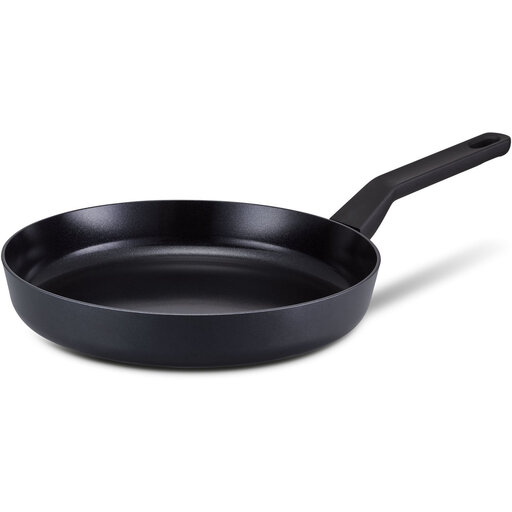
Why it suits this profile: According to the product information, this pan is made from 100% recycled aluminium and has a PFAS-free ceramic coating. The 24 cm size is suited to everyday family cooking.
The material, PFAS-free claim and induction compatibility are listed separately. The pan is dishwasher-safe, but hand-washing is recommended to help the coating last longer.
Recycled aluminium, ceramic coating, suitable for all the stated heat sources and dishwasher-safe according to the product description.
Don’t heat an empty pan on a high setting unless necessary. After cooking, let the pan cool before rinsing it; a sudden change in temperature can cause it to warp. Use a soft sponge and mild washing-up liquid. With a non-stick coating, metal spatulas and wire wool are usually best avoided.
A dishwasher-safe frying pan can be convenient, but dishwasher tablets, high temperatures and prolonged exposure to moisture can put extra strain on the coating and handle. Always check the handle before using the pan in the oven. If your frying pan has a lid, make sure the lid has its own maximum temperature rating too.
If you need several sizes, consider an induction frying pan set. Sets with 20, 24 and 28 cm pans offer flexibility, while a set with a detachable handle saves space in a smaller kitchen. With these sets, check that all the parts are oven- and dishwasher-safe, and that the handle locks securely on its own.
We’ve put together a complete, up-to-date list of products that meet these strict selection criteria and the applicable European safety regulations.
A 24 cm frying pan is a practical all-round size for smaller households and everyday use. A 28 cm pan is more convenient for families or larger portions. Always check that the base diameter matches the induction zone.
No. Ceramic describes the type of coating, but doesn’t automatically tell you about the pan’s full composition. Look for an explicit PFAS-free specification. This is stated in the product information for the WMF Durado and Brabantia Onyx mentioned above.
Its lifespan depends on the coating, temperature, utensils and cleaning method. Hand-washing, moderate heat and wooden or silicone spatulas can help reduce wear. If the coating is visibly damaged or starting to peel, replacing the pan is a sensible choice.
