
Vandaag of morgen in huis

Kwaliteit gegarandeerd

Welkomstaanbiedingen ontgrendelen: GRATIS bezorging | Tot 80% korting | Gratis 30 dagen JoyPlus-proefperiode
Download de app
An induction frying pan needs to do more than just be magnetic. It should fit your cooking zone, heat evenly and suit the way you cook. Three common pitfalls can easily lead to a disappointing purchase:
“Suitable for induction” without a clear base size
A pan may technically work on an induction hob, but heat less efficiently if its base is much smaller or larger than the cooking zone. Always check the diameter of the base, not just the top rim.
A non-stick coating that isn’t cared for properly
A ceramic or other non-stick coating can be damaged by metal utensils, scouring pads, high temperatures or a sudden change from hot to cold. What’s more, “dishwasher-safe” doesn’t automatically mean the coating will stay in optimum condition over time.
Features that don’t suit your cooking routine
A frying pan with a lid is handy for simmering, but a separate lid may not be suitable for oven use. A removable handle is useful for storage, too, but check how secure the mechanism is and whether the product information says the handle is oven-safe.
The right diameter depends on your portion sizes and the size of your induction zone.
Bear in mind the difference between the top diameter and the base diameter. For example, a 28 cm frying pan may have a smaller flat base. Position the pan as centrally as possible on the induction zone. This helps distribute the heat more evenly.
An aluminium pan usually heats up quickly. A stainless-steel pan with an aluminium core can spread heat across several layers. A ceramic frying pan usually has a smooth cooking surface, but needs careful handling.
For a PFAS-free frying pan, check the product description for the exact claim. According to the supplied product information, the WMF Durado and Brabantia Onyx coatings are PFAS-free. Other pans may be described as PFOA-free or PTFE-free, for example. These terms don’t automatically mean the same thing. Check the full product specifications, not just the short title.
Use wooden, silicone or nylon utensils with coated pans. Don’t leave an empty pan heating at a high temperature for long, and let it cool before washing it.
If you’re looking for a frying pan suitable for all hobs, check that gas, electric, ceramic and induction are explicitly listed. Halogen or infrared compatibility isn’t a given with every model.
Also check the following separately:
A frying pan with a lid is useful for sauces, simmering and stir-frying. For dry frying or quick cooking, an open pan is often more practical.
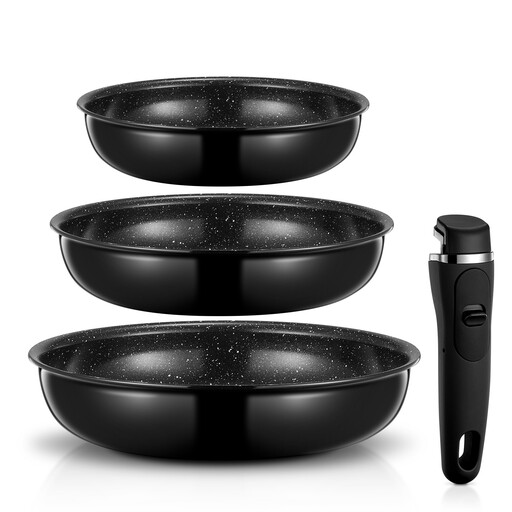
Why it suits this profile: This frying pan set gives beginners three sizes for smaller and larger meals. According to the product title, the pans are suitable for induction and other hobs, oven use and the dishwasher.
Having different sizes reduces the risk of using one pan that’s too small or too large for every meal. Before buying, be sure to check the exact coating and handle specifications.
Three popular sizes and a removable handle for flexible storage.
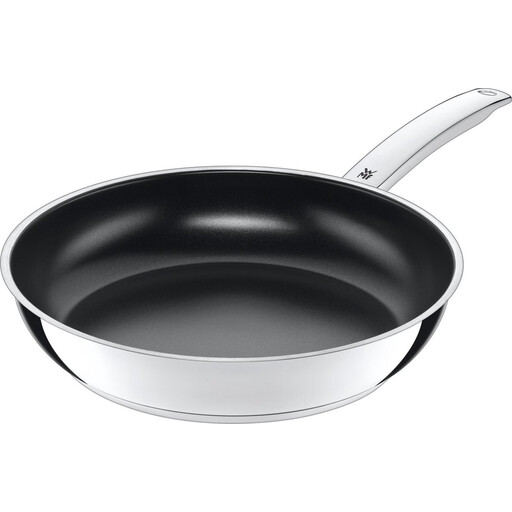
Why it suits this profile: According to the product information, this stainless-steel pan has a ceramic coating, is PFAS-free and is suitable for all heat sources. It’s listed as oven-safe up to 250 °C.
The product specifications clearly state which hobs it suits, what the coating is and the temperature limit. Bear in mind that it needs to be hand-washed: according to the description, the pan isn’t dishwasher-safe.
24 cm, a PFAS-free claim in the product information and oven use up to 250 °C.
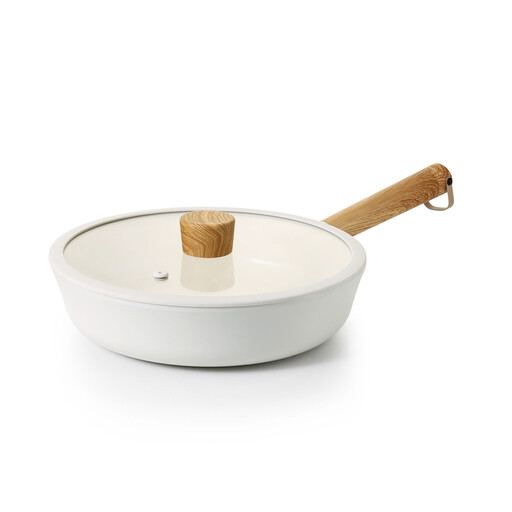
Why it suits this profile: The deep shape and glass lid are useful for stir-frying, simmering and cooking dishes with sauce. According to the product information, the pan is suitable for induction, gas, ceramic, electric and halogen hobs.
The product information states that it is free from PTFE, PFAS, cadmium and lead. It also recommends hand-washing and says the pan isn’t oven-safe unless explicitly stated.
28 cm capacity, deep sauté pan shape, glass lid and magnetic stainless-steel base.
We’ve put together a complete, up-to-date list of products that meet these strict selection criteria and the applicable European safety regulations.
An induction frying pan will usually last longer if you follow the manufacturer’s instructions. Use a suitably sized cooking zone and avoid heating the pan empty for long periods. After cooking, let it cool gradually and wash it with a soft sponge and mild washing-up liquid.
For a ceramic frying pan, hand-washing is often the safest option, even if the product page says it’s dishwasher-safe. Ideally, store pans so that metal edges or other pans don’t scrape against the coating. If you notice the coating peeling or becoming damaged, stop using the pan.
A 20 cm pan is often big enough for one person. A 24 cm frying pan is practical for everyday portions and a household of one or two people. Choose 28 cm if you want to cook several portions, stir-fries or larger ingredients at the same time. Always check that the base fits the cooking zone well.
Yes, if the manufacturer explicitly says so. According to their product information, many models in this selection are suitable for induction, gas, electric and ceramic hobs. Check compatibility separately for halogen and infrared hobs.
How long it lasts depends on the material, temperature, utensils and cleaning method. A coated pan will usually last longer if you avoid metal spatulas, don’t heat it empty at a high temperature and wash it by hand. Treat a brand’s scratch-resistant claim as product information from that brand, not as a guarantee of a specific lifespan.
