
Vandaag of morgen in huis

Kwaliteit gegarandeerd

Welkomstaanbiedingen ontgrendelen: GRATIS bezorging | Tot 80% korting | Gratis 30 dagen JoyPlus-proefperiode
Download de app
A good induction frying pan is essential in any modern kitchen. But the search can feel like a minefield. One pan promises the world but makes everything stick after three months, while another heats unevenly on your induction hob. Before you invest in a new pan, it's crucial to recognise the common pitfalls.
Many pans are sold with vague claims that mean little in practice. We'll help you see through the marketing jargon and focus on what really matters. These are the two most common problems:
To choose a durable and functional induction frying pan, focus on the following three concrete features.
For efficient performance on an induction hob, the base of the pan must be completely flat and ferromagnetic. This means it must contain iron. A simple test: if a magnet sticks to the bottom, the pan is suitable. A thicker, heavier base is often a sign of quality. It helps retain heat better and prevents the pan from warping at high temperatures, a common issue with a cheaper, lightweight frying pan.
The choice of material and coating determines how you cook and how you maintain the pan.
The right size depends on your household. A 24 cm frying pan is a versatile size for two to three people. For a single-person household or for frying an egg, 20 cm is often sufficient. A frying pan with a lid is especially practical; it retains heat and moisture, which is ideal for simmering dishes or preventing splatters.
We have selected a number of pans that suit different cooking styles and needs, based on their specifications.
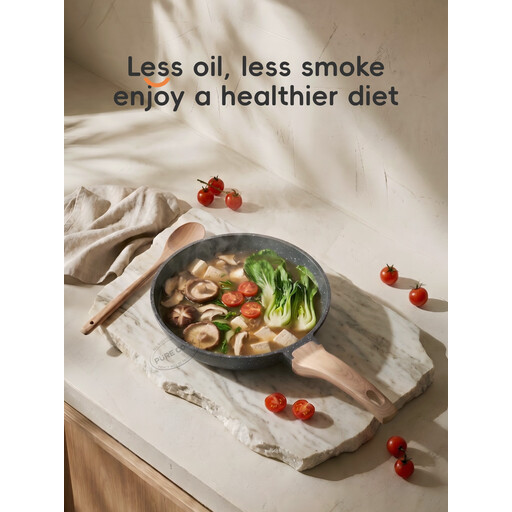
Why This Fits Their Persona: Ideal for quick, daily meals like a fried egg or pancakes. Its light weight makes the pan easy to handle, perfect for single-person households or as an addition to your cookware set.
The aluminium body ensures fast and even heat conduction, helping you avoid the pitfall of slow and uneven heating on induction.
Lightweight for easy one-handed operation. The non-stick coating makes cleanup simple.
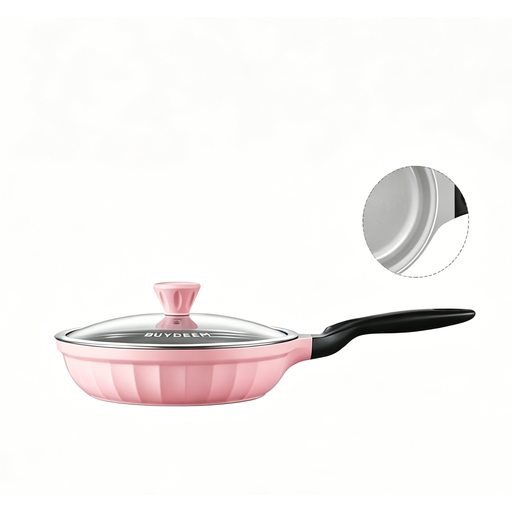
Why This Fits Their Persona: This pan is focused on healthy cooking for the whole family. The 26 cm size is perfect for 3-4 people, and it comes with a glass lid. The explicit PFAS-free claim provides peace of mind.
Tackles the pitfall of vague health claims by using a Swiss ceramic coating that is explicitly PFAS-, PFOS-, and PFOA-free.
Cast aluminium construction for fast, even heat distribution. Suitable for all hobs, including induction.
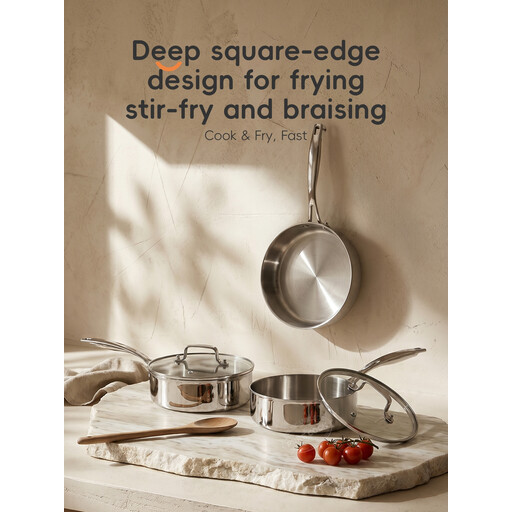
Why This Fits Their Persona: For those tired of replacing pans with worn-out coatings. This stainless steel pan is an investment in durability. Ideal for searing meat at high temperatures and for cooks who want total control.
Completely bypasses the pitfall of the wearing non-stick layer. Since there is no coating, there is nothing to wear out or damage, guaranteeing a very long lifespan.
Made of food-grade 304 stainless steel for maximum durability and corrosion resistance. The three-layer base ensures balanced heat distribution.
The simplest method is the magnet test. Hold a regular refrigerator magnet against the bottom of the pan. If the magnet sticks firmly, the base is ferromagnetic and therefore suitable for an induction hob. If the magnet doesn't stick or only sticks weakly, the pan will not work or will be very inefficient.
Follow these three basic rules:
There's no single "better" option; it depends on your priorities. A ceramic frying pan is an excellent choice if healthy cooking and avoiding PFAS are your main concerns. According to manufacturers, they are often more heat-resistant. A traditional non-stick pan (with a modern, PFAS-free coating) can sometimes have slightly better non-stick properties but is often more sensitive to high temperatures. In either case, the most important step is to check that the pan is explicitly labelled as PFAS-free.
