
Vandaag of morgen in huis

Kwaliteit gegarandeerd

Welkomstaanbiedingen ontgrendelen: GRATIS bezorging | Tot 80% korting | Gratis 30 dagen JoyPlus-proefperiode
Download de app
A frying pan for induction cooking may seem straightforward to choose at first glance. However, there are clear differences in the base, coating, size and care requirements. A pan may be marketed as “suitable for all heat sources” and still be less practical for your induction hob. Terms such as non-stick, ceramic and PFAS-free do not always tell the complete story either.
As a Joybuy Product Recommendation Officer, I filter the most important product specifications so you can compare marketing claims with verifiable information. This helps you avoid a pan that warps after a few months, does not properly match your cooking zone or is difficult to clean.
Induction cooking works through magnetism. An aluminium pan therefore does not automatically work on induction. It needs a magnetic stainless-steel base or a comparable induction layer. Also check the base diameter: a 28 cm pan may have a much smaller contact area than the upper rim suggests.
Products such as SENSARTE frying pans specify a magnetically conductive stainless-steel base and compatibility with induction, gas and electric hobs. Always check the current product page and your hob’s specifications before purchasing.
A non-stick frying pan will not automatically perform the same way for years. High temperatures, metal utensils, abrasive sponges and dishwashers can accelerate coating wear. Claims about enhanced durability come from the brand itself. According to SENSARTE’s product information, the Swiss ILAG coating on certain models is up to ten times more wear-resistant than standard coatings; this is a brand claim, not a general guarantee for every user.
Use wooden, silicone or nylon utensils and avoid preheating the pan empty for extended periods.
A dishwasher-safe frying pan can be convenient, but hand-washing with a soft sponge is often gentler on both the coating and the handle. Several models state that they can be cleaned in the dishwasher, while hand-washing is recommended to help extend the life of the non-stick coating.
Look for clear information on:
A frying pan suitable for all heat sources is useful if you move home or use multiple types of hob. According to their product descriptions, SENSARTE models with a magnetic stainless-steel base and the Brabantia Dusk and Onyx pans are suitable for induction, gas, electric, ceramic and halogen hobs.
Note one important exception: according to the product information, the 32 cm Tefal Easy Cook & Clean is not suitable for induction. This pan is compatible with gas, electric and ceramic hobs, but not with an induction hob.
A ceramic frying pan uses a ceramic non-stick coating, usually applied to an aluminium or metal pan body. Some brands market a PFAS-free frying pan as containing no intentionally added PFAS. Pay close attention to the exact wording:
According to the product information, Brabantia Dusk and Onyx feature a 100% PFAS-free ceramic coating. Redchef states that its materials are free from PTFE, PFOA and PFAS. For various SENSARTE Swiss Granite models, the product information states that no PFOA, PFOS, APEO, lead or cadmium has been intentionally added. This information comes from the brands’ product descriptions.
Choose the size based on your household and cooking style:
A frying pan with a lid is useful for simmering, preparing sauces and keeping dishes warm. A deep sauté pan offers more capacity, but also takes up more storage space.
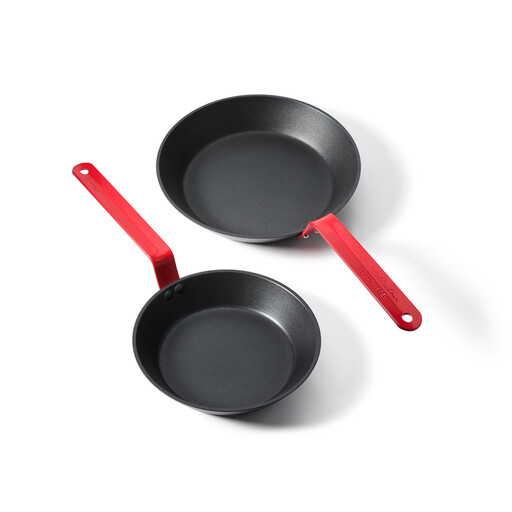
Why it fits: Two versatile sizes for everyday cooking, without having to invest in a large cookware set straight away.
The product information specifies a magnetic stainless-steel base for induction and compatibility with other heat sources. Hand-washing is recommended despite the dishwasher-safe claim.
Two sizes, a Swiss ILAG non-stick coating and oven resistance up to 232 °C according to the product description.

Why it fits: Ideal for smaller households and consumers who value material provenance and a ceramic coating.
The product description specifies a PFAS-free ceramic coating and 100% recycled forged aluminium with RCS certification. Usage remains decisive for the product’s lifespan.
Suitable for induction and oven use up to 200 °C; dishwasher-safe according to the product information.
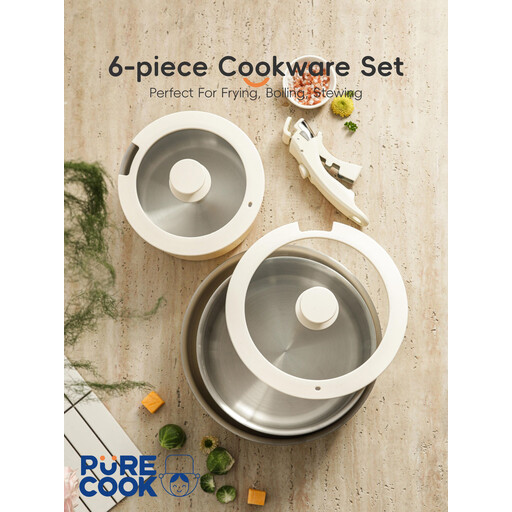
Why it fits: The set combines a frying pan with pots, lids and a detachable handle for a wide range of cooking methods.
The set specifies 304 stainless steel on the inside and a ceramic coating. The detachable handle must be securely locked into place before use.
Includes a 26 cm frying pan, milk pan, stockpot, glass lids and detachable handle.
Browse a current selection of ceramic-coated electric frying pans and compare size, coating, heat sources and care requirements.
A frying pan’s durability depends on more than just its materials. Follow these practical habits:
For everyday use, 24 cm is a practical starting point. For one person or small portions, 20 cm is often sufficient. Families and fans of stir-fry dishes are better served by a 26 or 28 cm pan. Also measure the cooking zone and the diameter of the magnetic base.
No. Ceramic describes the type of coating, while PFAS-free is a separate material characteristic. Check whether the manufacturer explicitly states that the product is PFAS-free, PTFE-free or PFOA-free, and read the complete product specifications.
This varies depending on the material, coating and usage. A pan can wear out more quickly due to high temperatures, metal utensils, abrasive cleaning products and frequent dishwasher use. Hand-washing, moderate heat and suitable utensils can help keep the coating in good condition for longer.
