
当日/次日达

品质保障

开启新人专享福利: 全场免邮 | 低至 2 折 | 免费试用 30 天 JoyPlus 会员
下载 Joybuy
Buying a new induction frying pan seems simple—until it warps after a few months, your food starts sticking, or it doesn't work on your hob at all. The market is flooded with marketing claims that create more confusion than clarity. As a Joybuy Product Recommendation Officer, I'll cut through the noise and give you practical guidance to choose a pan that fits your cooking style and budget.
Before you make a choice, it's important to recognise the most common pitfalls:
frying pan with a non-stick coating that loses its function after a few months is a common frustration. This is often caused by overheating or using the wrong utensils—something marketing materials rarely make clear.pfas-free frying pan and ceramic frying pan are widely used, but what do they really mean? Not every ceramic coating is equally durable, and performance can vary greatly.To avoid a bad buy, focus on a few concrete specifications. These determine the performance and lifespan of your pan far more than the marketing buzzwords on the packaging.
For an induction frying pan, the base is the most important element. It must have two properties:
The pan's material affects its weight, heat conduction, and durability.
stainless steel frying pan is heavier, extremely durable, and retains heat well. Perfect for searing meat. Pans without a non-stick coating do require a different cooking technique (using fat and the right temperature).A good frying pan has a coating that suits your cooking style.
ceramic frying pan can withstand higher temperatures but is generally more susceptible to scratches and can lose its non-stick properties faster with incorrect use.Below are some pans that suit different user profiles, based on their specifications.
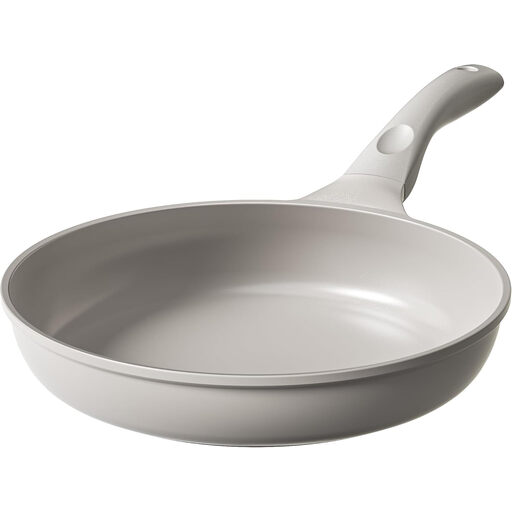
Why This Fits Their Persona: This pan is ideal for those who consciously choose to cook without potentially harmful chemicals. The 28 cm frying pan is a versatile size for daily meals, from an omelette to a piece of fish.
The manufacturer specifies that the ceramic coating is free of PTFE, PFOA, and PFAS, which clears up the 'PFAS-free' confusion. Its thickened base is designed for all hobs, including induction.
The combination of aluminium, ceramic, and stainless steel ensures fast, even heating. The Bakelite handle stays cool during cooking.
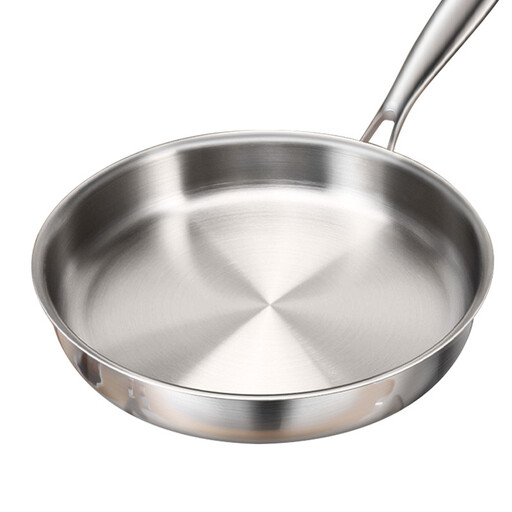
Why This Fits Their Persona: For those seeking a pan that will last for years and can withstand heavy use. This stainless steel frying pan has no delicate non-stick coating, making it suitable for metal utensils and intensive daily use.
This pan completely bypasses the pitfall of a wearing non-stick coating. Its 3-ply construction (stainless steel-aluminium-stainless steel) provides superior heat distribution and prevents warping, a common issue with cheaper pans on induction.
Extremely durable and scratch-resistant. The construction ensures a stable, flat base that makes optimal contact with the induction hob. Suitable for all heat sources.
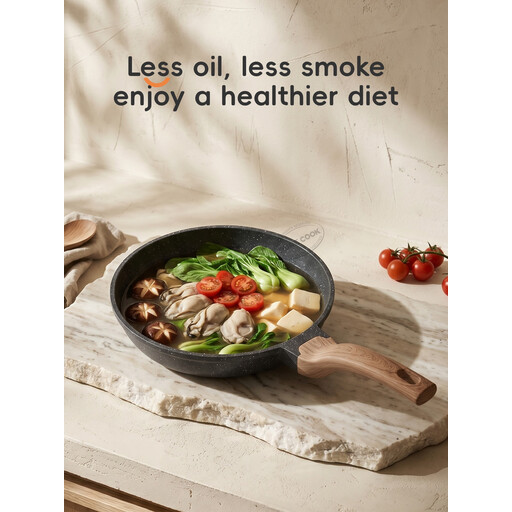
Why This Fits Their Persona: This pan combines ease of use with an attractive design. The lightweight aluminium makes the pan easy to handle, while the non-stick coating makes cleaning a breeze. A pan for all hobs that is practical for the everyday kitchen.
The pan has a specific base suitable for induction, avoiding the 'all hobs' pitfall. The care instructions (hand wash, no metal utensils) are clear to maximise the lifespan of the non-stick coating.
Lightweight aluminium for quick heating and easy handling. The wooden handle provides a comfortable and cool grip. Suitable for induction, gas, and ceramic.
Need a `frying pan with a lid` or a different size? We have compiled a complete list of products that meet these selection criteria and comply with current regulations.
How can I be sure my old pans will work on an induction hob? The easiest method is the magnet test. Take a regular fridge magnet and hold it against the bottom of the pan. If the magnet sticks firmly, the base is magnetic, and the pan will work on an induction hob.
How do I maintain a ceramic frying pan for a longer lifespan? A ceramic frying pan requires careful handling. Avoid metal utensils; use wood or silicone instead. Do not leave the pan empty on high heat and prevent major temperature shocks (like putting a hot pan under a cold tap). It's best to wash the pan by hand.
What is the main difference in use between a stainless steel frying pan and a non-stick pan? A non-stick pan is forgiving and ideal for delicate foods like eggs and fish, using little to no fat. A stainless steel frying pan is perfect for creating a crispy crust on meat or potatoes. However, it requires you to preheat the pan properly with oil or butter to prevent sticking. The stainless steel pan is more durable and can handle higher temperatures.
