
Vandaag of morgen in huis

Kwaliteit gegarandeerd

Welkomstaanbiedingen ontgrendelen: GRATIS bezorging | Tot 80% korting | Gratis 30 dagen JoyPlus-proefperiode
Download de app
Choosing a new frying pan for your induction hob seems simple, until you get lost in a web of marketing terms and promises. One pan promises to last a lifetime, while another warps or loses its non-stick coating after just a few months. As a Product Recommendation Officer at Joybuy, I see the challenges consumers face every day.
Before you buy a frying pan, it's wise to know the most common pitfalls that will cost you unnecessary money:
pfas free frying pan requires more attention.stainless steel frying pan might not suit someone who just wants to quickly fry an egg. The right match depends entirely on your cooking habits.To avoid a bad purchase, focus on a few objective features rather than marketing claims.
For an induction frying pan, the base is the most critical component. Induction works via a magnetic field that directly heats the base. A good induction pan therefore has a:
The frying pan with non-stick coating is popular, but there are significant differences.
pfas free frying pan. These layers are made from a sand derivative (sol-gel) and contain no PFAS, PFOA, or PTFE. They perform well at medium-high temperatures but can lose their non-stick properties more quickly if overheated or used with metal utensils.Tefal, these coatings are effective and durable when used correctly. Modern versions are PFOA-free but may still contain other PFAS substances. According to manufacturers, these are safe as long as the pan is not heated above 260°C.stainless steel frying pan has no chemical layer and is extremely durable. It requires a different cooking technique (playing with temperature and oil) to prevent sticking but is ideal for searing meat and lasts a lifetime.The diameter of the pan determines how many people you're cooking for.
28 cm frying pan is perfect for families of 2-4 people. You can easily cook a piece of meat or fish in it, along with vegetables.Below are some pans that score well on the objective criteria mentioned above, matched to different user profiles.
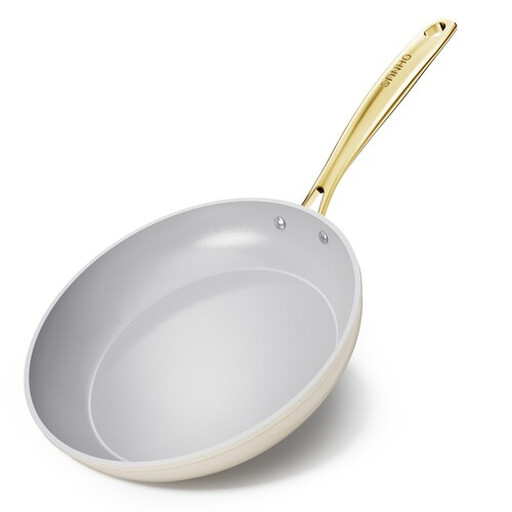
Why This Fits Their Persona: Perfect for those who consciously choose healthy cooking without harmful chemicals. The ceramic coating is completely PFAS-free and allows you to cook with minimal oil, while the 26 cm size is versatile for daily meals.
This pan tackles the 'hidden PFAS' pitfall with a coating guaranteed to be free of PFAS, PFOA, lead, and cadmium. The encapsulated stainless steel base ensures efficient performance on induction without warping.
The coating is reinforced with diamond and titanium particles for extra durability. The pan is oven-safe up to 260°C, offering additional cooking possibilities.
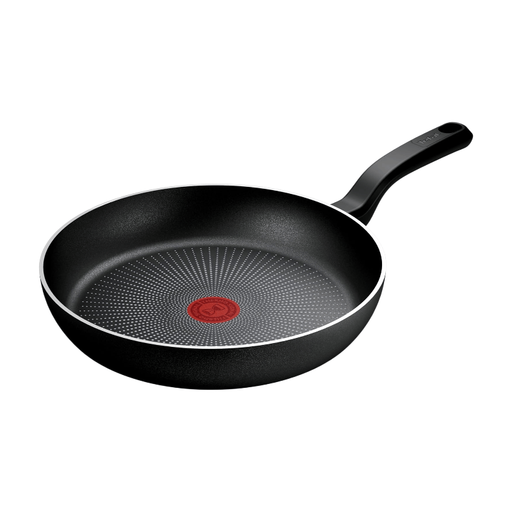
Why This Fits Their Persona: The spacious 28 cm frying pan is ideal for family meals. The combination of a durable non-stick coating and being dishwasher-safe makes cooking and cleanup on a busy weeknight much easier.
This pan addresses the 'short-lived non-stick coating' pitfall with a titanium-reinforced coating. According to Tefal, it lasts up to three times longer than their standard coating. The Thermo-Signal helps prevent overheating, which extends its lifespan.
The Thermo-Signal technology turns solid red when the pan reaches the ideal cooking temperature. This ensures better searing results and eliminates guesswork.
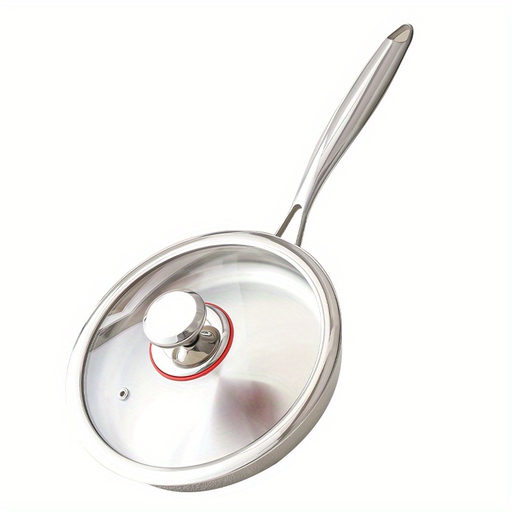
Why This Fits Their Persona: For the cook who invests in material that lasts a lifetime and delivers professional results. This stainless steel frying pan is perfect for searing meat, creating pan sauces, and techniques that require precise temperature control.
This is the answer to the 'thin base' pitfall. The tri-ply (three-layer) construction of stainless steel and aluminum throughout the entire pan ensures superior, even heat distribution and is extremely resistant to warping.
Extremely durable and scratch-resistant, allowing you to use metal utensils. The pan has no chemical coating that can wear off, making it a long-term investment.
We have compiled a complete, up-to-date list of products that fully meet these strict selection criteria and safety regulations.
The simplest method is the magnet test. Does a refrigerator magnet stick firmly to the bottom of the pan? If so, the base is magnetic and will work on an induction hob. Also, always check for the official induction symbol (a spiral icon) on the packaging or the bottom of the pan.
A ceramic frying pan requires a bit more care. Avoid using metal utensils; opt for wood or silicone. Always let the pan cool down before washing it and avoid the dishwasher, even if the manufacturer says it's safe. Hand washing with a soft sponge is always better. Preferably, use the pan on low to medium-high heat and avoid overheating an empty pan.
This is a classic symptom of a pan with a base that is too thin or warped. On an induction hob, heat is generated very locally and rapidly. If the base isn't thick and flat enough to distribute that heat properly, 'hot spots' will form. This is precisely why investing in a pan with a high-quality, thick sandwich base makes all the difference.
