
Cook making small portions of fish stew
You usually use one pan and want to be able to adjust the heat while your dish simmers. Check the size of your pan and the controls on the exact hob model.


For one small pan of fish stew, a portable induction hob is an option if your pan has a magnetic base and fits the cooking zone; a conventional electric hotplate avoids this induction requirement. According to Milieu Centraal, induction responds more quickly when you adjust the heat, while a conventional hotplate itself gets hot and responds less quickly. For either type, check the pan size, instructions and connection requirements for the exact model: wattage or a timer alone won’t tell you how gently your dish will simmer.
You usually use one pan and want to be able to adjust the heat while your dish simmers. Check the size of your pan and the controls on the exact hob model.
You want to keep using your current pan. Milieu Centraal advises checking that its base is magnetic if you’re considering induction; otherwise, you could compare conventional hotplates.
You’re looking for a separate cooking spot. As well as the dimensions, check the model’s placement instructions and connection requirements.
Suitable for: a magnetic pan that falls within the size range of your chosen hob, if you want to be able to adjust the heat quickly.
Bear in mind: pan compatibility and placement instructions are essential; heat settings and timers don’t guarantee a particular simmering temperature.
Suitable for: anyone who doesn’t want to use an induction-compatible pan or prefers a thermostatic control knob.
Bear in mind: the hotplate stays hot and responds less quickly to adjustments than induction.
Suitable for: anyone looking for a glass hob without the induction pan requirement, if they can find a suitable model.
Bear in mind: Milieu Centraal describes ceramic cooking as less responsive than induction; also check that your pan base is suitable for the model you choose.
Start by checking the pan base and the size of the cooking zone. Then compare how you can control the heat while cooking and whether the hob can be placed safely where you plan to use it.
| Consideration | What should you check? | Who should pay closer attention? |
|---|---|---|
| Adjusting the heat | Compare the controls and low heat settings on the exact model. The maximum power rating doesn’t show how gently your stew will simmer. | If I want to turn the heat down while my dish is cooking, being able to control it is my top priority. Around 33% of consumers say adjusting the heat is their first priority when buying. |
| Pan and cooking zone | Measure the flat base of your pan and compare it with the stated size range for the cooking zone. For induction, also check that the base is magnetic. | My small stew pan needs to fit the cooking zone well. Around 27% of consumers prioritise the size of the pan and zone. |
| Using an existing pan | Test the pan base with a magnet and check the hob’s size range. Milieu Centraal states that induction requires a magnetic steel layer. | If I want to keep using my current pan, I’ll first check that it’s suitable for the type of hob I choose. Around 20% of consumers prioritise keeping their existing pan. |
| Cooking space and connection | Read the placement and connection instructions. The Consumers’ Association (Consumentenbond) says that most, but not all, freestanding induction hobs work with an earthed socket; it recommends plugging high-power appliances directly into a socket wherever possible. | The portable hob needs to be suitable for the space and connection I have available. Around 20% of consumers make the cooking space and connection their top priority. |
For induction, the magnetic base needs to fit within the hob’s size range. According to the manufacturer, the Inventum KI120T is designed for pans with a diameter of 15–20 cm.
Measure the flat base, check it with a magnet and compare its size with the specifications for the exact model.
A stated timer or maximum power rating doesn’t tell you what temperature your dish will reach in your pan or how evenly it will heat.
Compare the low heat settings and stay nearby while cooking so you can keep an eye on your fish stew.
A portable hob needs a suitable spot where heat can escape. Connection requirements also vary by model.
Check the instructions, clearance space, plug and available electrical circuit beforehand. The Fire Service (Brandweer) recommends plugging high-power appliances directly into a socket wherever possible, rather than using an extension block or cable reel.
The hotplate on a conventional electric hob may still be hot after you switch it off.
Let it cool according to the instructions before cleaning or putting it away.
The portable KI120T induction hob is a useful comparison point for one small, induction-compatible pan.
The IK-6178 is a portable induction hob; the KP-6191 is a conventional single electric hotplate.
The KP 1091 is a conventional portable single hotplate with a rotary control knob.
The freestanding 303010 induction hob is worth comparing if you’re looking for a timer and touch controls.
This selection includes portable induction hobs and one conventional single electric hotplate for anyone wanting to use a small pan.
 No image available
A portable induction hob for anyone looking for a cooking spot with a rotary control knob.
The product description lists 5 heat settings and dimensions of 21,5 × 21,5 × 4,7 cm. Check that your pan is induction-compatible.
 No image available
A freestanding induction hob to compare if you use one pan and want to be able to adjust the heat.
The product description lists a cooking zone for pans measuring 12–26 cm, 10 power levels, an adjustable temperature of 60 °C to 240 °C and a timer of up to 3 hours. Use an induction-compatible pan.
 No image available
A portable induction hob with one cooking zone for anyone wanting to compare different heat settings while cooking a stew.
The product description lists a zone for pans measuring 12–23 cm, 10 power levels, 10 temperature settings and a timer of up to 180 minutes. The pan base must be ferromagnetic.
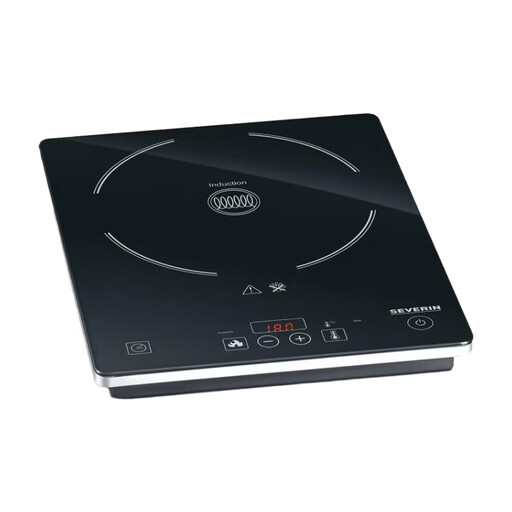 No image available
A conventional single electric hotplate to compare if you don’t want to use an induction hob.
The product description lists 2000 W, a ceramic glass surface and continuously adjustable heat control. Let the surface cool completely before cleaning it.
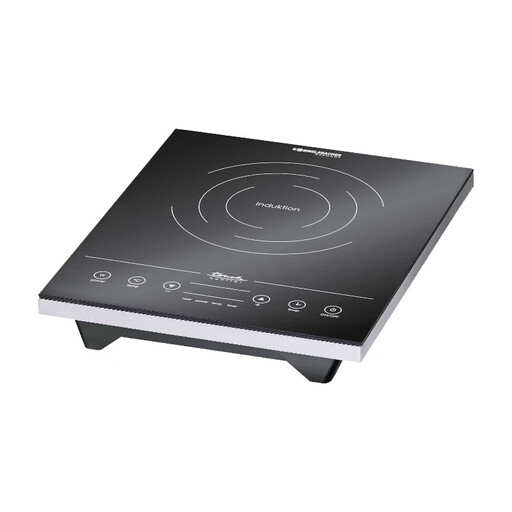 No image available
A portable induction hob with one zone to compare if you want to use a smaller pan and be able to set the temperature.
The product description lists a zone measuring 100–200 mm, 10 temperature settings and a timer of up to 180 minutes. Use an induction-compatible pan.
Only if its base is suitable. Milieu Centraal advises checking whether the pan has a magnetic steel layer, for example by testing it with a magnet. Then compare the base size with the range for your chosen hob.
Not necessarily. The Consumers’ Association (Consumentenbond) says that most portable induction hobs work with an earthed socket, but this isn’t true of every model. Check the appliance’s connection requirements and instructions, and make sure your electrical circuit can handle it.
Stay nearby while cooking and keep flammable items away from the hob. Let a conventional hotplate cool before cleaning or putting it away, and follow the model’s instructions. The Netherlands Nutrition Centre (Voedingscentrum) advises cooking raw fish and shellfish thoroughly, and keeping cooked food separate from raw ingredients.
Check the instructions to find out where the hob can be placed, how it should be connected and whether you have the required clearance around it. The Fire Service (Brandweer) recommends plugging high-power appliances directly into a socket wherever possible, rather than using an extension block or cable reel.