Which hob is right for you?

For cooks who want gentle heat

If you regularly make cheese sauce, you’ll want to be able to heat it on a suitable low setting while stirring. The Consumers’ Association tests simmering separately, as the temperature at a low setting matters for this kind of cooking.

For cooks making large batches

If you use a large pan or cook several dishes at once, check the size of the cooking zones and the power available when cooking on multiple zones simultaneously. A flex or bridge zone can make room for larger cookware, but it doesn’t in itself prove that the sauce will heat evenly.

For cooks with an existing kitchen

When replacing or adding a hob, make sure it suits your pans, the space available and your electrical connection. Milieu Centraal explains the differences in pan requirements between induction and ceramic hobs; the model specifications tell you what installation is needed.

What should you look for when choosing?

What to consider What to look for Who is this important for?
Low heat Look for a simmering rating for the exact model and check that you can easily adjust the low setting. If I want to heat cheese sauce gently, I need to be able to set a low heat and keep stirring. Around 36% of consumers put a usable low setting first when choosing.
Room for pans Compare the diameter of your pan base with the cooking zone, and think about how many pans you want to use at once. For large batches, I want enough space for my saucepan and, if needed, other pans at the same time. Around 29% of consumers prioritise space for pans.
Connection and installation Check the connection, plug and cut-out size required for your chosen model. If the hob needs to fit in my existing kitchen, I want to know in advance whether the connection and cut-out are suitable. Around 21% of consumers name installation and connection as their top priority.
Existing pans Check whether a pan is suitable for induction; for ceramic cooking, a flat pan base is important. If I want to keep using my current pans, the hob type needs to suit their bases. Around 14% of consumers prioritise keeping their existing pans.

Common purchasing mistakes

  • Assuming boost power means it will simmer well

    A high setting doesn’t tell you how steadily a hob heats at its lowest setting. The Consumers’ Association therefore assesses simmering as a separate test.

    If available, look for a rating of the lowest setting on the exact model, and don’t base your choice on boost functions alone.

  • Choosing a large pan without checking the cooking zone

    A larger or connectable zone gives you room for cookware, but it doesn’t automatically tell you how much power is available when you use several pans at once.

    Compare your pan base with the cooking zone, and check how many zones you want to use at the same time.

  • Assuming every hob will work with your existing connection

    Freestanding and built-in models can have different requirements for the plug, connection and cut-out. So a model with a standard plug isn’t necessarily interchangeable with a built-in hob.

    Check the model specifications and existing installation before choosing a hob.

  • Confusing a commercial warranty with all your warranty rights

    ACM ConsuWijzer explains that your statutory guarantee exists alongside any manufacturer’s or retailer’s guarantee.

    Read the terms of any extra warranty, and assess a fault in light of your statutory rights with the retailer too.

Brands to compare

Bosch

The PIX631HC1E is a built-in induction hob with four zones and FlexInduction, which can provide space for a larger pan.

  • Bosch lists DirectSelect and PerfectFry Plus for this model.
  • The frying function isn’t an independent assessment of cheese sauce or simmering at the lowest setting.

AEG

The TO64IB0BFB is a built-in induction hob with four zones and a bridge function for larger cookware.

  • AEG lists a connection rating of 7200 W and FlexPower Management for a 1- or 2-phase connection.
  • Check the connection and settings for your kitchen; the bridge function doesn’t prove that sauce will heat evenly.

Inventum

The freestanding VKI3020ZWA is a compact option with two 19 cm cooking zones.

  • Inventum lists a 1-phase connection with a plug and a maximum power of 2000 W.
  • The pan must be suitable for induction; the power settings aren’t an independent simmering test.

ETNA

The KC260ZT is a built-in ceramic hob with four cooking zones.

  • ETNA lists a cut-out width of 560 mm and a 2-phase connection.
  • A plug isn’t included. General differences between ceramic and induction hobs aren’t measured performance results for this model.

Siemens

The EH64KBFB5E is a built-in induction hob with four zones and a frying zone.

  • Siemens lists touchControl and a switch-off timer.
  • The frying zone is a different layout for cookware, not proof that the hob is better for making cheese sauce.

Hobs at Joybuy

This selection of products at Joybuy includes induction and ceramic hobs, with options for freestanding use, built-in installation and different numbers of cooking zones.

Induction hob with two cooking zones

Induction hob with two cooking zones

Worth considering if you’re looking for a hob with settings for simmering and slow cooking.

Two cooking zones; five temperature settings.

View at Joybuy
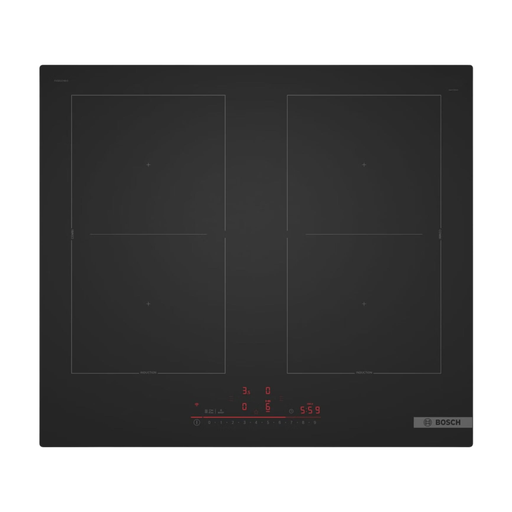
Bosch PVQ61CHB1E induction hob

Bosch PVQ61CHB1E induction hob

Worth comparing if you’re looking for a built-in hob for a larger pan and batch cooking.

60 cm; four cooking zones; TouchSlider; FlexInduction zone.

View at Joybuy

Fritel IP 1266 induction hob with one cooking zone

Fritel IP 1266 induction hob

A freestanding option to compare if you’re looking for a single cooking zone for a saucepan.

One cooking zone; 2000 W; XL cooking zone of Ø 26 cm; ten power settings.

View at Joybuy
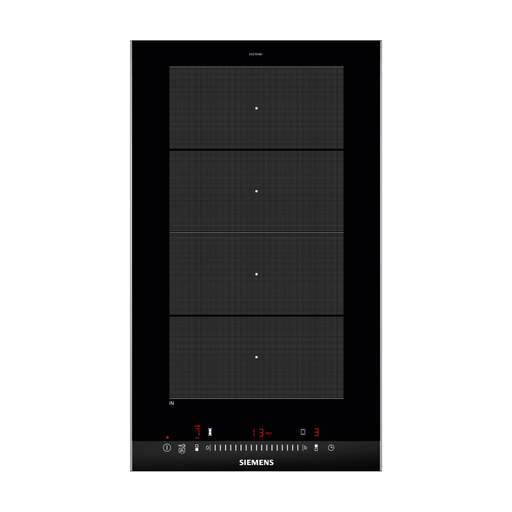
Siemens EX375FXB1E iQ700 FlexInduction hob

Siemens EX375FXB1E iQ700 FlexInduction hob

Worth considering if you’re looking for a flexible hob that fits into a domino layout.

30 cm; built-in model with frame.

View at Joybuy
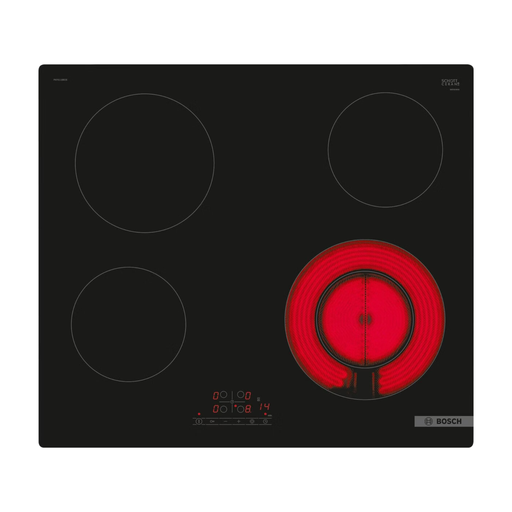
Bosch PKF611BB2E Series 4 built-in ceramic hob

Bosch PKF611BB2E Series 4 built-in ceramic hob

Worth comparing if you want to use an existing pan that isn’t suitable for induction; check that the pan base is flat.

60 cm; Touch Select.

Ceramic cooking zones get hot and respond more slowly than induction. Also check that the required connection and cut-out are suitable for your kitchen.

View at Joybuy

Frequently asked questions

Is a boost function more important than a low setting for cheese sauce?

No. An Albert Heijn Allerhande cheese sauce recipe uses low heat and stirring; the Consumers’ Association assesses simmering separately by measuring the temperature at a low setting. So, if available, look for a rating of the exact model.

Can every electric hob be plugged into a standard socket?

No, it varies by model. Inventum describes the VKI3020ZWA as a 1-phase appliance with a plug, while ETNA lists a 2-phase connection for the ceramic KC260ZT and says that a plug isn’t included. Follow the requirements for your chosen model, and have your existing connection checked if necessary.

Is induction cooking suitable if I have a pacemaker?

Check with your pacemaker technician or cardiologist first. Milieu Centraal gives this advice for people with a pacemaker; ceramic cooking may be an alternative.

How should I store leftover cheese sauce after batch cooking?

Cool leftovers quickly, store them in a sealed container and don’t leave them out of the fridge for more than 2 hours. This is the Netherlands Nutrition Centre’s advice for leftovers; for a specific prepared product, also follow the relevant storage instructions.

Does a manufacturer’s warranty replace my statutory guarantee?

No. ACM ConsuWijzer explains that your statutory guarantee exists alongside any manufacturer’s or retailer’s guarantee, and that the retailer is responsible if a product doesn’t perform as you could reasonably expect under normal use. So, assess any extra warranty according to its own terms.
