
Vandaag of morgen in huis

Kwaliteit gegarandeerd

Welkomstaanbiedingen ontgrendelen: GRATIS bezorging | Tot 80% korting | Gratis 30 dagen JoyPlus-proefperiode
Download de app
Indoor and outdoor lighting needs to do more than look good. In a home, on a balcony or in a garden, a light has to cope with moisture, temperature changes and different lighting needs. A light that looks suitable for anywhere in the product photo may provide too little light in practice, be difficult to install or fail to withstand direct rain.
So focus on where you plan to use it and check the technical specifications. Marketing claims such as ‘waterproof’, ‘extra bright’ or ‘energy-efficient’ only tell you so much unless they’re backed up by an IP rating, light output, power source and clear installation information.
An IP44 outdoor light is protected against splashing water. This rating can make it suitable for a covered balcony, a sheltered wall or a patio, for example. However, IP44 does not mean that the light can withstand being submerged or exposed to direct water jets.
For an open garden, driveway or wall exposed to heavy rain, an IP65 solar light may be a better choice. IP65 offers greater protection against dust and water jets. Always check the installation instructions too: the light’s IP rating won’t make an unsuitable connection or a poorly sealed cable safe.
Lumens indicate how much light a product is rated to produce. That’s useful, but it’s not the whole story. A 3,000-lumen light, for example, is designed for a different purpose from soft mood lighting beside a seating area.
Also consider:
Solar outdoor lighting doesn’t need a fixed power connection, but works most reliably when its panel receives enough direct sunlight. A shaded north-facing wall isn’t automatically a suitable spot.
With battery-powered lighting, you’ll need to recharge or replace the batteries. A fixed wall light with a GU10 or E27 fitting gives you more choice of LED bulbs, but needs to be connected to the mains. These products must be installed by a qualified electrician.
Use the IP code as your first filter. Lower protection is often enough for dry indoor spaces, while outdoors you’ll need suitable protection against splashes or water. Ideally, place an IP44 light in a sheltered spot and follow the manufacturer’s safety warnings.
For a path or entrance, well-directed light is often more important than high overall light output. A wide beam may work better for a driveway or larger garden. Integrated LED lighting usually has a low stated energy consumption and doesn’t need a separate bulb straight away. Do check whether the LED light source can be replaced, though. Several models have an integrated light source that can’t be replaced separately.
A wireless light with a magnet or solar panel is quick to install, but the surface needs to be stable and suitable. A fixed outdoor light requires wiring and secure installation. Also check:
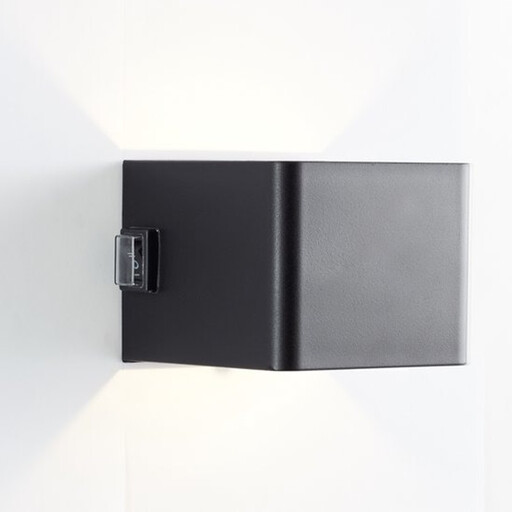
Why it suits this profile: This wireless wall light is a good option if you want lighting on a balcony, patio or in a hallway without fixed wiring. It has a stated light output of 300 lm and a colour temperature of 3000 K.
The IP44 rating makes clear that the light is protected against splashing water, not fully waterproof. The mounting plate needs to be secured firmly to a suitable, flat surface.
Integrated LED, motion sensor, magnetic mounting and rechargeable battery, according to the product information.
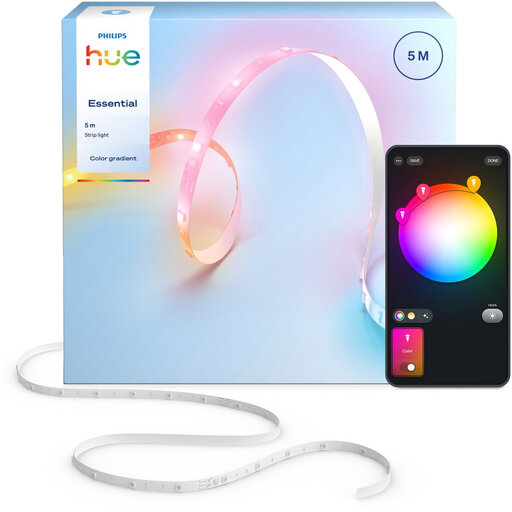
Why it suits this profile: If you want to tailor your indoor lighting to different scenes, colours and brightness levels, this 5-metre strip offers app control and compatibility with various smart platforms.
The product information clearly states that the strip is for indoor use. A Hue Bridge or Bridge Pro may be needed for advanced features, so check before you buy.
Dimmable, cut to size, colour-changing and Matter support, according to the product description.
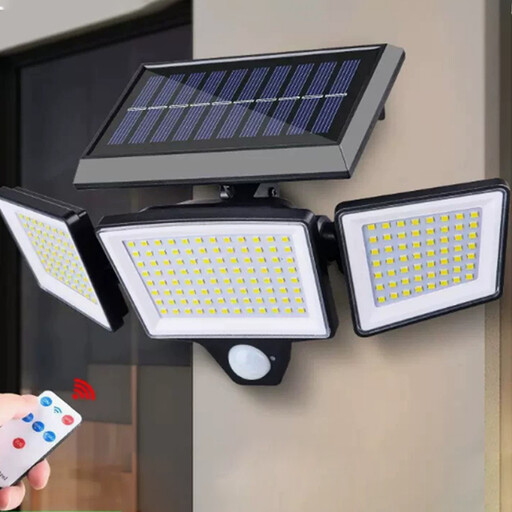
Why it suits this profile: This solar-powered outdoor light with motion sensor is designed for larger areas, such as a driveway, garage, garden or patio. Its three light heads are intended to spread light over a wide area.
The stated IP65 rating is more specific than simply calling the light ‘waterproof’. Make sure you position the solar panel where it will receive enough direct daylight.
302 LEDs, three light heads, three modes and a stated light output of 3,000 lm, according to the product information.
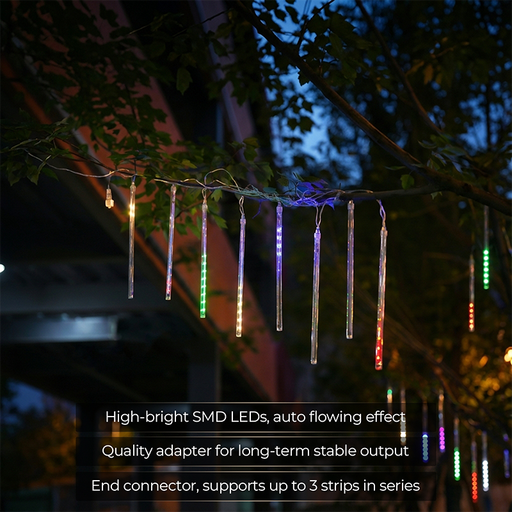
Why it suits this profile: A practical choice for Christmas decorations on a window, wall, covered area or Christmas tree, when moving decorative lights matter more than general outdoor lighting.
The product information gives an IP44 rating. Only use the string lights outdoors as specified, and keep the adapter protected from direct moisture.
192 coloured LEDs, eight hanging points, a 6 W adapter and a memory function, according to the product description.
We’ve put together a complete, up-to-date list of products that meet these strict selection criteria and the applicable European safety regulations.
It depends on where you’ll use it. An IP44 outdoor light may be enough for a sheltered entrance. For an exposed wall, driveway or larger garden, a model with greater protection, such as IP65, is more practical. Also check the beam, sensor and available mounting position.
LED bulbs generally have a lower stated energy consumption than many older light sources. The actual cost depends on the wattage, the number of hours they’re used and the price of electricity. With solar lighting, the amount of sunlight also makes a difference.
Not by default. The Philips Hue LED strip mentioned in the product information is designed for indoor use. Only use indoor lighting outdoors if the manufacturer explicitly says it’s suitable and specifies an appropriate IP rating.
