
Vandaag of morgen in huis

Kwaliteit gegarandeerd

Welkomstaanbiedingen ontgrendelen: GRATIS bezorging | Tot 80% korting | Gratis 30 dagen JoyPlus-proefperiode
Download de app
Good indoor and outdoor lighting is about more than looks. A light needs to suit the space, provide enough illumination and be suitable for the conditions in which you use it. A pendant light above the dining table has different requirements from solar-powered outdoor lighting on the balcony or a floor lamp beside the sofa.
Marketing copy can sometimes make choosing more difficult. Focus on verifiable product details rather than words such as “atmospheric”, “powerful” or “sustainable”.
A light without a bulb may seem like a good-value option, but you’ll need to buy a suitable bulb separately. Check whether the fitting takes an E14 bulb, an E27 bulb or uses integrated LED lighting. An E14 fitting is suitable for smaller bulbs, while E27 is commonly used in pendant lights, table lamps and floor lamps.
Also check the maximum wattage. A light with five E14 fittings, such as a particular arc lamp, offers plenty of light sources, but the bulbs may add to the cost.
For balconies, patios and gardens, the IP rating is important. IP44 means protection against splashing water, but not immersion or direct jets of water. According to the product specifications, a product rated IP65 offers greater protection against dust and jets of water.
So, place an IP44 light in a sheltered spot and follow the installation instructions. An indoor light rated IP20 is intended for dry rooms only and should not be used outdoors or in a damp bathroom.
The lumen figure tells you how much light a bulb produces. A 1,300-lumen light source is suitable for general lighting, while 170 lumens is more suited to a table lamp for accent or mood lighting. Colour temperature also affects how the light feels:
Bear in mind that a brand’s claims about ambience or lighting comfort are no substitute for objective measurements. Check the lumens, Kelvin rating, fitting and dimming options.
A light with integrated LEDs is ready to use straight away, but the light source usually can’t be replaced by the user. So, check the product information for details of its lifespan and whether the module can be replaced. With a fitting, you can choose a different light source yourself, such as a dimmable E14 or E27 bulb.
A dimmable light is useful when one light source needs to serve several purposes. In the living room, bright light can be practical for reading, while softer light is better for a relaxing evening. Check whether the dimmer is built in or whether you’ll need a compatible external dimmable light source.
Measure the available space before you buy. For a pendant light, check its diameter, height and cable length. Above a table, it shouldn’t hang so low that it blocks your view. A 179 or 200 cm floor lamp also needs plenty of clear space and a stable surface.
For a wall light with a motion sensor, where you install it is just as important as its brightness. Check that the surface is suitable and that a magnetic fitting will be secure enough. Keep cables out of walkways to reduce the risk of tripping.
Solar-powered outdoor lighting works best in a spot that gets plenty of direct sunlight. Shade, dirt on the panel and short winter days can affect how long the light stays on. A light that can be charged via USB as well as solar power gives you more flexibility when there’s less sunshine.
For lights with a motion sensor, check the detection angle, range and available lighting modes. These figures tell you more about how the light will work than general claims such as “extra bright” or “safe”.
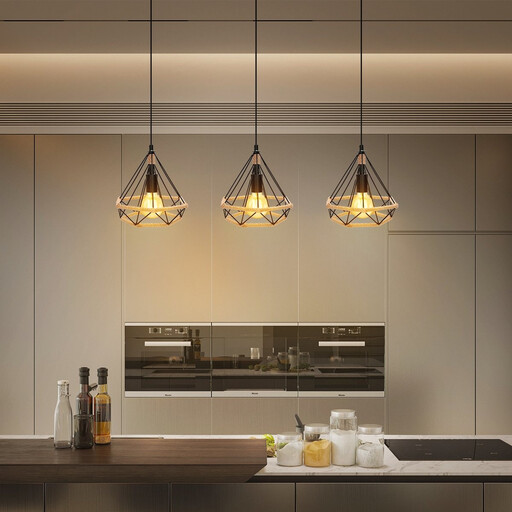
Why it suits this profile: This pendant light brings a distinctive retro look to a dining room, hallway or living room and uses a standard E27 fitting.
The fitting, 220–240 V voltage and 1.1-metre cable length are specified. The E27 bulb does need to be bought separately.
Steel frame, 250 mm diameter, 1,100 mm height and an E27 fitting.
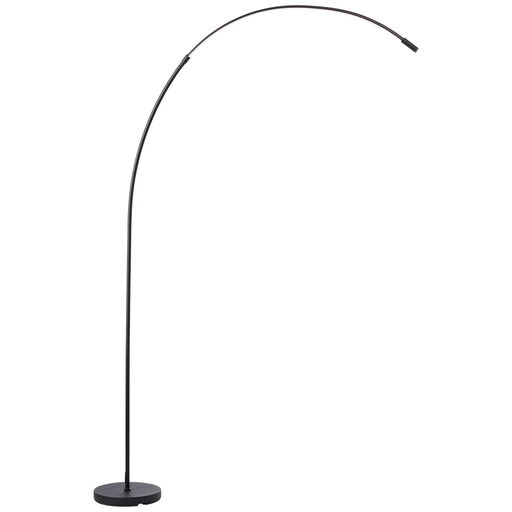
Why it suits this profile: This arc lamp combines broad light coverage with an adjustable colour temperature for reading, working and mood lighting.
The 1,300-lumen brightness, 3,000–6,500 K range and integrated touch dimmer are all clearly specified.
179 cm tall, 1,300 lumens, dimmable and suitable for dry indoor spaces with an IP20 rating.

Why it suits this profile: These solar-powered outdoor lights are designed for driveways, garages, patios and larger outdoor areas where motion detection and wide light coverage are useful.
The product information specifies IP65, three lighting modes, a detection range of 60 feet and a detection angle of 180 degrees. Sufficient sunlight is still essential.
302 LEDs, a stated light output of 3,000 lumens, three adjustable heads and solar-powered operation.
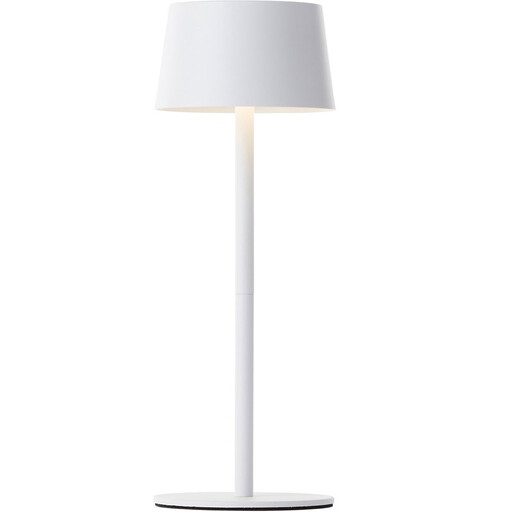
Why it suits this profile: This compact table lamp is ideal for a balcony, patio or table and can be charged using solar power or USB.
The IP44 rating is described as splash-resistant, not completely waterproof. It’s therefore important to keep the lamp away from direct jets of water.
Integrated LED, 170 lumens, warm white light at 3,000 K and three dimming settings.
We’ve put together a complete, up-to-date list of products that meet these strict selection criteria and current European safety regulations.
A combination often works well: a ceiling light or pendant for general lighting, complemented by a floor lamp, arc lamp or table lamp. For the living room, warm white light around 2,700–3,000 K is usually a good choice. An adjustable arm or higher light output is useful for reading.
Not always. A solar light needs enough direct sunlight to charge its battery. Check the IP rating too. IP44 is suitable for splashing water and sheltered spots; don’t place the light somewhere it will be constantly exposed to strong jets of water.
Energy use depends on the wattage and the number of hours the light is on. A 10-watt light switched on for five hours a day uses around 18.25 kWh per year. Multiply this by your current electricity rate. For integrated LED lighting, also check the stated energy rating and light output so you can compare energy use and functionality together.
