
Vandaag of morgen in huis

Kwaliteit gegarandeerd

Welkomstaanbiedingen ontgrendelen: GRATIS bezorging | Tot 80% korting | Gratis 30 dagen JoyPlus-proefperiode
Download de app
A new lamp often seems like a simple purchase. However, problems usually only become apparent after unpacking: the fitting does not fit, the light colour feels too harsh or an outdoor lamp turns out not to be suitable for rain. If you are looking for indoor and outdoor lighting, it is therefore wise to consider more than just appearance and price.
Pay particular attention to these common pitfalls:
Check the fitting first. An E27 fitting is a common large screw fitting, while an E14 bulb has a smaller fitting. A fitting with E14 sockets therefore will not accept an E27 LED filament bulb.
Also check:
For example, a floor lamp may require an E27 and an E14 light source. The product information for the vidaXL floor lamp states that the light sources are not included. With models like this, always check the fitting and recommended wattages before ordering.
Lumens (lm) indicate how much light a lamp produces. A decorative retro lamp with 250 lumens is mainly suitable for ambient lighting, not as the only light above a desk or dining table.
The colour temperature in Kelvin (K) determines the appearance of the light:
According to the product details, the Nedis LED Filament Bulb E27 G125 has a power consumption of 3,8 W, a light output of 250 lumens and a colour temperature of 2.100 K. The bulb is dimmable. This makes it an interesting light source for an open fitting where the filament remains visible.
For indoor lighting, a fitting with IP20 is often sufficient, provided it is used in a dry room. Outdoor lighting requires a higher level of protection. The first numbers and letters in the IP rating indicate how well the product is protected against solid particles and moisture.
For example, look out for:
According to the product information, the Brilliant Viani solar table lamp has IP44 and is intended for outdoor use, but not for immersion or direct water jets. Even if a product is described as “for indoor & outdoor use”, you should still check the specific IP rating and placement instructions.
A table lamp works well on a bedside table, chest of drawers or small side table, while a pendant light provides focused illumination above a dining table. A ceiling light spreads light throughout the room, and a floor lamp can enhance a reading corner.
Style is also important:
When choosing wooden or bamboo fittings, check the documentation. An FSC label refers to the material and its associated certification; it does not automatically say anything about the performance of the light source.
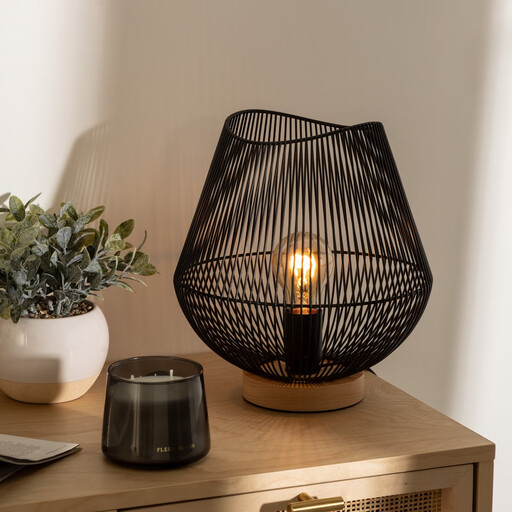
Why it suits this profile: A compact table lamp for a chest of drawers, bedside table or small side table. The lamp has a 185 cm cable and an on/off switch on the cable.
The dimensions and cable details are clearly stated. However, check whether the E27 light source is included before ordering.
28 cm high, 26 cm diameter, metal wire structure and an E27 fitting.
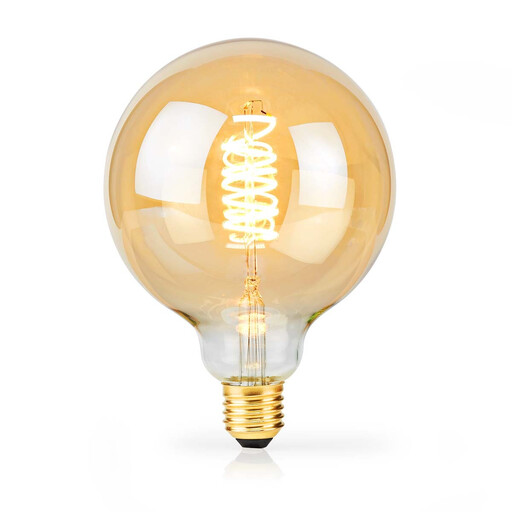
Why it suits this profile: For anyone who wants to fit an existing E27 lamp with a visible retro light source offering adjustable brightness.
The fitting, light output, colour temperature and dimming function are clearly stated. Do not use the bulb in a closed fitting without sufficient ventilation.
3,8 W, 250 lm, 2.100 K, dimmable and fitted with an E27 metal screw fitting.
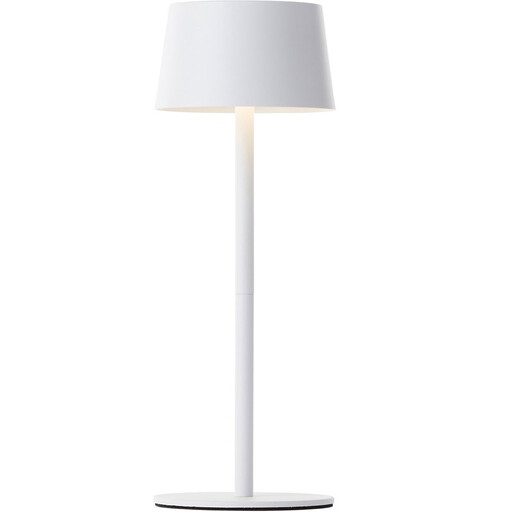
Why it suits this profile: For a balcony, patio or garden where you do not want to use a permanent power connection. The lamp is freestanding and can be charged using solar power or USB.
The IP44 rating clearly indicates where it can be used: splashing water is permitted, but immersion and direct water jets are not.
170 lm, 3.000 K, integrated LED, three dimming settings and both solar and USB charging.
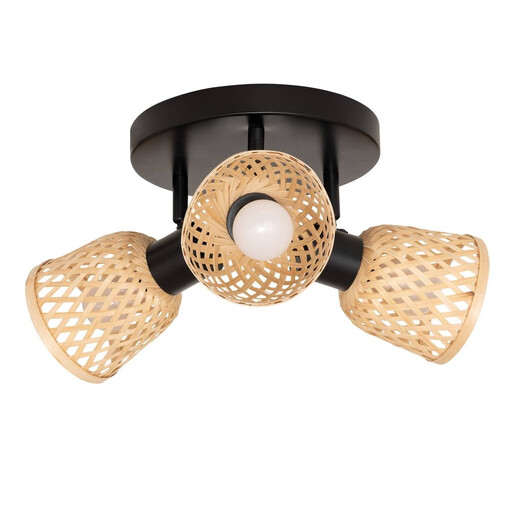
Why it suits this profile: A ceiling light for a hallway, bedroom or living room, with adjustable light points and FSC-certified bamboo shades.
The fitting is clearly marked for indoor use with IP20. This makes it less likely that you will accidentally use it outdoors.
Three E14 light points, adjustable spotlights, maximum 25 W per light point and an FSC-certified bamboo shade.
We have put together a complete, up-to-date list of products that fully meet these strict selection criteria and the applicable European safety regulations.
For a cosy living room, warm white lighting of around 2,700 to 3,000 K is often a practical choice. A lower colour temperature, such as 2.100 K, creates a distinctly warmer and more decorative look. Also consider the number of lumens: ambient lighting and main lighting do not require the same light output.
No. Check whether the packaging or product description explicitly states “dimmable”. You should also use a suitable LED dimmer. A non-dimmable bulb may flicker or fail to respond properly when connected to a dimmer.
A solar outdoor lamp does not use mains electricity while charging, but its performance depends on sunlight, positioning, battery capacity and operating time. Position the solar panel away from shade and check that the IP rating is suitable for the location. A lamp with USB charging can be useful when there is not enough sunlight.
