
Vandaag of morgen in huis

Kwaliteit gegarandeerd

Welkomstaanbiedingen ontgrendelen: GRATIS bezorging | Tot 80% korting | Gratis 30 dagen JoyPlus-proefperiode
Download de app
An indoor dog crate can provide your dog with a place to relax, sleep or feel safe for a while. However, not every crate suits every home or dog. A compact dog igloo bed, for example, may suit a small dog that likes a cosy, sheltered spot, while a larger dog needs more room to move and a sturdy steel dog crate.
When comparing options, look beyond the price and attractive product photos. These common pitfalls are worth bearing in mind:
Measure your dog standing up, then allow extra room to turn around and stretch out. Don’t focus solely on the external dimensions: the frame, door and any raised base all take up space.
For a larger dog, a crate around 94 cm long may be more practical than a compact model. Check the height, too. Your dog should be able to stand without hunching. If you’re choosing a dog crate mainly as a place for your pet to relax, having enough room to move is more important than choosing the smallest possible size.
A steel dog crate is generally a sensible choice if you’re looking for a sturdy frame and good ventilation. Check that:
A metal crate usually offers less privacy than a soft bed. Place it somewhere quiet, away from draughts and busy walkways. Don’t use a blanket that completely blocks the ventilation.
A dog crate with a feeding hatch can be useful if you want to offer food or water without opening the main door. For many households, though, this isn’t essential. Check that the hatch closes securely and that your dog can’t get to it when you don’t want them to.
A dog crate with a top opening can be handy if you want to reach inside from above. Before buying, check that there’s enough space above the crate to open the roof. If the crate is under a shelf or cupboard, you may not end up using this feature.
A crate isn’t automatically the right choice for every pet. An active dog needs a spacious, well-ventilated area. A small dog that likes to snuggle under a blanket may feel more comfortable in a sheltered dog bed or igloo bed. Always give your dog time to get used to it, and never use the crate as a punishment.
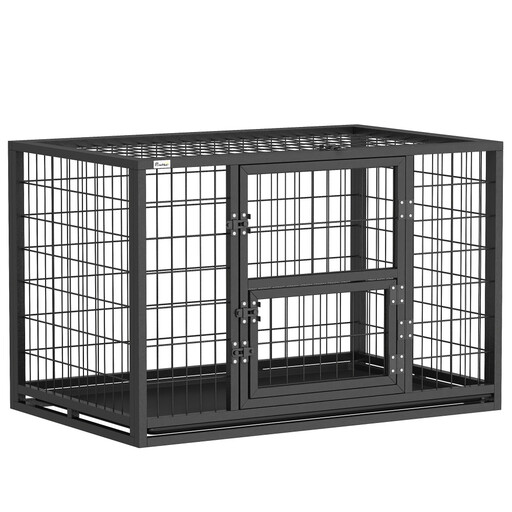
Why it suits this type of buyer: Its 94 x 60 x 64 cm dimensions and steel design make this a practical option for dog owners looking for a dedicated indoor space without an integrated bed.
The stated dimensions make it easier to compare with other options. Check that the 64 cm height suits your dog and decide whether you’d like to add a suitable cushion.
Steel frame, top opening and separate feeding door; dimensions: 94 x 60 x 64 cm.
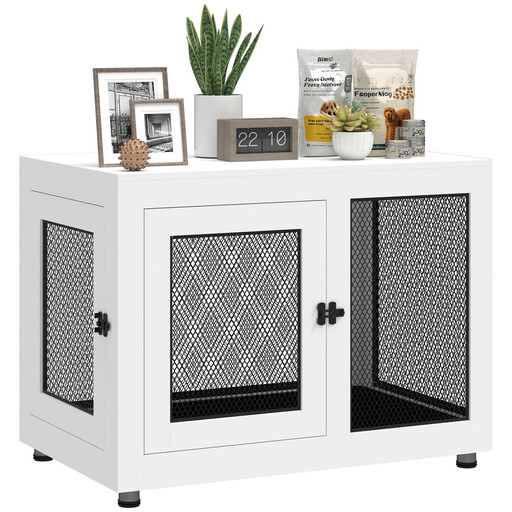
Why it suits this type of buyer: This model combines a steel frame with a removable cushion, making it a good choice if you want to combine a crate and dog bed in one indoor solution.
The removable cushion is included, so you won’t need to find a separate dog bed straight away. Check the washing instructions and make sure it’s the right fit for your dog.
Steel construction, raised design, removable cushion and dimensions of 94 x 60 x 71.5 cm.
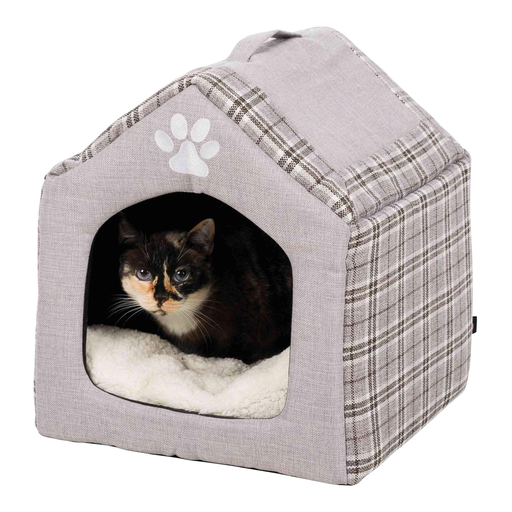
Why it suits this type of buyer: This igloo-style bed is designed for cats and small dogs looking for a sheltered place to sleep. Its soft interior is well suited to relaxing indoors.
The product information specifies a non-slip base and a soft plush interior, giving you a clearer idea of the comfort and stability to expect.
Igloo shape, soft plush fabric, non-slip base and suitable for small dogs; stated product dimensions are 40 x 40 x 45 cm, with detailed measurements of 45 x 33 x 40 cm.
We’ve put together a complete, up-to-date list of products that meet these strict selection criteria and the applicable European safety regulations.
Place the crate somewhere quiet where your dog can see into the room without being disturbed all the time. Don’t put it right next to a radiator, in a draught or in a busy walkway. A non-slip mat under a steel crate can help prevent it from sliding and reduce noise from contact with the floor.
Clean the inside regularly and check the door, latch, base and cushion for signs of wear. Regular checks are especially important for dogs that like to chew. You can pair a soft, comfortable dog bed with a crate, as long as your dog still has enough room.
Your dog should be able to stand up, turn around and lie down at full stretch. Measure your dog and compare those measurements with the usable internal dimensions of the crate, not just its external measurements.
It can be, as long as the cushion fits well, is cleaned regularly and leaves your dog enough room. Check it regularly for loose seams or damage. If your dog chews a lot, a simpler, replaceable sleeping surface may be more practical.
Choose a dry, draught-free spot that isn’t too busy. An igloo bed often works well in a quiet corner for a small dog. A larger steel crate needs more floor space and should stand securely, with enough room around it to open the doors and clean.
