
Parents packing a snack to take along
An individually wrapped portion is practical if the crispbread will be eaten after school. Check the difference between individual pieces of plain crispbread and a pack of pre-filled sticks.


Choose individually wrapped plain crispbread if you want to decide what to put on it yourself. Pre-filled sandwich sticks are more convenient when you need a snack that’s ready to go. Whichever you choose, check the current label for allergens and ask about your school’s rules. If you regularly use crispbread instead of bread, don’t assume it provides the same amount of iodine as bread made with iodised baker’s salt.
An individually wrapped portion is practical if the crispbread will be eaten after school. Check the difference between individual pieces of plain crispbread and a pack of pre-filled sticks.
For varieties containing ingredients such as cereals containing gluten, milk or sesame, it’s important to check the exact packaging. Also ask about the rules at your child’s school or in their class.
If you regularly eat crispbread instead of bread, you can compare the nutritional information and ingredients of each product. According to the Netherlands Nutrition Centre, bread made with iodised baker’s salt is an important source of iodine in the Netherlands; you can’t automatically assume crispbread provides the same amount.
Choose this when: you want to take sealed portions with you and decide what to put on them yourself. Albert Heijn says that Bolletje Knackebrod sesam is individually wrapped.
Bear in mind: you’ll need to provide your own topping or separate filling.
Choose this when: you want a snack that can be eaten without taking a separate topping. Albert Heijn describes Wasa Sandwich roomkaas bieslook as two sticks per pack.
Bear in mind: the fixed filling limits your choice; this Wasa variety contains rye, milk and cereals containing gluten.
When choosing an after-school snack, consider the packaging, allergens and the part crispbread plays in your usual diet.
| What to consider | What to check when buying | Who it matters to |
|---|---|---|
| Portions and convenience | Look for ‘individually wrapped’ or a stated number of sticks per pack; check whether you’ll need to add a topping. | If I’m eating it after school, I want to take a sealed portion without having to sort out a topping there and then. For around 42% of consumers, choosing a practical portion is the top priority. |
| Allergens and school rules | Read the ingredients, highlighted allergens and any ‘may contain’ statements; ask the school about its rules. | If an allergen needs to be avoided, I want to know before packing whether this particular variety is suitable and complies with the school’s rules. For around 33% of consumers, checking this is the top priority. |
| Nutritional information | Compare fibre and salt per 100 g and per portion eaten; if you regularly use it instead of bread, check the ingredients too. | If crispbread is often on the menu, I want to assess its ingredients without treating it as equivalent to ordinary bread. This nutritional choice matters most to around 25% of consumers. |
Rye and wheat varieties contain cereals with gluten, but some products are specifically labelled gluten-free.
If you need to avoid gluten, check the label and allergen information for the exact variety, including any warnings about other allergens.
A sealed box doesn’t mean that every piece of crispbread is wrapped individually. This matters if you want to pack a single portion.
Check that the packaging explicitly says ‘individually wrapped’ or states how many sticks are in a portion.
The filling also determines which allergens are in a sandwich stick. According to Albert Heijn, Wasa Sandwich roomkaas bieslook contains rye and milk, among other ingredients.
Read the full allergen information before packing it and make sure it complies with the school’s rules.
The Netherlands Nutrition Centre identifies bread made with iodised baker’s salt as an important source of iodine in the Netherlands. Crispbread may have different ingredients.
Don’t assume that the word ‘crispbread’ means it contains iodised baker’s salt; check the ingredients if it regularly replaces bread.
Wasa offers both pre-filled Sandwich sticks and plain crispbread varieties, including Gluten- & Lactose Vrij Classic.
A good option if you’re specifically looking for plain crispbread in individual wrappers.
A brand to consider if you’re looking for plain wholegrain rye crispbread as a base for your own toppings.
This product selection is suited to a crispbread sandwich that you can take as an after-school snack without a separate topping.
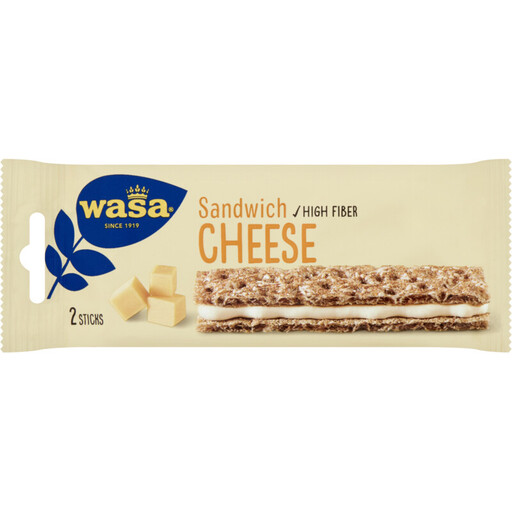 Image unavailable
A pre-filled option if you don’t want to take a separate topping. This variety is listed as containing rye (gluten), milk and sesame, and may also contain soya and lupin; check the current label and the school’s rules before packing it.
Yes. Individual wrapping doesn’t tell you which allergens the variety contains. Read the ingredients and allergen information on the pack you buy; according to the Netherlands Food and Consumer Product Safety Authority, allergens must be clearly shown on the label of pre-packed foods.
That depends on the rules at the school or in the class, and on which allergens need to be considered. Check the label of the exact variety and ask the school about its policy before packing the snack.
No, the label ‘gluten-free’ doesn’t mean that. For example, Wasa says that Gluten- & Lactose Vrij Classic may contain traces of sesame seeds and milk, so read the full allergen information on the pack you choose.
You can’t tell from the product category alone. The Netherlands Nutrition Centre identifies bread made with iodised baker’s salt as an important source of iodine in the Netherlands; check the ingredients of the crispbread if it regularly replaces bread.