What should you look for when choosing?
Start by thinking about where you have breakfast: a portion to take with you calls for different packaging from a bowl you fill at home. Then compare each product’s size and label.
Multipack with individual portions
A good fit if: you want to grab a pre-measured portion in the morning or take dry cereal with you.
Things to consider: you’ll have individual packs, and if you choose a variety pack, you’ll need to check the ingredients for each flavour.
Larger pack
A good fit if: you usually have breakfast at home and can measure out your own portion.
Things to consider: you’ll need to pack a portion separately if you want to take it with you.
| What to consider | What to check when buying | Who it matters to |
|---|
| Portion and taking it with you |
Check how many sachets there are and the weight of each one; consider whether you’ll want to eat or drink something else with it. |
If I leave early, I want to be able to grab a dry portion without measuring it out. An estimated 37% of consumers prioritise convenience and a fixed portion. |
| Nutritional information |
Compare sugars, fibre and salt per 100 g and per portion eaten; also read the ingredients for each variety. |
If I eat the same breakfast often, I want to know what’s in the flavour I’ve chosen. For around 36% of consumers, the ingredients are their main concern. |
| Packaging and use at home |
Decide whether you’ll actually use individual sachets or would rather pour your own serving from a larger pack at home. |
If I always have breakfast at home, individual sachets matter less to me. An estimated 18% of consumers prioritise using a larger pack. |
| Allergens and up-to-date labelling |
Check the ingredients, allergen information and any warning about possible traces on the packaging. |
If I need to avoid certain ingredients, the current label determines what I choose. For around 9% of consumers, checking this comes first. |
Joybuy product for individual portions
This product suits anyone looking for individually packed cereal to take along on a working day. If you choose a multipack, check which portions and flavours are included in the current pack.
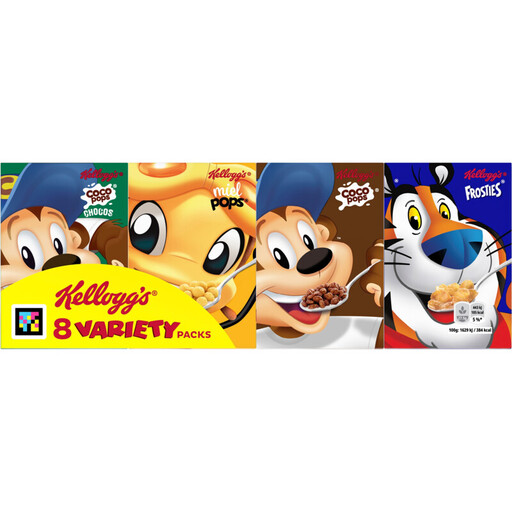 No image available
Kellogg's Mini Assorted Cereal, 220 g
Worth considering if you want to take a dry portion with you on weekdays. The pack contains 220 g. Check the current label for the ingredients, allergens and nutritional information for your chosen flavour.
View at Joybuy
Frequently asked questions
Is a sachet of cereal enough for a complete breakfast?
You can’t tell from the portion pack alone. Think about what you actually eat; the Netherlands Nutrition Centre suggests wholegrain breakfast cereal with yoghurt or a fortified dairy alternative and fruit as one possible breakfast combination.
How do I compare a multipack with a large box?
Compare the weight of each sachet with the amount you’d take from a box, and check the sugars, fibre, salt and ingredients for each product. Also consider whether you need individual sachets to take your breakfast with you.
Does the fibre information tell me everything I need to know about breakfast cereal?
No, the fibre information doesn’t tell you everything about the product. The Netherlands Nutrition Centre explains that a product needs at least 3 g of fibre per 100 g to make the claim ‘source of fibre’; check the other nutritional information and ingredients too.
Where can I find allergen information for prepacked breakfast cereal?
On the pack label. The Netherlands Food and Consumer Product Safety Authority says allergen information must appear there, so check the current packaging rather than relying only on a product page you viewed earlier.
How should I store opened cereal?
Follow the storage advice on your product’s packaging. Albert Heijn says Kellogg's Variety Pack should be stored in a dry place; an individual sachet doesn’t change the best-before date on the pack.


