
Vandaag of morgen in huis

Kwaliteit gegarandeerd

Welkomstaanbiedingen ontgrendelen: GRATIS bezorging | Tot 80% korting | Gratis 30 dagen JoyPlus-proefperiode
Download de app
Disposable incontinence underwear for adults can be handy for urine leakage, nighttime leaks, travel, post-childbirth recovery or bed care. Even so, it’s tricky to compare packs honestly. Terms like “maximum absorption”, “leak-proof” and “24-hour protection” don’t tell you much if the size, fit or use case isn’t right.
Pay particular attention to three common pitfalls:
The product descriptions below list features such as absorbency, odour control and leak barriers. These are claims from the respective brands’ information; they do not guarantee the same experience for every user.
Absorbent underwear for men and women can be pulled on like normal underwear. This is practical for independent use, on the go or when travelling. However, a pull-up pant is less suitable when someone can’t stand easily or needs help with changing.
Incontinence nappies with adhesive tabs can be fitted more easily in bed. The adjustable tabs make it possible to adjust the fit around the waist. Check that the inner leg cuffs sit snugly without pinching.
Incontinence pads for women are designed for smaller amounts of urine loss and are secured inside normal underwear with an adhesive strip. They are usually more compact, but offer less all-round protection than a full pant or a nappy with tabs.
Check the technical description:
A claim like “up to 12 hours” is a product claim from the brand and not a fixed usage time. How often you need to change depends on fluid loss, position, size and personal skin sensitivity.
Measure the waist or hips according to the size chart on the product page. Don’t just look at clothing size. With a pull-up pant, the elastic leg openings must sit snugly without gaps. With a tabbed model, the tabs must fasten securely and not be stuck to the skin.
Materials such as soft non-woven fabric, breathable material or cotton can feel pleasant. A fragrance-free or lotion-free version may suit people who prefer to avoid perfumes. According to the product descriptions of various SUNKISS models, these contain no lotions or fragrances. Stop use if irritation occurs and always follow the instructions on the packaging.
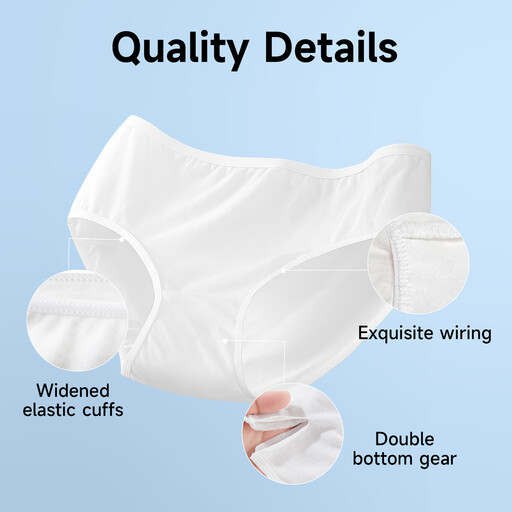
Why this fits the profile: A pack of three is practical for trying out disposable underwear for women, whether for travel or as a spare in your bag. The stated hip size for L is 99–109 cm.
The size and contents are clearly stated. This means you can try a small quantity first instead of buying a large stock straight away.
According to the product description: 100% cotton, individually wrapped and intended for single use.
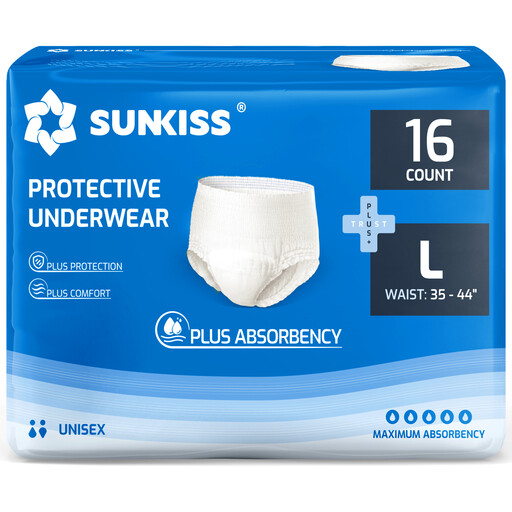
Why this fits the profile: This pull-up model is designed for adults who prefer a pant shape both day and night. The elastic waist and flexible leg openings are, according to the product description, aimed at easier pulling on and movement.
The description mentions both side barriers and an absorbent core. This gives more information than just a general claim about absorbency.
According to SUNKISS: FSC-certified pulp, breathable materials, odour control and three available sizes.
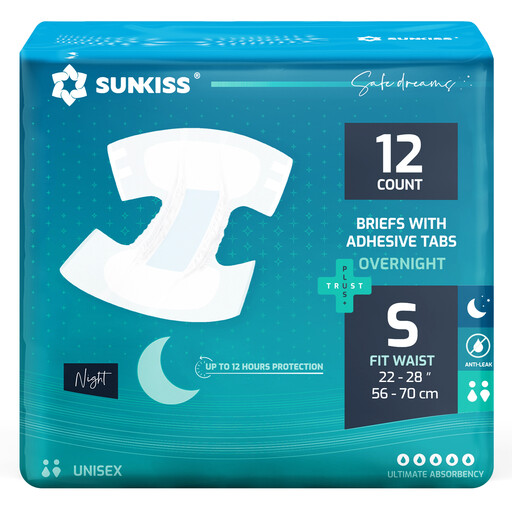
Why this fits the profile: This tabbed model is designed for nighttime use and can be practical for carers or people who need changing in bed.
The adjustable tabs help you readjust the waist. Leg cuffs and a wetness indicator give extra practical control when changing.
According to the product description: dual absorbent core, quick-drying properties, inner leg cuffs and an outer layer designed to limit sagging.
We’ve put together a full, up-to-date list of products that fully meet these strict selection criteria and current European safety regulations.
Gently pull a pull-up pant up and check that the waist and leg openings sit flat. With a tabbed nappy, position the product centrally and fasten the tabs securely, but not too tightly. Replace the product regularly according to the packaging and personal need. Disposable products are not designed to be washed or reused.
Do not flush incontinence underwear, pads or nappies down the toilet. Dispose of them with your regular household waste, unless local rules state otherwise. Store unopened packs in a dry place and follow the expiry information on the label.
That depends on the model, the amount of moisture and the fit. Change it as soon as it is saturated, leaks or feels uncomfortable. A wetness indicator can help with this, but is not a substitute for a check. Regular changing supports good hygiene.
For light urine loss, incontinence pads can be cheaper per use and contain less material. For heavier loss or nighttime use, a full pant can be more practical because it offers more all-round protection. Compare the price per piece and how often you need to change.
Some models are mentioned in their product description for postpartum use. Always check the size, coverage and absorbency level. For a specific medical or recovery question, follow the advice of your midwife, GP or other healthcare professional.
