
Livraison le jour même et le lendemain

Qualité garantie

Débloquez vos offres de bienvenue: Livraison GRATUITE | Jusqu'à -80 % | 30 jours d'essai gratuits à JoyPlus
Téléchargez l'application
Disposable incontinence underwear for adults can make daily life easier, but only if the size, absorbency and fit are right for the situation. A product that works well during the day, for example, may not be suitable for night-time use or for someone who spends a lot of time in bed.
The biggest purchasing mistakes usually come down to three misleading expectations:
Also, be aware of the difference between absorbent incontinence underwear, disposable adult nappies and incontinence pads with adhesive strips. Pull-ups are put on like normal underwear. A nappy with tabs is often more practical for bedridden users or when a carer helps with changing.
Don’t just look at Small, Medium, Large or XLarge. Check the size chart for the specific product and measure your waist or hip circumference according to the seller’s instructions. Fit is more important than absorbency level alone.
For men, men’s incontinence underwear may have a tailored shape. Women’s incontinence underwear is often designed with a different waist-to-hip ratio. Unisex models are practical when one product is used by several people, but getting the right size is still essential.
When putting them on, check that:
For daytime, a light, breathable model with fast fluid absorption is often practical. For night-time incontinence protection, a wider core, leg cuffs and a backsheet that’s less likely to sag are more relevant.
Product descriptions sometimes mention a dual-core system, superabsorbent polymer or FSC-certified pulp. These are verifiable material specifications, but they don’t indicate a universal capacity. According to SUNKISS’s product information, several TrustPlus models are designed for heavy absorbency and night-time use. Compare the number of pieces, the size and the stated application before you order.
A model that the manufacturer claims offers up to 12 hours of protection, such as a particular women’s model, shouldn’t automatically be worn all night or all day. The actual wear time depends on the amount of fluid, movement and when you change it.
Look for inner leg cuffs, elastic leak barriers and a wetness indicator. According to the product description, an indicator can show when a change is needed. This is especially useful when caring for someone who can’t tell you the product is wet.
Materials such as latex-free, lotion-free or fragrance-free fabrics can be relevant for sensitive skin. According to SUNKISS’s own information, certain TrustPlus models contain no lotions or fragrances. Stop using them if skin irritation occurs and change regularly. These products are for single use only, must not be flushed and should go in general waste.
The recommendations below are based on stated product specifications, size options, quantities and use cases. Claims about absorbency, odour control and protection come from the manufacturer’s product information and are not presented here as guaranteed results.
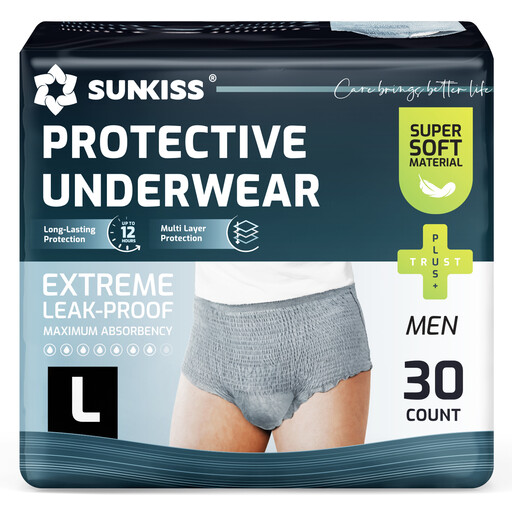
Why this fits the profile: This model is designed for daytime use and contains 30 pieces. That makes it a good option for trying a pull-up first without committing to a smaller pack.
The product description mentions an ergonomic fit for men, breathable materials and reinforced leak guards. Just be sure to check the waist size first.
According to the manufacturer: an absorbent core, odour control and a 357-degree elastic design for all-round snug protection.
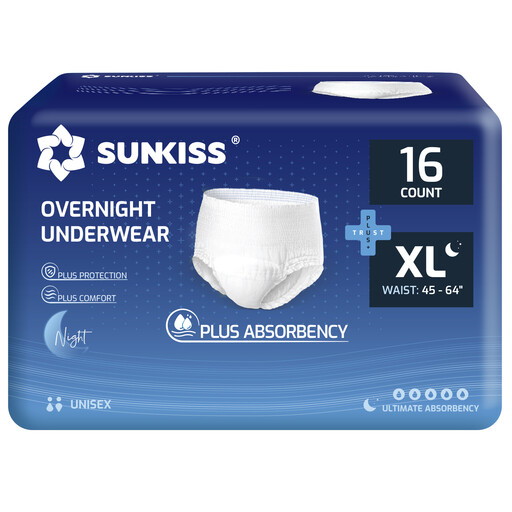
Why this fits the profile: An option for users who want one unisex model for both day and night, with extra focus on night-time use.
The stated wide core and inner leg cuffs are designed for bed use and different sleeping positions. Choose the size based on your body circumference.
According to SUNKISS’s own information: a dual-core system, quick-drying properties, odour control and a sag-resistant outer layer.
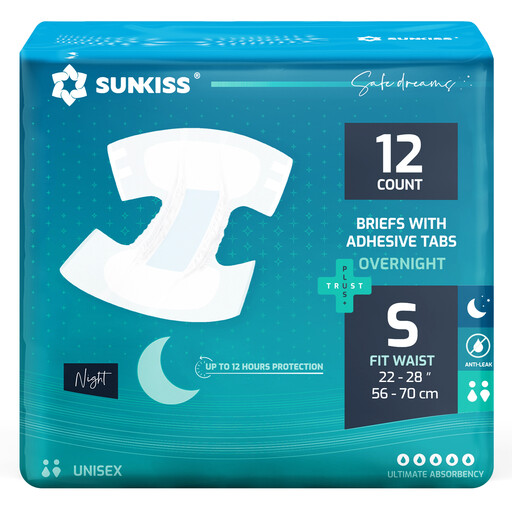
Why this fits the profile: This model with adhesive tabs is practical for bedridden individuals, carers and users who can’t easily put on a pull-up.
The adjustable tabs allow for correct positioning. Leg cuffs and a wetness indicator are, according to the product description, designed to make changing more practical.
According to the manufacturer: heavy night-time absorbency, a dual-core system, adjustable adhesive tabs and material free from lotions or perfume.
We’ve put together a full, up-to-date list of products that fully meet these strict selection criteria and comply with current European safety regulations.
A pack with lots of pieces isn’t always better value. Work out the price per piece and consider the recommended changing frequency. A product for heavy use could cost more per day if it needs to be changed more often.
Pull a disposable pull-up on gently and check the leg cuffs. With a nappy that has tabs, first position the back section correctly, then fasten the strips firmly but not too tightly. Store packs in a dry place away from heat and naked flames. Check the expiry information on the label.
For postpartum underwear, extra coverage and a soft waistband may be desirable. If incontinence problems persist or change, it’s wise to consult a healthcare professional; this buying guide is not a substitute for personal medical advice.
That varies by product and the amount of fluid. Follow the product information and change regularly. A stated duration, such as “up to 12 hours”, is a claim from the manufacturer’s product description and not a fixed guarantee of wear time.
Some models are, according to the manufacturer, designed for night-time use and have a wider absorbent core, leg cuffs or a sag-resistant outer layer. For night-time incontinence protection, always choose the right size and check that all edges fit snugly after putting them on.
That depends on the number of changes, the pack size and the absorbency needed. Pull-ups are handy when someone can stand or walk independently. Disposable nappies with tabs can be more practical for bedridden users, because a carer can put them on while the person is lying down. So compare the price per piece and the suitability for the user.
