
Livraison le jour même et le lendemain

Qualité garantie

Débloquez vos offres de bienvenue: Livraison GRATUITE | Jusqu'à -80 % | 30 jours d'essai gratuits à JoyPlus
Téléchargez l'application
Urinary incontinence calls for a solution that suits your body, daily routine and the amount of fluid that needs to be absorbed. But it can be difficult to tell from product photos and marketing copy which incontinence underwear for adults is right for you. If the fit is too loose, leaks can escape around the edges; if it is too tight, it may chafe or not fit properly.
This guide helps you compare disposable incontinence underwear based on verifiable features. You’ll find information about fit, absorbency, daytime and overnight use, incontinence pants for men and women, postpartum underwear, and adult nappies with adhesive tabs.
High absorbency sounds appealing, but it doesn’t automatically mean a product is right for your situation. Thicker absorbent underwear may be less discreet or feel warmer. So check these features too:
According to SUNKISS product information, several models have an absorbent core and leak barriers. These are features listed in the product description; how well a product works for you depends on how you use it, the fit and the amount of urine leakage.
Sizes such as medium, large and extra large vary between manufacturers. It’s best to check the size chart on the product page and measure your waist or hip circumference as instructed. A good fit should feel comfortable and secure, without creating pressure points.
For pull-ups, check the leg openings too. An elasticated edge should fit snugly without digging into your skin. With adult nappies that have adhesive tabs, make sure the fastenings are adjustable and don’t sit over a skin fold.
Odour control usually relies on a filter layer, absorbent polymer or another layer of material. According to SUNKISS product information, some models feature odour-control or Odor-Lock technology. This is a manufacturer’s claim, not a guarantee that odours will disappear in every situation.
It’s still important to change regularly. Used products should not be flushed down the toilet; dispose of them with general waste unless local waste rules say otherwise.
For light urinary leakage, an incontinence pad may be enough. According to its product information, TENA Discreet Ultra Normal is a thin pad for light to moderate bladder leakage. It has an adhesive strip and is individually wrapped.
For heavier leakage, absorbent pants generally offer more coverage than a separate pad. Look for:
Claims such as “up to 12 hours” come from the manufacturer’s product description. Don’t treat this as a set wear time: when to change depends on leakage, activity and comfort.
Incontinence pants for men may have an ergonomic shape that provides more room at the front. Styles for women are often designed for a different body shape and may have a higher waist or wider coverage.
Postpartum underwear can be useful if you want extra coverage after giving birth. If so, check that the waistband feels comfortable and that the material doesn’t cause irritation. Claims in product information about balanced pH or being “suitable for sensitive skin” should be treated as manufacturer claims, not medical guarantees.
Disposable incontinence underwear is pulled on like regular underwear. It’s suitable if the wearer can stand or move independently. For adults who are bedbound or in care settings, a nappy with adhesive tabs may be more convenient. Its adjustable fastenings make it possible to put on and take off without the wearer having to stand fully upright.
Always check the instructions for use. The products listed are for single use and are not designed to be washed or reused.
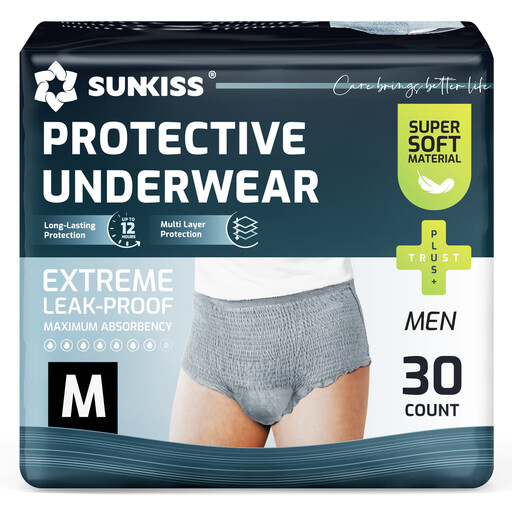
Why it suits this profile: This disposable style for men is designed for daytime use and comes in a pack of 30. That makes it practical for everyday use, home care or when you’re out and about.
The product information describes an ergonomic fit, elasticated edges all around and reinforced leak guards. Be sure to check the size before ordering.
30 per pack, a fit designed for men and an absorbent core, according to the product description.
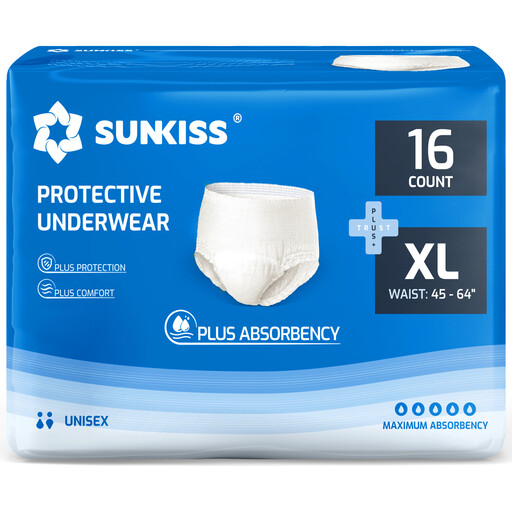
Why it suits this profile: This unisex style is designed for daytime and overnight protection. It may suit adults looking for fuller coverage, including those who need postpartum underwear.
The manufacturer lists leak barriers, an elasticated waistband and flexible leg openings. Compare the measurements with your own body measurements.
Soft, breathable materials according to the product information, with an absorbent core and side barriers.
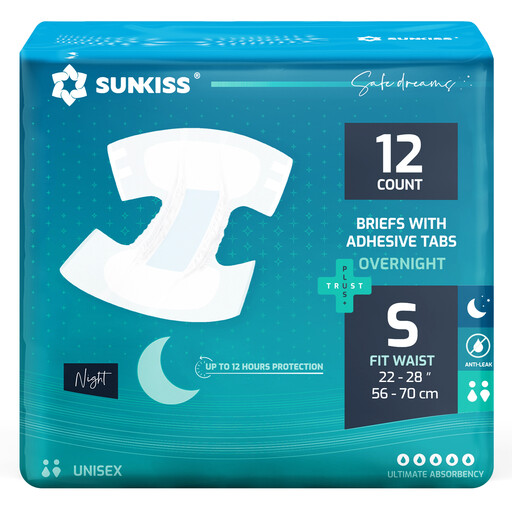
Why it suits this profile: The adhesive tabs and wetness indicator are practical for overnight use, adults who are bedbound and carers who want to adjust the product without having the wearer stand up.
The product description mentions adjustable adhesive tabs, inner leg cuffs and an outer layer designed to help prevent sagging. A suitable size is still essential.
Adhesive tabs, a dual absorbent core according to the manufacturer, and a wetness indicator.
We’ve put together a full, up-to-date list of products that meet these strict selection criteria and the applicable European safety regulations.
Measure your waist or hip circumference using the brand’s size chart. Don’t automatically choose the same size as your regular underwear. For your first order, check in particular that the leg openings fit snugly without feeling tight.
Change the product as soon as it is saturated, leaks or no longer feels comfortable. How long it can be worn varies from person to person and depends on the situation. Product claims such as “up to 12 hours” are not a set rule for when to change it.
For light urinary leakage, a pad may cost less per use. For larger amounts of fluid, incontinence underwear may be more practical because it covers more of the body. Compare the price per item, how many changes you need each day and the absorbency required, rather than looking at the pack price alone.
