
Vandaag of morgen in huis

Kwaliteit gegarandeerd

Welkomstaanbiedingen ontgrendelen: GRATIS bezorging | Tot 80% korting | Gratis 30 dagen JoyPlus-proefperiode
Download de app
Finding the right incontinence product can be a difficult journey. The packaging makes big promises, but in practice, products can sometimes be a letdown. You are looking for a solution that offers security, comfort, and discretion, so that you or your loved one can get through the day (and night) with complete confidence.
As a Product Recommendation Officer at Joybuy, I see the daily challenges users face. Many marketing terms create confusion and lead to choices that don't fit the individual's situation. Let's look at the most common pitfalls so you can make a more informed choice.
To avoid these pitfalls, it's helpful to focus on a few concrete product features. These specifications provide a much clearer picture of what to expect than the marketing buzzwords on the front of the package.
The absorbency level is the most critical factor. Instead of relying on vague terms, it's better to look at the indication for the type of urinary loss:
The choice between pants and a brief (diaper) depends on mobility and personal preference.
Prolonged contact with moisture and synthetic materials can irritate the skin. Therefore, pay attention to the following points:
Based on these objective criteria, we have selected a number of products that cater to different needs.
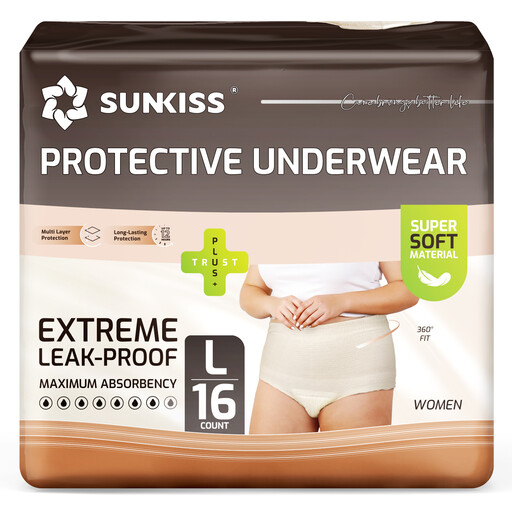
Why it's a match: This incontinence pant is designed for women who lead an active life. It is worn like regular underwear, offers freedom of movement, and is discreet under clothing, making it ideal for daily use or as a postpartum pad.
The fit is specifically tailored to the female body shape (curve-hugging 360°), which minimizes the risk of leakage due to a poor fit. The breathable material helps prevent skin irritation.
According to the manufacturer SUNKISS, the Odor-Lock technology neutralizes odors directly at the source. The super-absorbent core turns liquid into gel for a dry feeling.
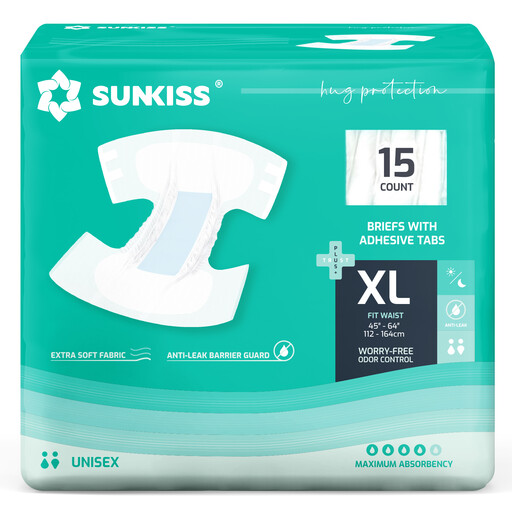
Why it's a match: This brief with adhesive tabs is suitable for users with heavy urinary loss or reduced mobility. The tab closure provides an adjustable and highly secure fit, ideal for those who are often sitting, lying down, or need assistance with changing.
This product offers a clearly high absorbency level and tackles the problem of a poor fit with adjustable fasteners. This gives the user or caregiver control over how tightly the product fits.
The combination of high absorption capacity and a secure, customizable fit offers maximum protection against leakage. The material is breathable and made from FSC-certified pulp.
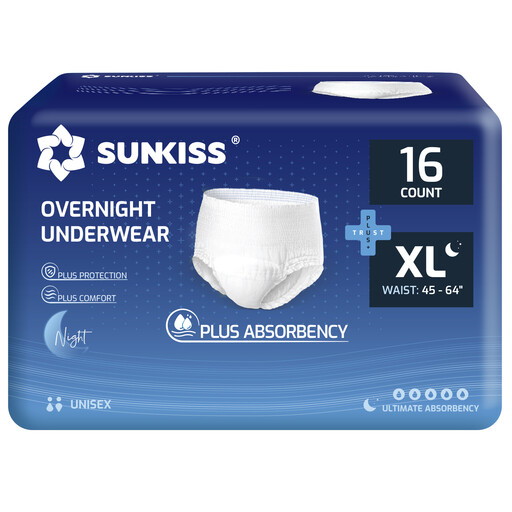
Why it's a match: This unisex pant is specifically designed for overnight use. It provides the security needed to get through the night without fear of leakage, even when turning in bed. It combines the comfort of a pant with the absorbency required for nighttime.
The product is explicitly designed for a lying position, with an extra-wide core and anti-leak guards. This goes beyond a generic "maximum absorbency" and addresses the specific challenges of the night.
According to the manufacturer, the dual-core system ensures rapid absorption and dryness. The product is free of latex, lotion, and fragrance, making it suitable for sensitive skin.
We have compiled a complete, up-to-date list of products that meet these selection criteria and current regulations.
The right size is crucial for comfort and leak protection. Measure your hip and waist circumference at the widest point. Compare these measurements with the manufacturer's size chart, which you can usually find on the product page or packaging. If you are between two sizes, don't just opt for the larger one; a product that is too large will not fit snugly and can leak.
This depends on the level of urinary loss and the product's absorption capacity. A general guideline is to change 3 to 4 times a day, or immediately after a bowel movement. Many modern incontinence diapers have a wetness indicator: a line that changes color when the product becomes saturated. Regular changing is important to keep the skin healthy and prevent odors.
In the Netherlands, incontinence products may be reimbursed under the basic health insurance plan under certain conditions. This usually depends on the cause and severity of the incontinence. You often need a referral from a doctor or nurse. Contact your health insurance provider to check the specific conditions and reimbursement policies for your situation.
