
Livraison le jour même et le lendemain

Qualité garantie

Débloquez vos offres de bienvenue: Livraison GRATUITE | Jusqu'à -80 % | 30 jours d'essai gratuits à JoyPlus
Téléchargez l'application
Urinary leakage calls for a solution suited to the situation. If you focus only on phrases such as “maximum absorbency”, “waterproof” or “extra comfortable”, you may still end up buying a product that is not the right fit. The right choice mainly depends on the amount of moisture, the fit, when it will be used and the surface you want to protect.
This guide helps adults, carers and healthcare professionals compare incontinence products objectively. Options include incontinence underwear for women, incontinence underwear for men, incontinence pads for men, disposable underpads and a mattress protector against urine.
A product that is too loose can move around and cause leakage around the edges. A product that is too tight can feel uncomfortable and restrict freedom of movement. Therefore, always check the waist or hip measurement, and when choosing bed protection, look at the exact dimensions and mattress depth.
With a mattress protector, a standard size is not always sufficient. For example, a 150 x 200 cm mattress with a deep mattress needs a different fit from a thin 140 x 200 cm mattress.
Packaging may suggest high absorbency, but that does not automatically mean the product can be worn all day or night. The level of protection needed depends on when it is used: light drips during the day call for something different from repeated urinary leakage during the night.
With disposable products, it is sensible to replace the product as soon as it feels saturated or damp. This supports hygienic use and reduces the risk of leakage.
A soft top layer is pleasant, but with bed protection, the waterproof membrane layer, fastening and washing instructions are also important. Without secure fastening, a cover can shift. With disposable underpads, the absorbent surface must lie fully beneath the body, without folds.
Pay attention to brand claims too. According to a brand’s product description, terms such as “super absorbent”, “odour control” or “up to 12 hours” may form part of the product presentation. Treat this information as the manufacturer’s product specification and adjust use to your personal circumstances.
First, choose the type of product:
For light incontinence, a thin pad may be sufficient. With post-partum incontinence, night-time urinary leakage or more intensive use, pull-up pants or a combination of personal protection and an absorbent bed underpad may be more practical.
Measure the following before buying:
A mattress protector with 30 cm deep pockets is particularly relevant for deeper mattresses. A model with four corner elastics can help limit movement, but it still needs to be fitted correctly.
Check whether the product:
The models in this selection state that they have a washable design, are machine washable at 20–40 °C and may be washed at up to 60 °C according to the product information. The care instructions provided also recommend drying at a low temperature and not ironing. Always check the label on the product you receive.
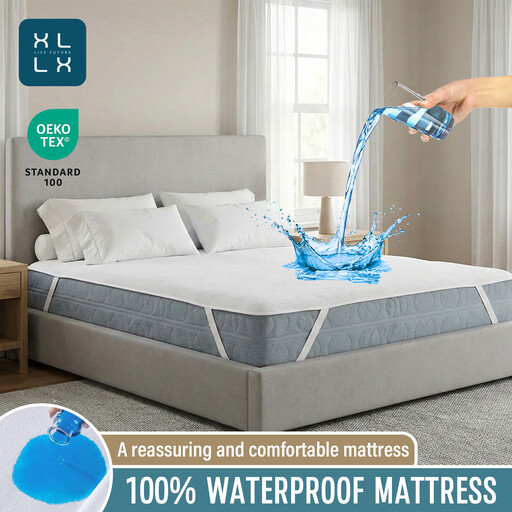
Why it suits this profile: A practical washable model for anyone who wants to protect a mattress against moisture, perspiration or light urinary leakage without immediately turning to disposable products.
The four corner elastics help keep the protector in place. The product description mentions a waterproof, breathable membrane layer; check that 140 x 200 cm is suitable for your mattress.
100% polyester, four corner elastics, machine washable according to the stated instructions and suitable for standard mattresses.
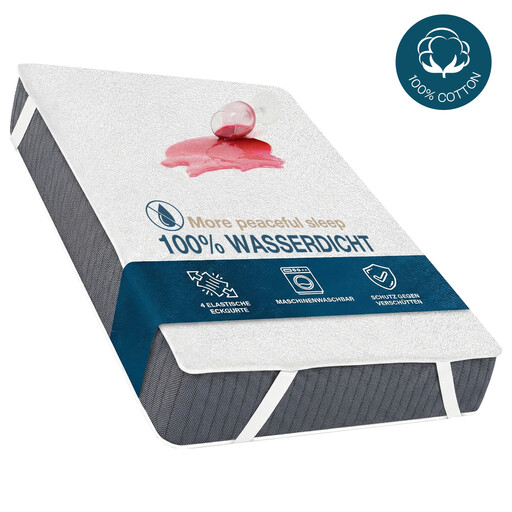
Why it suits this profile: An option for anyone who values a cotton terry surface, a quiet finish and reusable protection.
The product specification states that the top is made from 100% cotton and the back is waterproof and breathable. The corner elastics help limit movement, but choosing the correct size remains essential.
100% cotton terry surface, washable, breathable membrane layer and four elastic fastening points.
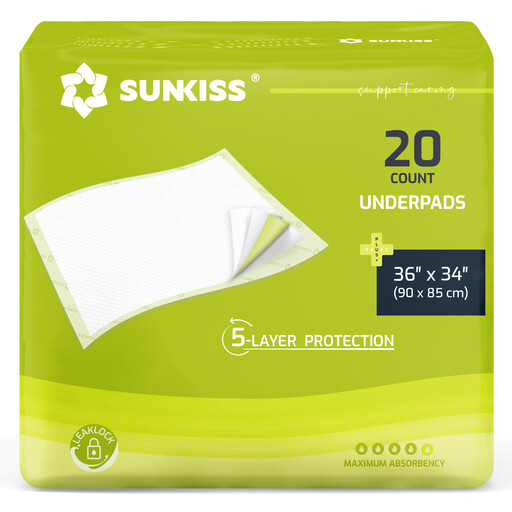
Why it suits this profile: For beds, sofas, chairs and car seats where additional surface protection is needed, for example with night-time urinary leakage or intensive use.
The underpad is not dependent on a clothing size and covers a large surface area. According to the product description, it consists of five layers with SAP; the product is intended for single use.
36 x 34 inch, five-layer construction, absorbent polymer, latex-free specification and suitable for beds, furniture and car seats.
For light urinary leakage in men, a separate incontinence pad may be more practical than full pull-up pants. According to the product description, the Tena Men Active Fit Absorbent Shield has a male shape, an adhesive strip and a thickness of 0.3 cm. The manufacturer describes it as protection for light urinary leakage. The pad is intended for single use and must not be flushed down the toilet.
Anyone specifically looking for incontinence underwear for women or men can consider the different SUNKISS sizes. For women, models are available in medium, large and XLarge, among others. For men, there is an XLarge model with an ergonomic fit. Check the size chart and bear in mind that, according to the product information, these products are intended for single use.
We have put together a complete, up-to-date list of products that fully meet these strict selection criteria and the applicable European safety regulations.
A washable waterproof mattress protector can protect the mattress against moisture. With larger amounts or repeated night-time urinary leakage, an absorbent bed underpad can be useful as an additional layer. Choose the size based on the mattress and make sure the protector lies flat and securely.
Its lifespan depends on washing frequency, temperature, drying and wear to the waterproof layer. Follow the manufacturer’s care instructions. Replace the protector when the membrane layer becomes damaged, the elastics no longer work properly or moisture starts to seep through.
Disposable underwear and pads involve recurring costs. The daily cost depends on the number of changes and the pack size you choose. A washable mattress protector can supplement bed protection, but it does not replace suitable absorbent protection when urinary leakage occurs directly.
