
当日/次日达

品质保障

开启新人专享福利: 全场免邮 | 低至 2 折 | 免费试用 30 天 JoyPlus 会员
下载 Joybuy
Leaking urine when you sneeze, laugh, cough, exercise or sleep doesn’t always call for the same type of product. If you focus only on terms such as “extra protection” or “maximum absorbency”, you could end up buying a pad that’s too small, too thick or simply larger than you need.
As a Joybuy Product Recommendation Officer, I filter out the most important product specifications and practical considerations. This helps you compare incontinence pads for women by intended use, fit and absorbency, rather than relying solely on marketing claims.
Using a sanitary pad for bladder leaks might seem logical, but menstrual fluid and urine behave differently. Incontinence pads for women are generally shaped for bladder leaks and often have an absorbent core designed to take in moisture more quickly. So check that the packaging clearly states that the product is intended for urinary incontinence or a weak bladder.
A product designed for periods may have a similar shape, but that doesn’t automatically mean it’s suitable for everyday bladder leaks.
Brands use terms such as normal, long, long plus and extra absorbency. These descriptions aren’t standardised across all brands. So also check:
A long incontinence pad may offer more coverage, but could feel less comfortable if it’s too large for your body shape.
Odour control is about reducing or neutralising smells. A dry feel depends largely on how quickly moisture is absorbed and retained in the core. For example, according to the product description, Always Discreet uses OdourLock technology, which the manufacturer says neutralises odours. This is a brand claim, not a guarantee that odours will disappear completely in every situation.
Also check whether the product contains fragrance. Some products have a light scent, while fragrance-free options may be more suitable if you’re sensitive to scented materials.
A thin liner may be enough for light bladder leaks, such as after sneezing or for a few drops. For more regular leaks, standard or long incontinence pads may be more practical. For heavy leaks or longer-lasting protection, incontinence underwear can offer more coverage than a separate pad.
Use the product category as a starting point, but also consider your own pattern:
A claim such as “up to 12 hours of protection” for SUNKISS underwear comes from the manufacturer’s product description. How long you can actually wear it depends on the amount of moisture, your activity and the fit. Change the product according to the instructions and when it becomes saturated.
A pad should sit comfortably in the gusset of your underwear, without creases or gaps around the edges. A model that’s too short may not provide enough coverage at the front or back. One that’s too wide could feel uncomfortable or shift more easily.
Always check the brand’s size guide for incontinence underwear. A tight waistband doesn’t automatically provide better protection. Too much pressure can make it uncomfortable to sit, cycle or sleep.
Many disposable products have a top sheet, an absorbent core and a waterproof backing. Product descriptions may list materials such as cellulose, polypropylene, polyethylene and superabsorbent polymers. The exact composition varies by product.
Use each pad or pair of underwear once, unless the packaging explicitly says otherwise. Stop using the product if you experience skin irritation and follow the safety information on the packaging. Dispose of used products with household waste; don’t flush them down the toilet.
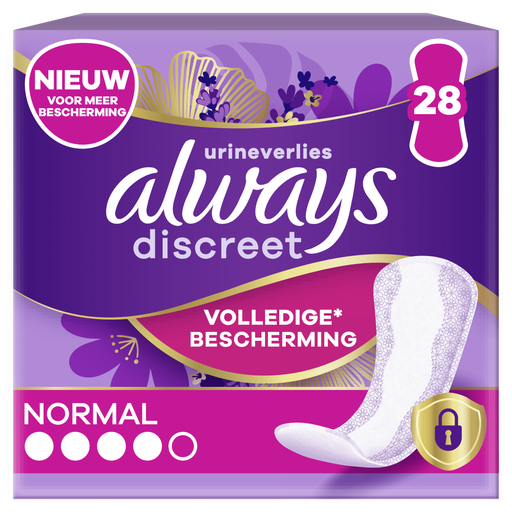
Why it suits this profile: A thin liner is an easy starting point for light bladder leaks and everyday use. According to the product description, the liner is less than 0.2 cm thick and has a flexible core.
You don’t have to pay straight away for a heavy-duty incontinence pad if a lighter option suits your needs. Bear in mind, though, that a liner isn’t designed for heavy bladder leaks.
28 liners per pack, a thin design and a flexible core, according to the product information.
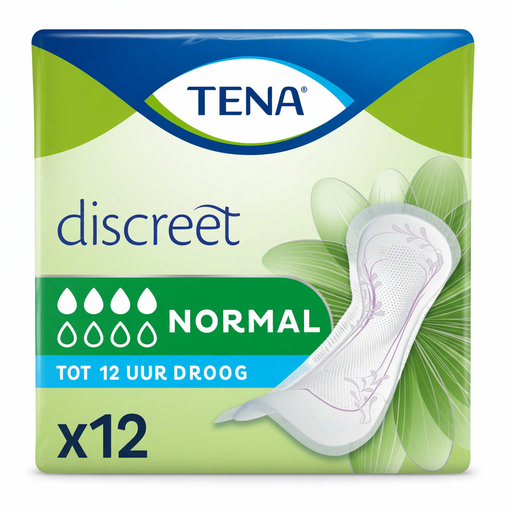
Why it suits this profile: This standard pad is designed for everyday use with moderate bladder leaks. The product description mentions an anatomical shape, elasticated sides and a quick-drying zone.
The “Normal” label is backed up with specific information about the shape and intended use, so you don’t have to rely on a vague marketing term alone.
12 pads, an anatomical fit and, according to the product information, protection against a damp feeling and odours.
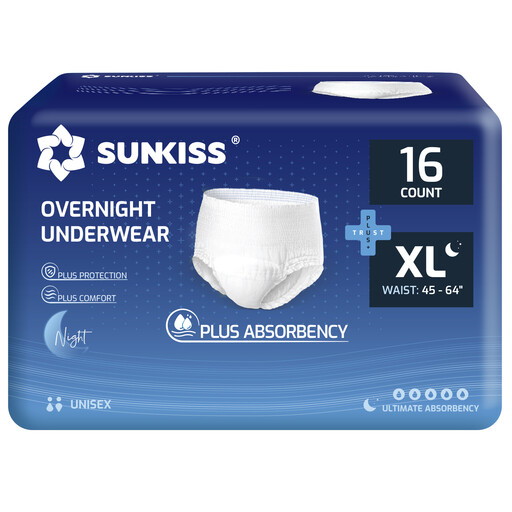
Why it suits this profile: Disposable underwear is practical for overnight use, heavier bladder leaks or situations where a separate pad might shift. According to the product description, this model has an extra-wide core and inner leg guards.
The underwear style offers more all-round coverage than a standard pad. Make sure the XLarge size is right for you, and don’t use it if the waist or leg openings don’t fit properly.
16 pairs, XLarge size, an extra-wide core and odour control, according to the product information.
We’ve put together a complete, up-to-date list of products that meet these strict selection criteria and the applicable European safety regulations.
Change a pad when it’s saturated, if it feels damp or according to the instructions on the packaging. You may need to change it less often for light leaks than for heavy ones, but wearing a damp product for a long time can be uncomfortable. Disposable pads are designed for single use.
Yes, as long as the product is suitable for the expected level of absorbency and provides enough length or coverage. For heavy bladder leaks overnight, incontinence underwear may be more practical than a standard incontinence pad. Always check the size, fit and instructions for use.
Work out the cost by dividing the pack price by the number of items, then multiplying that figure by the average number of products you use each day. Don’t compare pack prices alone: a larger pack may seem better value, but a product with too little absorbency could mean you need to change it more often. The right fit and absorbency level will determine how many products you actually use.
