
Livraison le jour même et le lendemain

Qualité garantie

Débloquez vos offres de bienvenue: Livraison GRATUITE | Jusqu'à -80 % | 30 jours d'essai gratuits à JoyPlus
Téléchargez l'application
Urine leakage can happen when you sneeze, laugh, exercise, are out and about, or during the night. Incontinence pads are available in different lengths, shapes and absorbency levels. However, it’s not wise to rely solely on terms like “ultra-thin”, “extra protection” or “odour control”.
The product description, fit and intended use determine whether a pad is truly right for you. This guide helps you compare adult incontinence products on verifiable features, so you can avoid a purchase you’ll regret.
At first glance, a sanitary towel for urine leakage might seem a logical choice, but menstrual blood and urine require a different construction. Incontinence pads are generally designed for faster fluid absorption and a different fit around the urethra.
A regular sanitary towel may therefore not fit as well or absorb moisture as quickly. Always check that the packaging explicitly mentions urine leakage or bladder weakness.
A thin pad isn’t automatically suitable for every situation. For light urine loss, a discreet model can be comfortable, whereas for regular or heavier loss, a longer variant with more absorbency may be needed.
Pay attention to the combination of absorbency, length, width and shape. A pad that’s too small can leak, while one that’s too large may be unnecessarily visible or uncomfortable.
Brands use different systems for odour control. According to their own information, Always uses Always Discreet OdourLock technology; TENA mentions odour control and moisture retention in its product descriptions. This doesn’t mean odours disappear completely in all circumstances.
Regular changing, a good fit and correct disposal remain important. A used pad should go in the bin, not the toilet.
First, consider the situation:
Product names like Normal, Extra, Long and Long Plus give an indication, but always check the official product information. Your actual needs will vary from person to person and depending on the time of day.
A men’s incontinence pad often has a cup-like or more triangular shape designed for the male body. Examples include the TENA Men Active Fit models. A women’s model is usually wider and anatomically shaped for use in underwear.
The adhesive strip must be strong enough to prevent shifting. Tight, snug-fitting underwear helps with this. When trying a new variant, test a small pack before buying in bulk.
If you have sensitive skin, look for:
Terms like “hypoallergenic” or “dermatologically tested” are manufacturer claims. According to product information, certain models are described as dermatologically tested or latex-free. Stop using the product if irritation occurs and follow the instructions on the packaging.
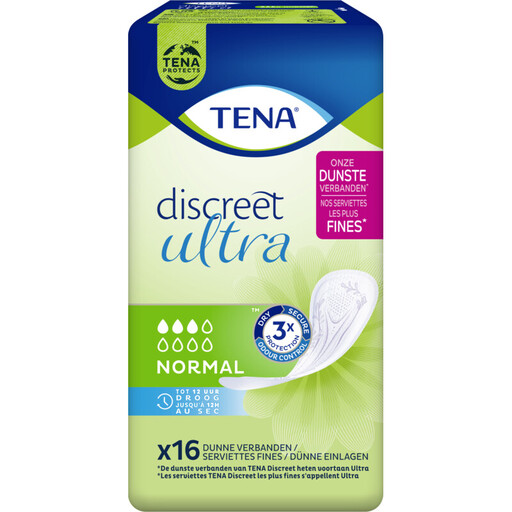
Why this fits the profile: The pack contains 16 individually wrapped pads for daily use, work or on the go. The product description mentions an ultra-thin design, bamboo fibre and cotton.
The specifications make it clear that this is protection for light to moderate bladder weakness, not a general sanitary towel.
Latex-free according to the product information, individually wrapped and designed for a discreet fit.
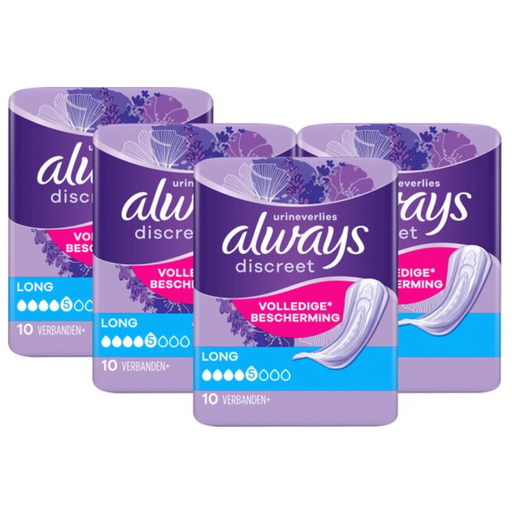
Why this fits the profile: This variant comes as 4 packs of 10 and is aimed at women who want extra length and a reliable daily supply.
The variant is clearly labelled as Long and contains an absorbent core, so you’re not buying based solely on the term ultra-thin.
40 pads per bundle, long design and, according to the product information, an odour control system.
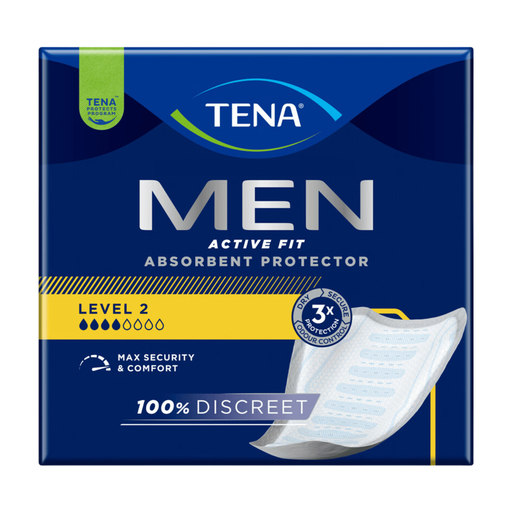
Why this fits the profile: According to the product description, this men’s incontinence pad is shaped for the male body and intended for moderate urine loss.
The male-specific shape prevents you from choosing a women’s model that doesn’t fit your body shape as well.
Level 2, 10 pads, an adhesive strip and a thickness of approximately 0.4 cm according to the product information.
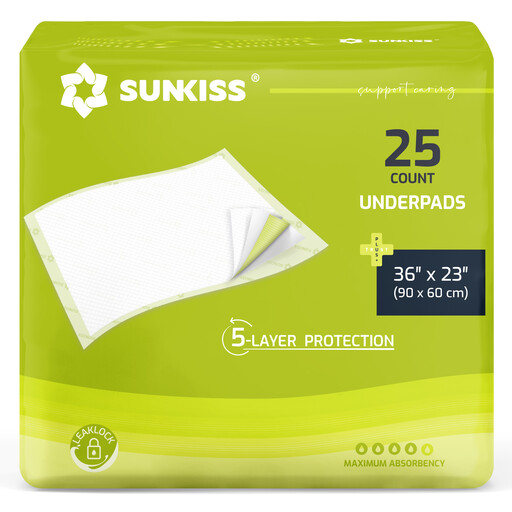
Why this fits the profile: These disposable underpads are designed for beds, sofas, chairs and car seats. The pack contains 25 pads.
You use a separate protection product for furniture and bedding, rather than overloading a pad.
Five layers, absorbent polymer, breathable top layer and latex-free materials according to the product description.
We’ve put together a full, up-to-date list of products that fully meet these strict selection criteria and current European safety regulations.
A pad is a single-use disposable product. Change it according to the product instructions and sooner if it becomes saturated, damp or soiled. The mention of “up to 12 hours” in some product descriptions is not a fixed wear time for every person or situation. Always check the packaging.
When buying, compare not just the price per pack, but also the price per pad. A larger bundle can be more cost-effective for daily use, while a small pack is handier for trying out a new size or absorbency level.
If you experience persistent, suddenly worsening or troublesome urine loss, it’s wise to consult your GP. A pad protects against leakage but doesn’t treat the underlying cause.
Start with the amount and timing of your urine loss. For a few drops, a thin liner may be enough. For more frequent loss, choose a longer or more absorbent model. Keep a note of when leakage occurs and whether the pad shifts. This will help you choose a different size or variant more accurately.
That depends on the amount of moisture, the product and the usage instructions. Change the pad regularly and immediately when it becomes saturated. The wear time on the packaging is the guide; general claims about long-lasting dryness are not a guarantee for every user.
A bed protector for incontinence can be useful for night-time leakage, when changing pads, or if you want to protect a mattress, chair or car seat. An underpad doesn’t replace a body-worn pad, but provides an extra physical barrier for surfaces.
