
Livraison le jour même et le lendemain

Qualité garantie

Débloquez vos offres de bienvenue: Livraison GRATUITE | Jusqu'à -80 % | 30 jours d'essai gratuits à JoyPlus
Téléchargez l'application
A suitable incontinence pad needs to absorb moisture quickly, stay securely in place, and suit your daily routine. Yet it can be tricky to compare packs fairly. Brands use different terms for absorbency levels, lengths and odour protection. What's more, a product that feels comfortable for light urine loss may not be sufficient for longer periods without changing.
That's why Joybuy's Product Recommendation Officer is here to help you assess the key product information practically. This way, you can avoid relying solely on a flashy marketing claim or a low price.
A thin pad can feel discreet, but its thickness alone doesn't tell you how much fluid the product can hold. Look at the stated use, the absorbent core and the shape. A product designed for light urine loss isn't automatically suitable for heavier loss or overnight use.
Also watch out for phrases like "extra protection" or "reliable protection". According to their own product information, Always and TENA use these claims to refer to the features and intended use of their products. They are not a guarantee that every pad will remain leak-free for every user.
A pack with lots of incontinence pads may seem good value, but the cost depends on how many changes you need per day and the absorbency level. A pad that is too small or not absorbent enough may need to be changed more often. So compare the price per piece as well as the type of product.
The anatomical shape affects how well the pad fits. Women's incontinence pads are often longer or shaped differently than protective pads for men. A men's incontinence pad may have a wider zone at the front and is designed to be secured in close-fitting underwear. A good fit helps prevent shifting during walking, working or sleeping.
Start with the amount and pattern of your urine loss. For a few drops when sneezing, laughing or moving, a liner or light pad may be enough. For more regular loss, normal or extra absorbent incontinence pads make more sense. For night-time, a longer model or extra protection may be needed.
Product names like Normal, Extra, Long and Long Plus are not fully standardised across brands. So always check the product description and instructions for use. For example, TENA Discreet Normal is described as suitable for light to moderate urine loss, while Always Discreet Long Plus is intended for heavier urine loss, according to its own product description.
Look out for:
For a bed, chair or car seat, you don't need a body-worn pad, but absorbent bed pads. Check the dimensions, for example 60 × 60 cm, and place the absorbent side facing up. These products are for single use and are not intended as a replacement for a body-worn pad.
Check the composition if you are sensitive to certain materials. Products in this selection use, among other things, cellulose, polyacrylate or SAP as the absorbent core, and polyethylene as the protective outer layer. Some models also mention an unperfumed or dermatologically tested top layer.
Odour control is usually based on a technology or material in the core. According to its own product information, TENA's Instadry zone works by quickly drawing moisture into the pad; Always refers to OdourLock. Treat this as product information, not a medical guarantee. If irritation occurs, stop using the product and consult a healthcare professional if necessary.
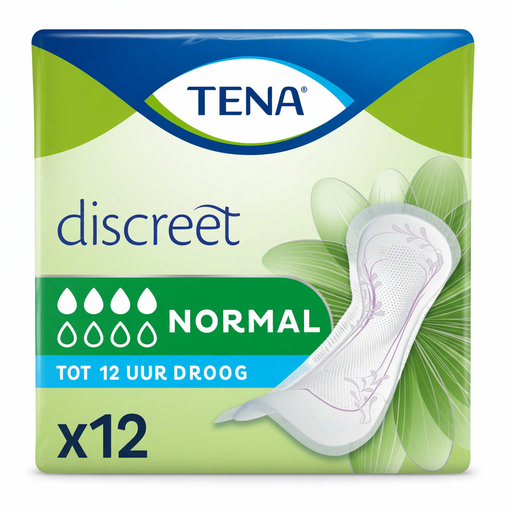
Why this fits the profile: This model is designed for light to moderate urine loss and contains 12 pieces, so you can try a normal fit without committing to a large supply straight away.
The product description clearly states the intended absorbency level, so you don't have to rely solely on the name or a general claim.
12 pieces, anatomical shape, faster absorption zone and, according to the product description, protection against moisture and odours.
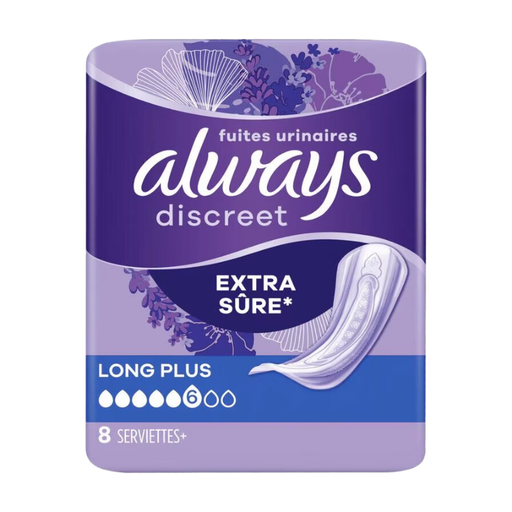
Why this fits the profile: The longer Long Plus shape is, according to the product description, aimed at extra protection for heavy urine loss and may be suitable for longer periods of use.
The product variant states Long Plus and an 8-piece pack. This means the length, variant and quantity can be checked in advance.
Long Plus version, ultra-thin core according to the manufacturer, and product information on odour neutralisation.
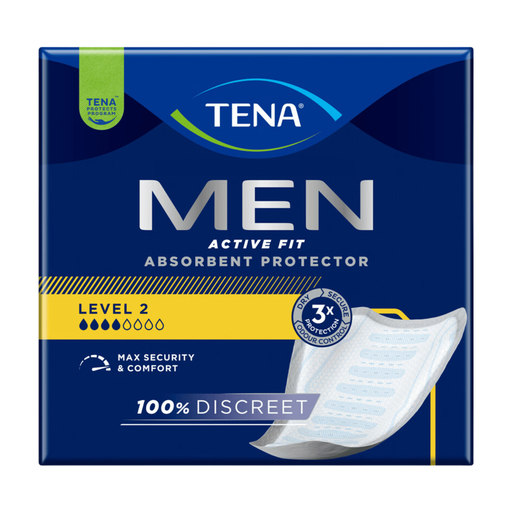
Why this fits the profile: This men's incontinence pad has, according to the product information, a male contoured shape and is designed for moderate urine loss during work, sport or on the go.
The specific shape prevents you from choosing a general model that doesn't fit the male body shape as well.
Level 2 for moderate urine loss, 10 pieces, adhesive strip and a thickness of approximately 0.4 cm according to the product description.
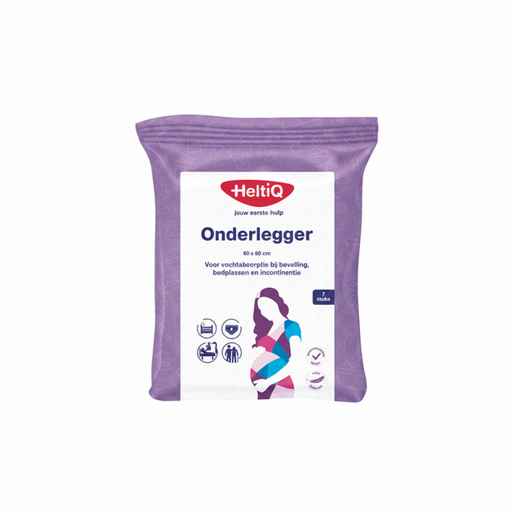
Why this fits the profile: This underlay is designed to protect mattresses, chairs and other surfaces from moisture and is practical for temporary or intensive care.
You use a surface protector for its intended purpose, rather than trying to use a body-worn pad as a bed underlay.
Size 60 × 60 cm, waterproof backing, individually wrapped and intended for single use.
Place a pad according to the instructions on the packaging and replace it when necessary. Dispose of used material in general waste; do not flush incontinence products down the toilet. Store unopened packs in a dry, cool place away from direct sunlight. For medical devices, always check the instructions for use and the expiry date on the packaging.
We've put together a full, up-to-date list of products that fully meet these strict selection criteria and comply with current European safety regulations.
Change the pad when it is saturated, feels damp or no longer fits properly. The right frequency varies depending on the absorbency level, the amount of urine loss and your activity. Always follow the instructions on the packaging.
Unopened products generally remain usable until the date on the packaging, provided they are stored dry and according to the storage instructions. An opened pack may become less suitable due to moisture or damage to the packaging. Check the material before use.
That depends on the price per piece, the number of changes per day and the variant you choose. Calculate the monthly cost by multiplying the price per pad by the average number of pads used per day and the number of days. Also compare whether a multi-pack offers better value without buying more than you can practically store.
