
Vandaag of morgen in huis

Kwaliteit gegarandeerd

Welkomstaanbiedingen ontgrendelen: GRATIS bezorging | Tot 80% korting | Gratis 30 dagen JoyPlus-proefperiode
Download de app
Urine leakage can happen at different times: when you sneeze, exercise, are out and about, or during the night. The right incontinence pad helps protect your clothing and bedding, without the product feeling unnecessarily bulky or uncomfortable. Yet it can be difficult to compare the many different options available.
Marketing terms like “extra dry”, “ultra-thin” or “strong odour control” don’t always tell you enough. So it’s best to focus on the fit, absorbency level, dimensions and usage instructions. Below, you’ll find out what to look for and which products suit different situations.
Using a sanitary towel for urine leakage might seem like a cheap solution, but menstrual blood and urine have different properties. Incontinence pads generally contain an absorbent core that needs to absorb and hold fluid more quickly. Ordinary sanitary towels may therefore not fit the pattern of urine leakage as well, especially with sudden leaks.
A thin pad is discreet, but it isn’t automatically suitable for every absorbency level. For light urine leakage, a thin liner can be comfortable. For regular or heavier leakage, a longer version or extra absorbent incontinence pad makes more sense. A size that’s too small can cause leaks, while a pad that’s too large may shift out of place.
Brands use different technologies for odour control. Don’t take such claims as a guaranteed result: according to the product description from Always, OdourLock is designed to neutralise odours; according to the product description from TENA, certain variants offer odour control. The experience can vary from person to person. Regular changing remains important.
Start with the amount and type of urine leakage. For a few drops, absorbent liners or incontinence pads are often sufficient. For light to moderate leakage, normal or long pads can provide a better fit. For heavier leakage, Long Plus variants are designed to offer more length and absorbency.
Bear in mind that brand names like “Normal”, “Long”, “Extra” and “Plus” don’t mean exactly the same thing across every brand. So always compare the product information and use the fit as a complement to the absorbency level.
A women’s incontinence pad usually has a wider, anatomically shaped fit that sits well in women’s underwear. A men’s incontinence pad is often cup-shaped or triangular, with the absorbent zone positioned more towards the front. For men, a specific model can therefore sit more securely than a universal liner.
Also check the fastening. An adhesive strip works most reliably in well-fitting underwear. Loose underwear can cause the pad to shift.
Products may contain a soft non-woven top layer, cotton, bamboo fibre or synthetic materials. If you are sensitive to latex, look for an explicit latex-free mention. If irritation occurs, stop using the product; if symptoms persist, consult a healthcare professional.
Incontinence pads are for single use only and should not be flushed down the toilet. Wrap the used pad in its packaging or a bag and dispose of it with your household waste. Always follow the instructions on the packaging.
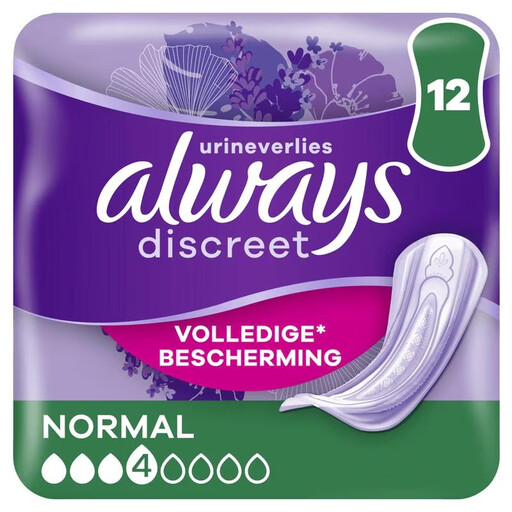
Why this suits the profile: A pack of 12 pads is practical for trying out a normal variant first with light bladder weakness.
The product description clearly states that the pads are intended for small bladder leaks. This means you’re not choosing based on thickness alone.
Normal variant, 12 pieces, adhesive strip and absorbent core according to the product information.
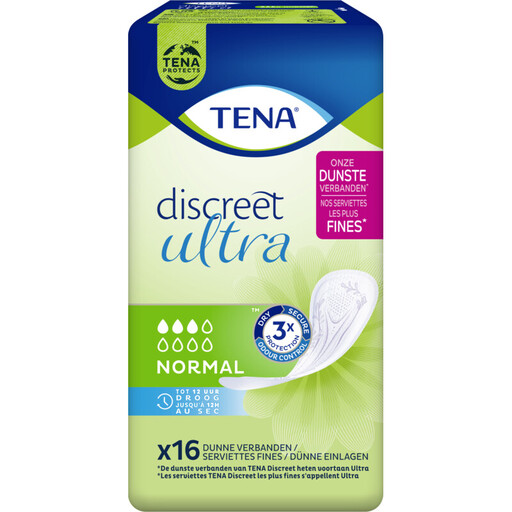
Why this suits the profile: Ideal for anyone looking for a thin pad with a soft material blend and individually wrapped pieces.
The packaging states the absorbency level as light to moderate and mentions an ultra-thin design. This makes the choice verifiable.
16 individually wrapped pads, bamboo fibre and cotton according to the product description, plus a latex-free mention.
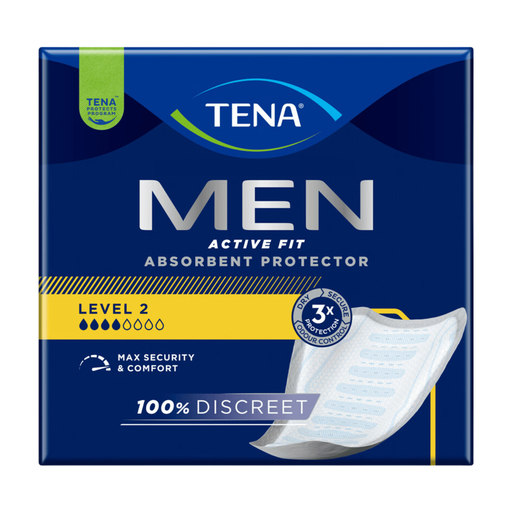
Why this suits the profile: Designed for men with moderate urine leakage who want a targeted fit and discreet protection.
The male cup shape and absorbency zone are clearly described. This means it’s not a general pad that might fit incorrectly.
Level 2 for moderate urine leakage, adhesive strip and a thickness of approximately 0.4 cm according to the product information.
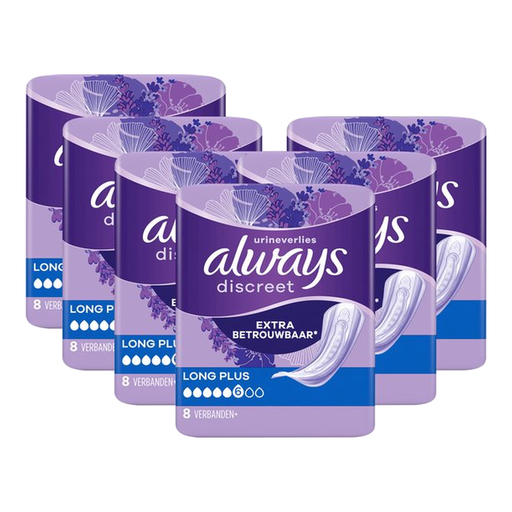
Why this suits the profile: The longer design is intended for users who need more protection when laughing, sneezing or moving around.
The product information explicitly mentions extra length and absorbency. That’s more relevant than just the label “ultra-thin”.
6 packs of 8 pads, Long Plus size and absorbent core according to the product description.
A pad protects your clothing, but not automatically your mattress. For night-time use, a waterproof mattress protector can be practical. The XLLX protector measuring 90 × 200 cm has a cotton-polyester blend, a TPU film and four corner elastic straps. According to the product information, it is washable and suitable for mattresses of this size. Check the dimensions before purchasing and follow the washing instructions.
For a dog, human incontinence pads are not a suitable solution. Dog nappies for incontinence have a different shape and fastening. The disposable female dog nappy in size M is offered, according to the product description, for older dogs with incontinence, training and season. Measure your dog and check whether the model is suitable for the gender and body shape.
We’ve put together a full, up-to-date list of products that fully meet these strict selection criteria and comply with current European safety regulations.
Change a pad as soon as it feels damp, becomes saturated or no longer fits properly. Some product descriptions suggest a guideline of four to six hours, but the right frequency depends on the amount of urine leakage and your daily activity. Follow the instructions on the packaging.
No. Incontinence pads, liners and dog nappies should not be flushed down the toilet. Wrap the used product in its original packaging, toilet paper or a sealable bag and dispose of it with your household waste.
Stop using any product that causes irritation and check the size, fit and changing frequency. If skin problems, pain, blood loss or suddenly increased urine leakage persist, it is advisable to contact your GP or another healthcare professional.
