
Livraison le jour même et le lendemain

Qualité garantie

Débloquez vos offres de bienvenue: Livraison GRATUITE | Jusqu'à -80 % | 30 jours d'essai gratuits à JoyPlus
Téléchargez l'application
Urine leakage can happen at different times: when you sneeze, laugh, exercise, on the go, or during the night. The right incontinence pad helps to absorb moisture without feeling too thick, uncomfortable or visible. However, not every absorbent pad is suitable for every situation.
The biggest mistake is usually not that someone spends too little, but that the product doesn't match how it will be used. A pad for light urine leakage may not be enough for moderate loss. On the other hand, a heavy, long pad can feel unnecessarily bulky for everyday use.
Sanitary towels for menstruation are designed for a different type of fluid and a different use. Some models can offer temporary protection, but that doesn't automatically mean they are suitable as urine loss pads. Always check the product category and the stated application.
A specific incontinence pad for women often has an anatomical shape, a fast-absorbing core and features to reduce the feeling of dampness. For men, there are models with a cup shape or triangular fit that conform better to the body.
Words like “extra”, “plus” or “long” only mean something when combined with the full product specifications. Also check the length, shape, fastening and recommended use. A longer pad can offer more coverage, but it doesn't always fit comfortably in close-fitting underwear.
Also pay attention to the difference between pads for light incontinence and pads for moderate incontinence. For regular or heavier urine loss, a pull-up pant or other type of incontinence product may be more suitable than a liner pad.
Odour neutralisation can be a useful product feature, but it doesn't prevent leakage. According to the product descriptions from Tena and Always, certain models feature odour control or odour neutralisation technology. That is a product specification, not a guarantee that odour will disappear completely in every situation.
Claims such as “up to 12 hours” should also be viewed in the context of use. The actual wear time depends on the amount of fluid, movement, fit and when the pad is changed.
The absorbent core usually consists of cellulose, superabsorbent polymer or a combination of these. These materials take in fluid and hold it inside the pad. Check whether the product is intended for:
A slim design is discreet, but not automatically suitable for heavier use. Choose the absorption class based on the amount of loss and change the pad regularly.
An anatomical shape reduces the chance of the pad shifting. For women, a wider back or wings can provide extra grip. An incontinence pad for men often has a specific shape around the front and an adhesive strip for fastening in close-fitting underwear.
Also check:
If you react sensitively to fragrances or certain materials, look for “unscented”, latex-free or dermatologically tested. These mentions describe product specifications; they do not guarantee suitability for every skin type. Stop using the product if irritation occurs and consult a healthcare professional if necessary.
Use a disposable pad only externally, do not flush it down the toilet and follow the instructions on the packaging. If urine loss persists or increases, it may be wise to speak to your GP or another healthcare professional.
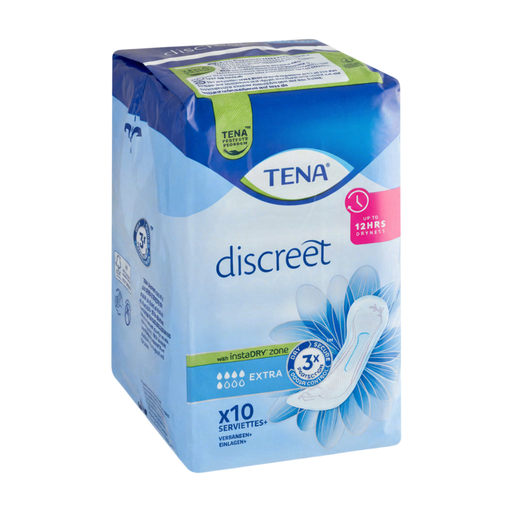
Why this fits the profile: This model is designed for light incontinence and contains 10 pieces. That makes it suitable for trying out the right size and absorption level first.
The product description mentions an Instadry zone, anatomical fit and use for light incontinence. Check your personal needs before buying larger packs.
10 pieces, anatomical shape and, according to the product description, odour control without added fragrances.
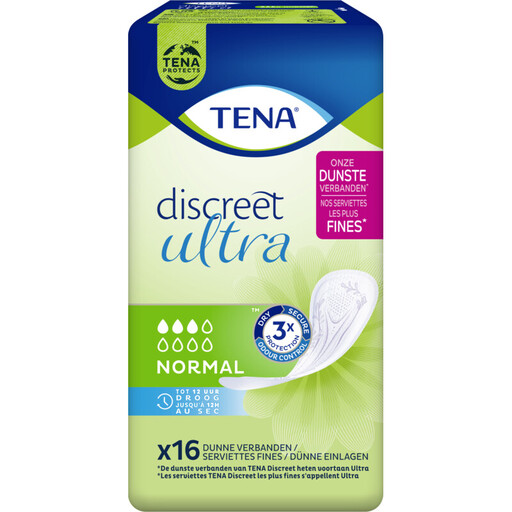
Why this fits the profile: The ultra-thin design and individually wrapped pieces are ideal for daily use, commuting and discreet carrying.
The product specifications mention an ultra-thin shape, bamboo and cotton fibres and a latex-free design. Always check the packaging if you have sensitive skin.
16 individually wrapped pads, ultra-thin design and, according to the product description, suitable for light to moderate bladder weakness.
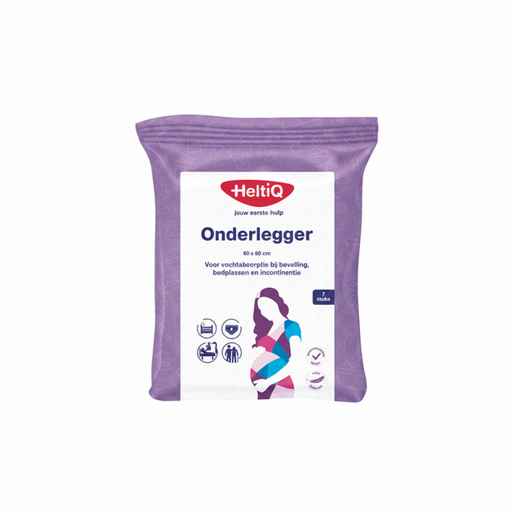
Why this fits the profile: This is a practical choice for carers or for overnight use where the mattress, chair or other surface also needs protection.
This is not a pad for the body, but a disposable underlay. This prevents you from buying a surface protector when you need personal protection.
Size 60 x 60 cm, waterproof backing and individually wrapped pieces. The product is intended as physical surface protection.
We have compiled a full, up-to-date list of products that fully meet these strict selection criteria and comply with current European safety regulations.
Fit is more important than colour or packaging. A model for women often conforms to the female anatomy and may have a longer back or wings. A model for men, such as the Tena Men Active Fit, has a male shape and is designed for light to moderate urine leakage. Always check the target group and fastening method for each product.
For overnight use, a longer pad or a separate incontinence underlay may be needed. An incontinence bed pad protects the mattress, but does not replace a pad worn on the body. For larger amounts of urine loss, it is wise to also compare other product types.
Change the pad as soon as it is saturated, after leakage or when it feels uncomfortable. Always follow the usage instructions on the packaging. Regular changing helps to limit moisture and skin irritation, but the right frequency varies from person to person and situation to situation.
A sanitary towel can absorb moisture occasionally, but it is not automatically designed for urine loss. A specific urine loss pad usually has a different core, shape and fluid handling. For recurring urine loss, choose a product whose packaging clearly states this use.
That depends on the price per pack, the number of pieces and how often you change. Calculate the price per pad and then compare the absorption class. A larger pack is not better value if the product doesn't fit properly or needs to be changed more often.
